


- Home
- About Liya
- Liya Boats
- Luxury RIB Boats-Fiber Hull
- 8.3m/27Ft Cabin RIB Boat
- 8m/26Ft Sport Fiber RIB Boat
- New 7.5m/25Ft luxury Italy style RIB Boat
- Classic 7.5m/25Ft Rigid Inflatable Boat
- New 6.6m/22Ft Sport RIB Boat
- Classic 6.6m/22Ft Inflatable RIB Boat
- 6.2m/20Ft RIB Fishing Boat
- 5.8m/19Ft Fiberglass hull RIB
- 5.2m/17Ft RIB Boat
- 4.3m/14Ft Yacht Tender RIB Dinghy
- 4.3m/14Ft Center Console RIB Boat
- 3.8m/12.5Ft High Speed RIB Tender
- 3.3m/11Ft RIB Dinghy
- 8.3m/27Ft Cabin RIB Boat
- Open Deck RIBs-Fiber Hull
- Aluminum Hull RIB Boats
- 8-10M Aluminum Patrol RIB
- 7m/23Ft Aluminum RIB Yacht Tender
- 6.6m/22Ft Rigid Aluminum Hull RIB Boat
- 6.2m/20Ft Aluminum RIB Boat with Motor
- 5.8m/19Ft Aluminum Hull RIB Tender Boat
- 5.8-7.5M Transportation RIB
- 5.2m/17Ft Aluminum RIB Center Console Boat
- 4.3m/14Ft Aluminum RIB Dinghy For Sale
- 2.4-5.2m/8-17Ft Aluminum RIB Dinghy
- 8-10M Aluminum Patrol RIB
- Work RHIB-Rescue & Patrol RIBs
- 27Ft Aluminum Patrol Boat Polyurea-EVA Collar Deep-V Hull
- 9-10m/29-34Ft Aluminum Patrol RIB Boat
- Professional 8.3m Heavy-Duty Patrol RIB Boat|Fast-Response,12-Person,CE Certified
- 7.9m/26Ft RHIB for Patrol
- 6.6m/22Ft Black RIB Boat
- 5.8-7.5m/19-25ft Heavy Duty RIB Patrol & Work Boat
- 5.8-7.5m/19-25Ft Aluminum RIB Work Boat
- 27Ft Aluminum Patrol Boat Polyurea-EVA Collar Deep-V Hull
- Fiberglass Boats/Fishing Boats
- 7.6m/25Ft Fiberglass Panga Boat for Fishing
- Liya 45ft Fiberglass Cabin Fishing Boat Passenger Tour Vessel
- 9.18m/30Ft Fiberglass Cabin Fishing Boat
- 6.6m/22Ft Fiberglass Panga Skiff Boat
- 6m/20Ft Center Console Fishing Boat
- 5.8m/19Ft Center Console Panga Fishing Boat
- 5m/16.5Ft Economical Fiberglass Boat
- 7.6m/25Ft Fiberglass Panga Boat for Fishing
- Ferry & Transportation Boats
- Fully Inflatable Boats
- Luxury RIB Boats-Fiber Hull
- Application
- Hot Sale
- News
- Feature & Service
- Work RHIBs
- Contact Liya

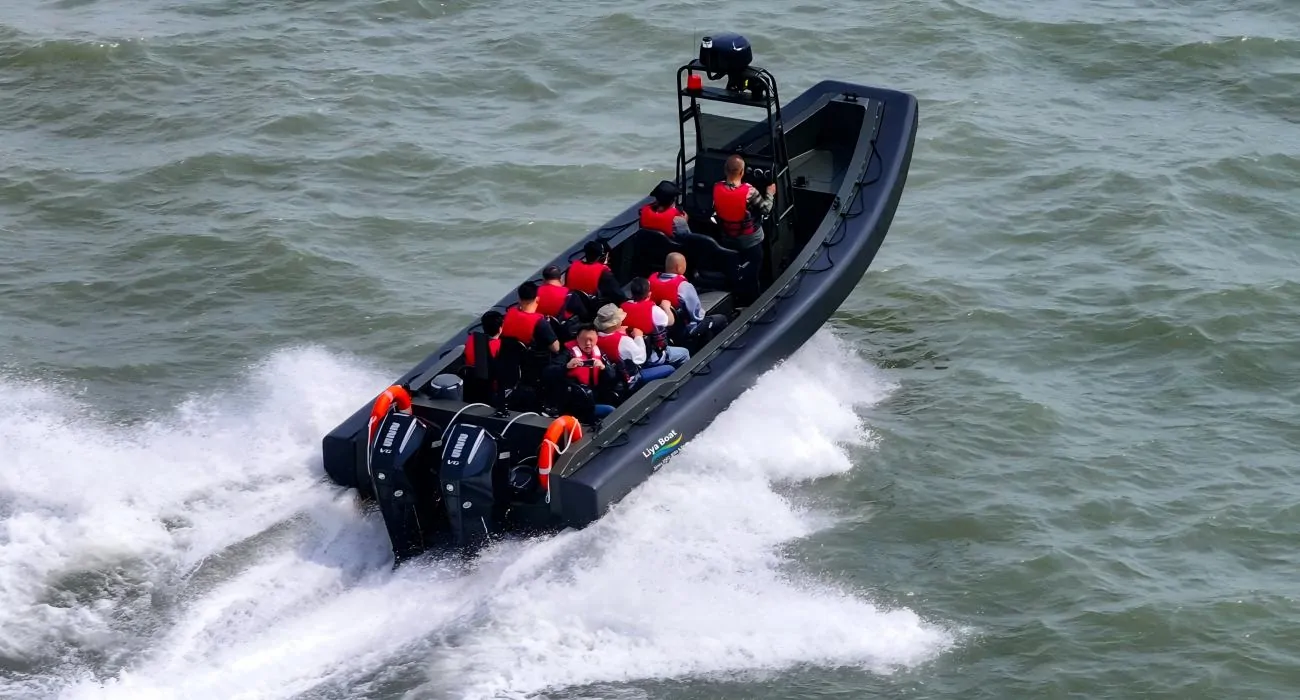


27Ft Aluminum Patrol Boat Polyurea-EVA Collar Deep-V Hull ![]()
Professional-grade vessel engineered for demanding marine
operations.
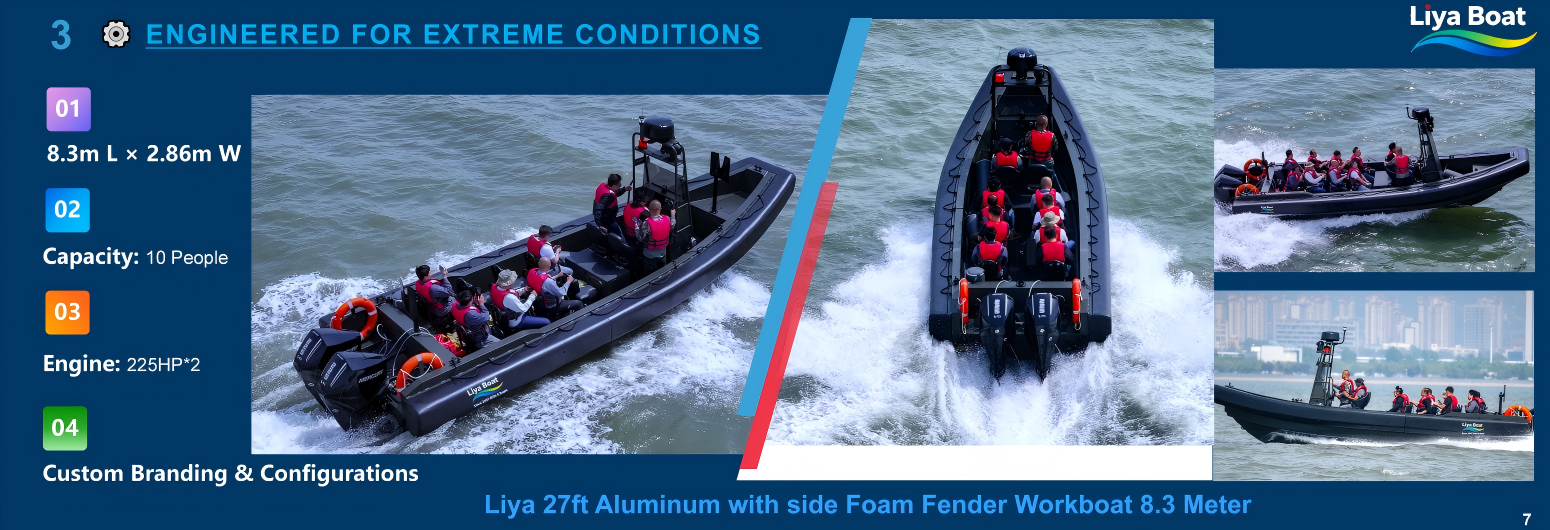
➤Built with a fully welded aluminum hull and aluminum skeleton, this boat delivers exceptional durability in the toughest environments.
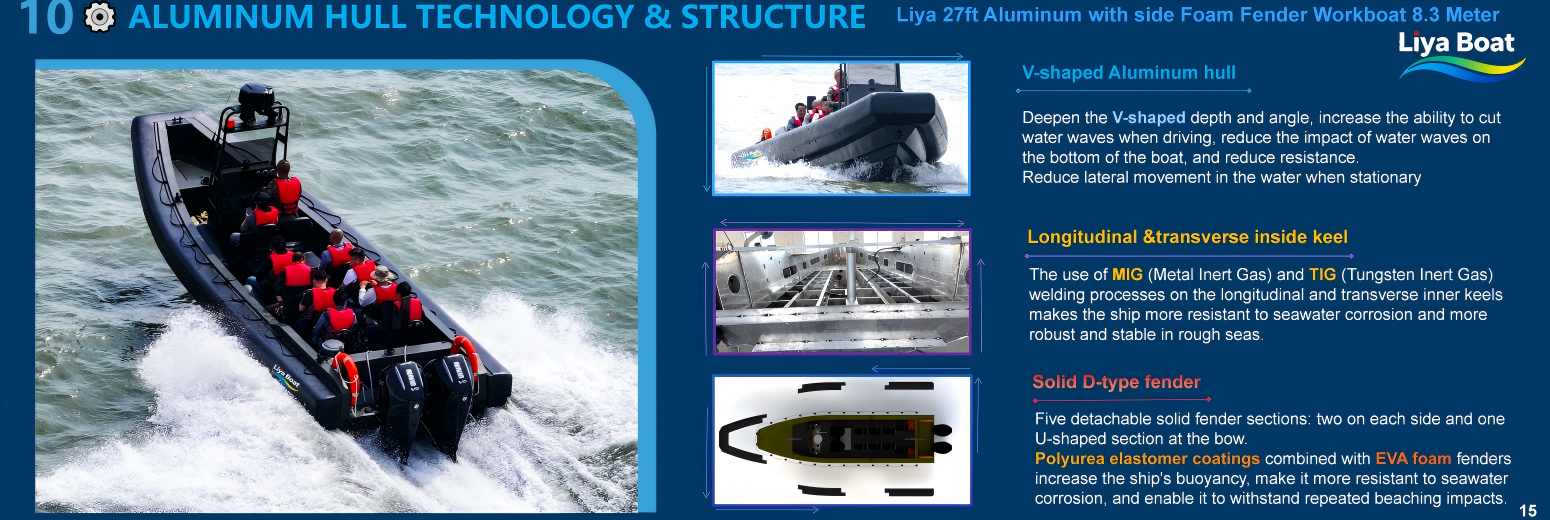
➤What sets it apart is the polyurea spray-coated EVA foam collar that runs around the entire gunwale—providing both additional buoyancy and superior impact resistance against docks, debris, and beaching landings.
➤The 23° deep V aluminum hull cuts through waves efficiently, reducing pounding and ensuring a smooth, dry ride.
➤Whether you need a search and rescue aluminum boat, a beach landing support craft, or a rugged commercial work boat for transport and logistics, the 27ft aluminum hull vessel is built to perform.
➤With twin 225HP outboard engines (estimated 236kg each) and a 450-liter fuel tank, this polyurea foam collar workboat is ready for extended missions.
operations.
➤Built with a fully welded aluminum hull and aluminum skeleton, this boat delivers exceptional durability in the toughest environments.
➤What sets it apart is the polyurea spray-coated EVA foam collar that runs around the entire gunwale—providing both additional buoyancy and superior impact resistance against docks, debris, and beaching landings.
➤The 23° deep V aluminum hull cuts through waves efficiently, reducing pounding and ensuring a smooth, dry ride.
➤Whether you need a search and rescue aluminum boat, a beach landing support craft, or a rugged commercial work boat for transport and logistics, the 27ft aluminum hull vessel is built to perform.
➤With twin 225HP outboard engines (estimated 236kg each) and a 450-liter fuel tank, this polyurea foam collar workboat is ready for extended missions.
-
HY830-Alu
-
Liya Boat
-
8903.190000
-
10 people
-
XL 25''
-
225 HP*2
-
250 HP*2
库存: 0
Inquire
▍Built for Professional Maritime Missions
▍27 foot all aluminum hull patrol vessel with polyurea-coated foam collar
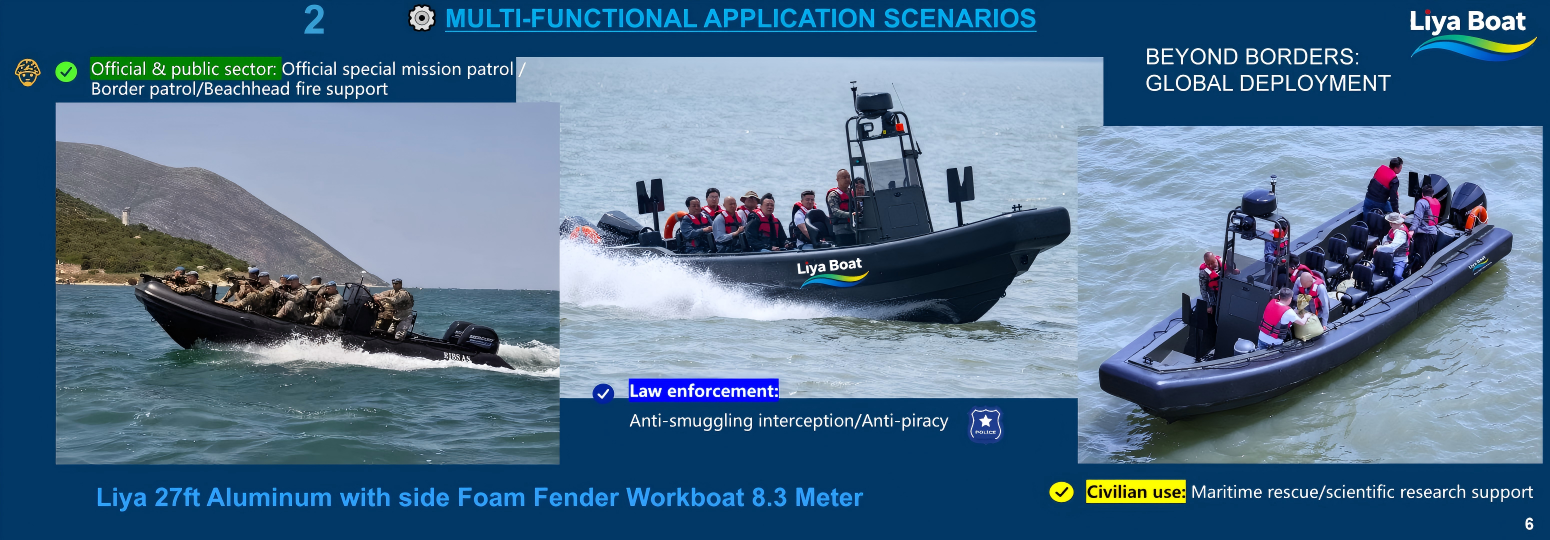
This 27 foot all aluminum hull patrol vessel is specifically designed for
✦ Waterborne patrol and maritime security
✦ Search and rescue (SAR) operations
✦ Beach area logistical support and personnel transfer
✦ Patrol interdiction
✦ Shallow water deployment and coastal defense
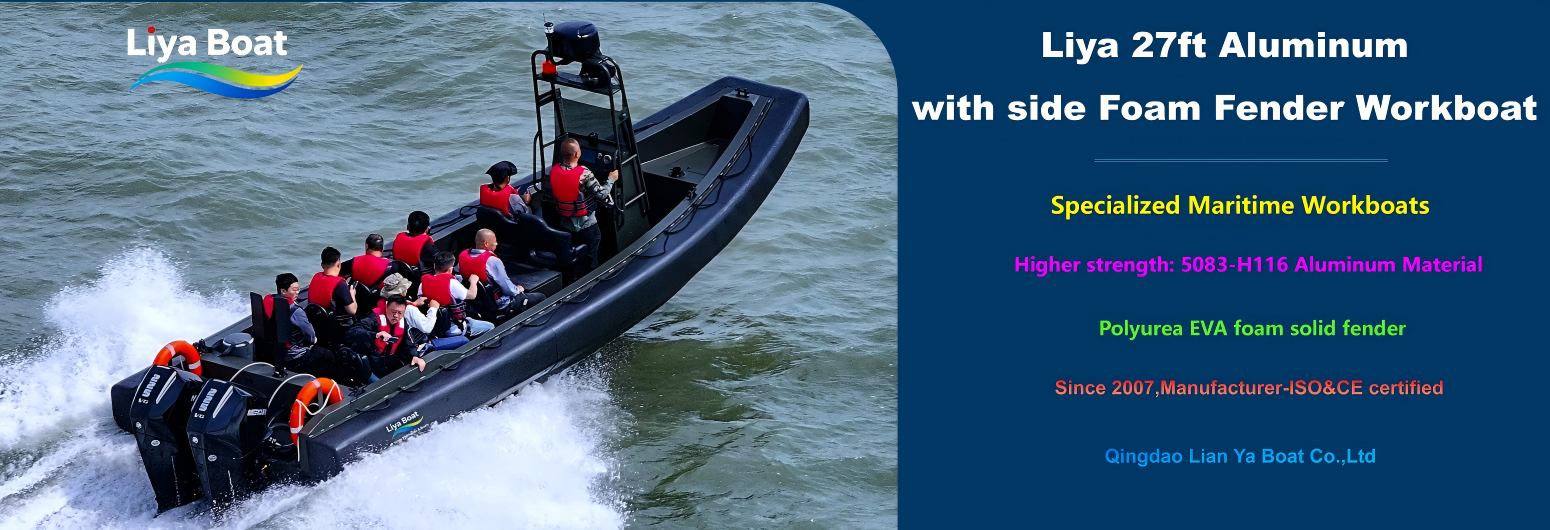
The combination of an aluminum bottom and polyurea‑coated solid EVA foam collar makes this vessel truly multi‑mission capable. The rigid foam collar provides
▶Permanent buoyancy even if the outer skin is compromised
▶Impact absorption for pier landings and beaching
▶Zero maintenance compared to inflatable Hypalon or PVC tubes
▶High resistance to UV, saltwater, and abrasion
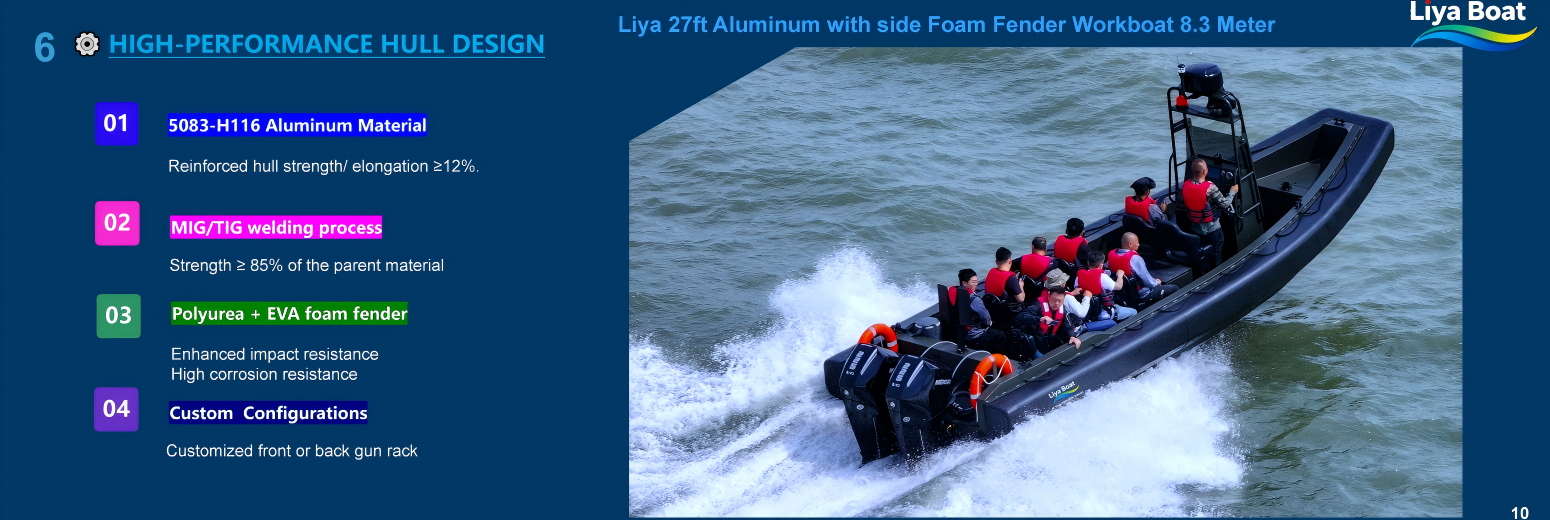
Deep‑V Aluminum Hull Design for Superior Seakeeping
≈ With a 23° deep‑V hull, this deep V aluminum patrol boat for rescue delivers exceptional wave‑cutting capability.
≈ The deeper V‑shape angle significantly reduces slamming and vertical acceleration, allowing higher transit speeds in rough sea states without compromising crew safety.
≈ This design is proven for planing hulls operating in offshore environments — the deep‑V cuts through waves to reduce pounding, a critical requirement for patrol and rescue missions.



27Ft Aluminum Patrol Boat Polyurea-EVA Collar Deep-V Hull
Close Model Selection
This image includes all accessories. Click on "Non-Required Fields" to deselect the options you don't need,Thanks
Back
Continue


-
 Liya panga boats, rib boats, foldable inflatable boats manufacturer and exporter
 -
 Choosing between a fiberglass (GRP) and aluminum hull presents a high-stakes decision for any mariner. This specific choice dictates the physical lifespan, routine maintenance demands, and ultimate operational limits of your vessel.
 -
 Liya 7 Meter Luxury Aluminum RIB Boat: Five Key FeaturesIn the high-end inflatable boat market, the Liya 7 meter aluminum rib inflatable boat continues to win global acclaim. This product, from the renowned manufacturer Liya, is the top choice for those seeking quality and versatility thanks to its
 -
 The Liya 33ft aluminium hull RIB boat is designed for patrol and water work, combining high performance and practicality. The hull of 33ft RHIB boat is made of power-coated aluminium alloy, which is not only light and durable, but also adaptable to various water environments. The unique deep V-shape


