


- Home
- About Liya
- Liya Boats
- Luxury RIB Boats-Fiber Hull
- 8.3m/27Ft Cabin RIB Boat
- 8m/26Ft Sport Fiber RIB Boat
- New 7.5m/25Ft luxury Italy style RIB Boat
- Classic 7.5m/25Ft Rigid Inflatable Boat
- New 6.6m/22Ft Sport RIB Boat
- Classic 6.6m/22Ft Inflatable RIB Boat
- 6.2m/20Ft RIB Fishing Boat
- 5.8m/19Ft Fiberglass hull RIB
- 5.2m/17Ft RIB Boat
- 4.3m/14Ft Yacht Tender RIB Dinghy
- 4.3m/14Ft Center Console RIB Boat
- 3.8m/12.5Ft High Speed RIB Tender
- 3.3m/11Ft RIB Dinghy
- 8.3m/27Ft Cabin RIB Boat
- Open Deck RIBs-Fiber Hull
- Aluminum Hull RIB Boats
- 8-10M Aluminum Patrol RIB
- 7m/23Ft Aluminum RIB Yacht Tender
- 6.6m/22Ft Rigid Aluminum Hull RIB Boat
- 6.2m/20Ft Aluminum RIB Boat with Motor
- 5.8m/19Ft Aluminum Hull RIB Tender Boat
- 5.8-7.5M Transportation RIB
- 5.2m/17Ft Aluminum RIB Center Console Boat
- 4.3m/14Ft Aluminum RIB Dinghy For Sale
- 2.4-5.2m/8-17Ft Aluminum RIB Dinghy
- 8-10M Aluminum Patrol RIB
- Work RHIB-Rescue & Patrol RIBs
- 27Ft Aluminum Patrol Boat Polyurea-EVA Collar Deep-V Hull
- 9-10m/29-34Ft Aluminum Patrol RIB Boat
- Professional 8.3m Heavy-Duty Patrol RIB Boat|Fast-Response,12-Person,CE Certified
- 7.9m/26Ft RHIB for Patrol
- 6.6m/22Ft Black RIB Boat
- 5.8-7.5m/19-25ft Heavy Duty RIB Patrol & Work Boat
- 5.8-7.5m/19-25Ft Aluminum RIB Work Boat
- 27Ft Aluminum Patrol Boat Polyurea-EVA Collar Deep-V Hull
- Fiberglass Boats/Fishing Boats
- 7.6m/25Ft Fiberglass Panga Boat for Fishing
- Liya 45ft Fiberglass Cabin Fishing Boat Passenger Tour Vessel
- 9.18m/30Ft Fiberglass Cabin Fishing Boat
- 6.6m/22Ft Fiberglass Panga Skiff Boat
- 6m/20Ft Center Console Fishing Boat
- 5.8m/19Ft Center Console Panga Fishing Boat
- 5m/16.5Ft Economical Fiberglass Boat
- 7.6m/25Ft Fiberglass Panga Boat for Fishing
- Ferry & Transportation Boats
- Fully Inflatable Boats
- Luxury RIB Boats-Fiber Hull
- Application
- Hot Sale
- News
- Feature & Service
- Work RHIBs
- Contact Liya

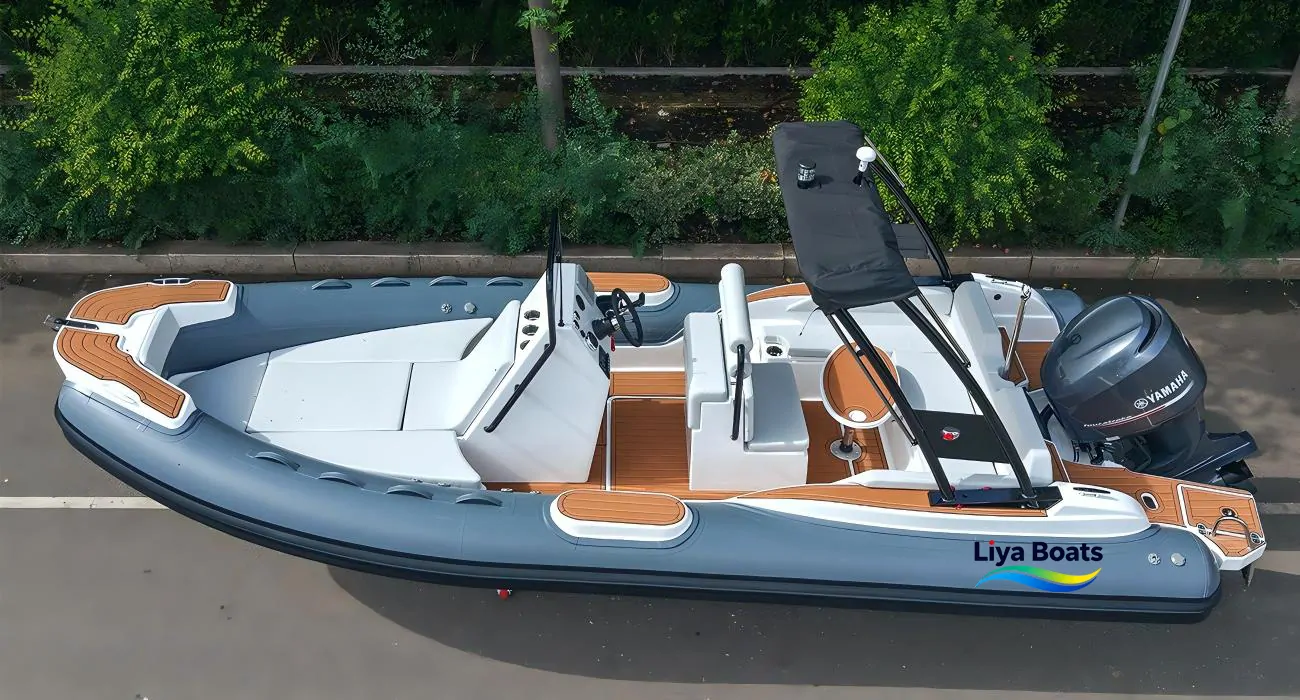


Liya 22FT Luxury Sport RIB Boat for Sale | 6.6m High-Performance, 12 Person ![]()
✨Introducing the all-new 2026 Model 22ft Sport RIB Boat, a CE-certified luxury inflatable boat designed for thrill-seekers and discerning boaters.
- This 6.6-meter premium fiberglass RIB boat combines a high-performance deep V hull with exceptional stability, comfortably accommodating up to 12 persons.
- Perfect for water sports, cruising, and leisure, it features a deluxe swim platform and optional sun cushions for ultimate comfort.
- As a top-quality fiberglass RIB for sale, it represents the pinnacle of design, safety, and versatility.
-
New HYP660
-
Liya Boat
-
8903.190000
-
12 people
-
XL 25''
-
150HP-200HP
-
250HP
库存: 0
Inquire
2026 Newest 22ft Luxury Sport RIB Boat for Sale - CE Certified & High-Performance
▍Redefine Your Water Adventures
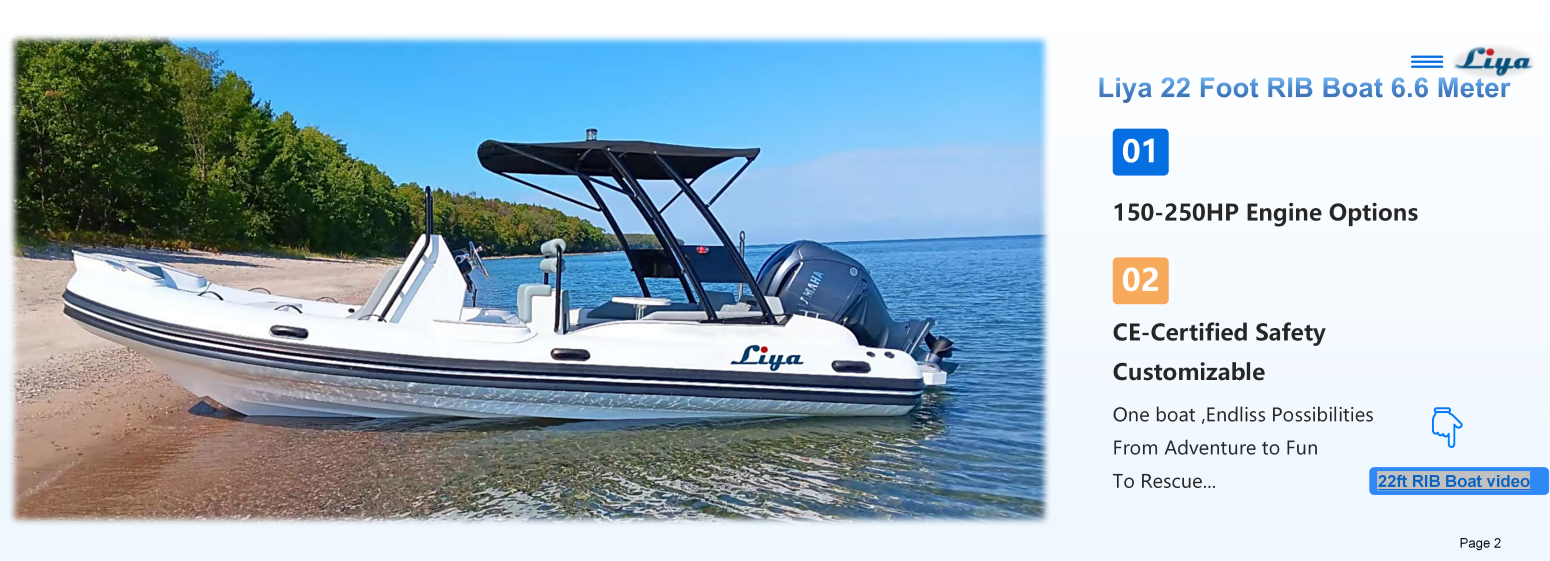
The new Liya 22ft Sport RIB Boat is a masterpiece of marine engineering, designed as the ultimate luxury inflatable boat for 2026.
It seamlessly blends the rugged reliability of a top-quality fiberglass deep V hull RIB with the refined comfort expected from a deluxe sport RIB.
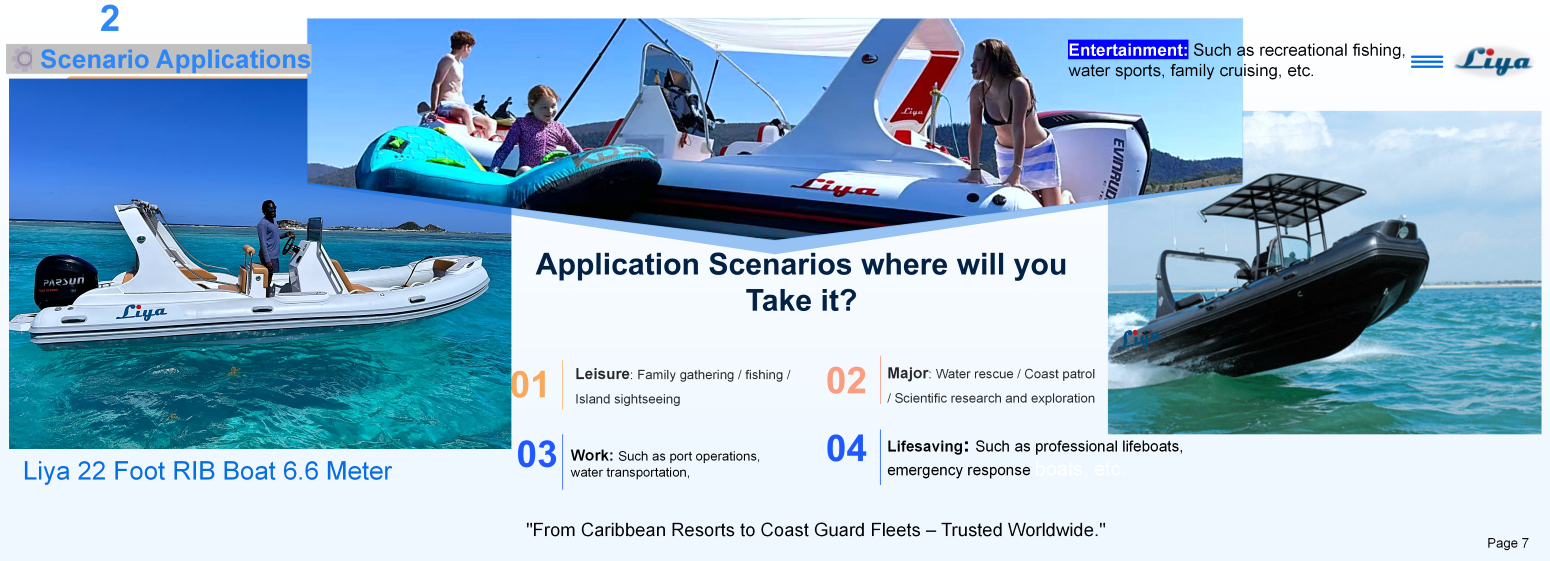
Whether you're chasing adrenaline on water skis or hosting a sunset cruise, this 22 foot RIB boat for water sports excels in every scenario.
▍Unmatched Design & Customizable Comfort
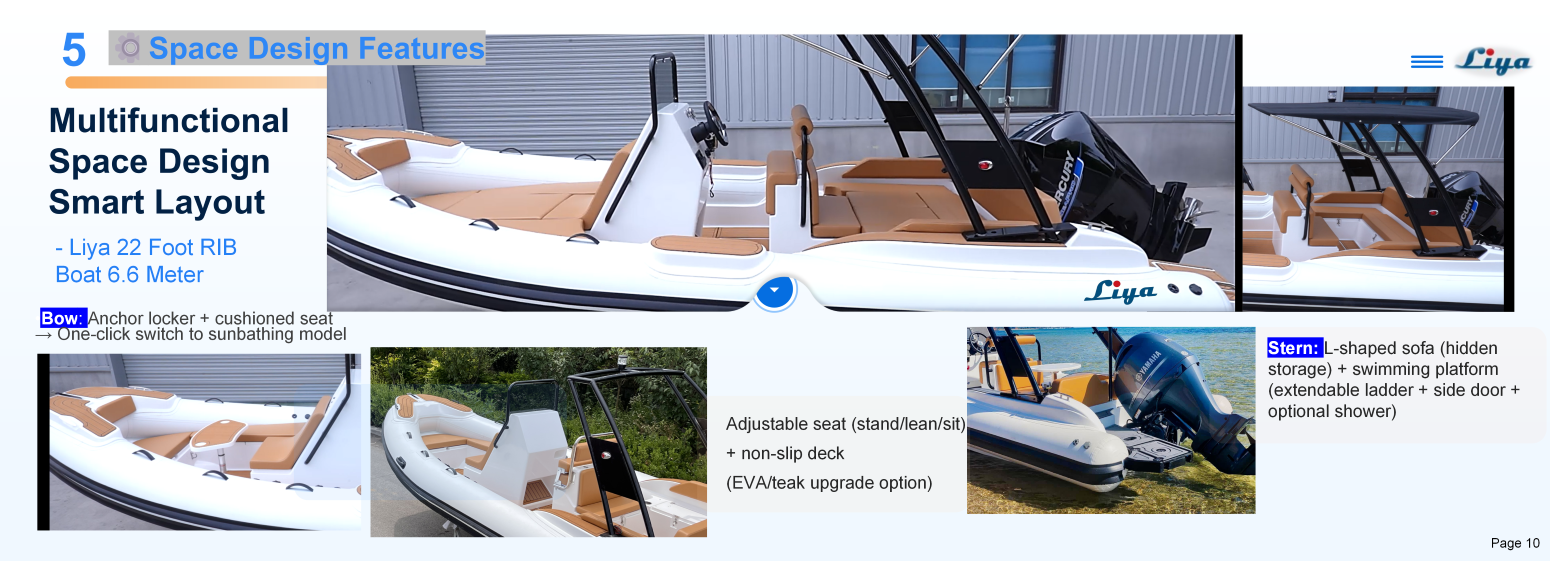
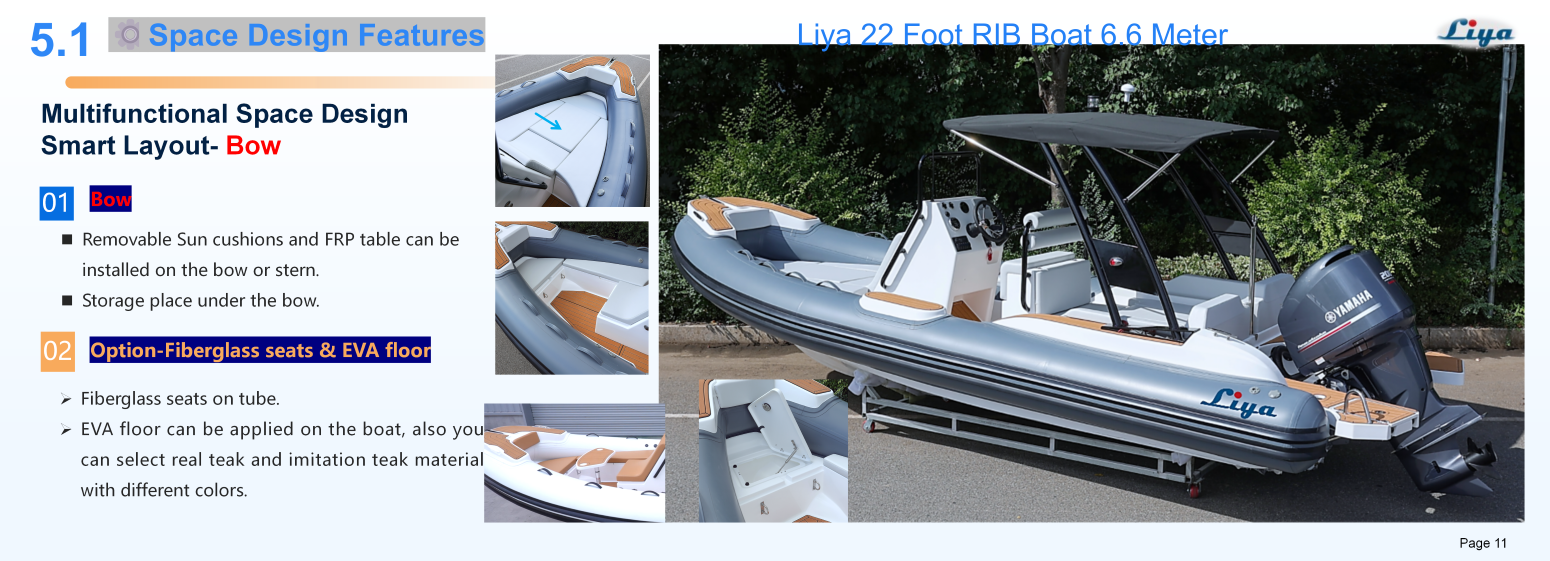
Versatile Lounge & Entertainment Zones:
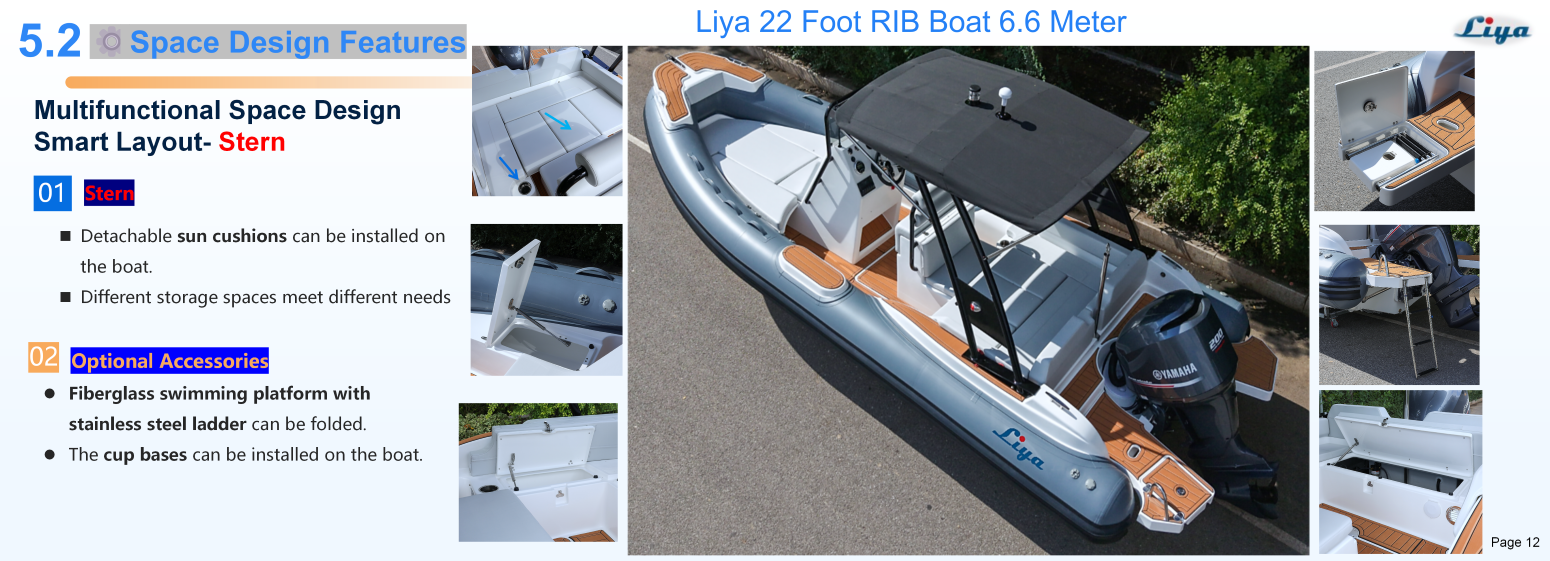
Transform your deck in moments.
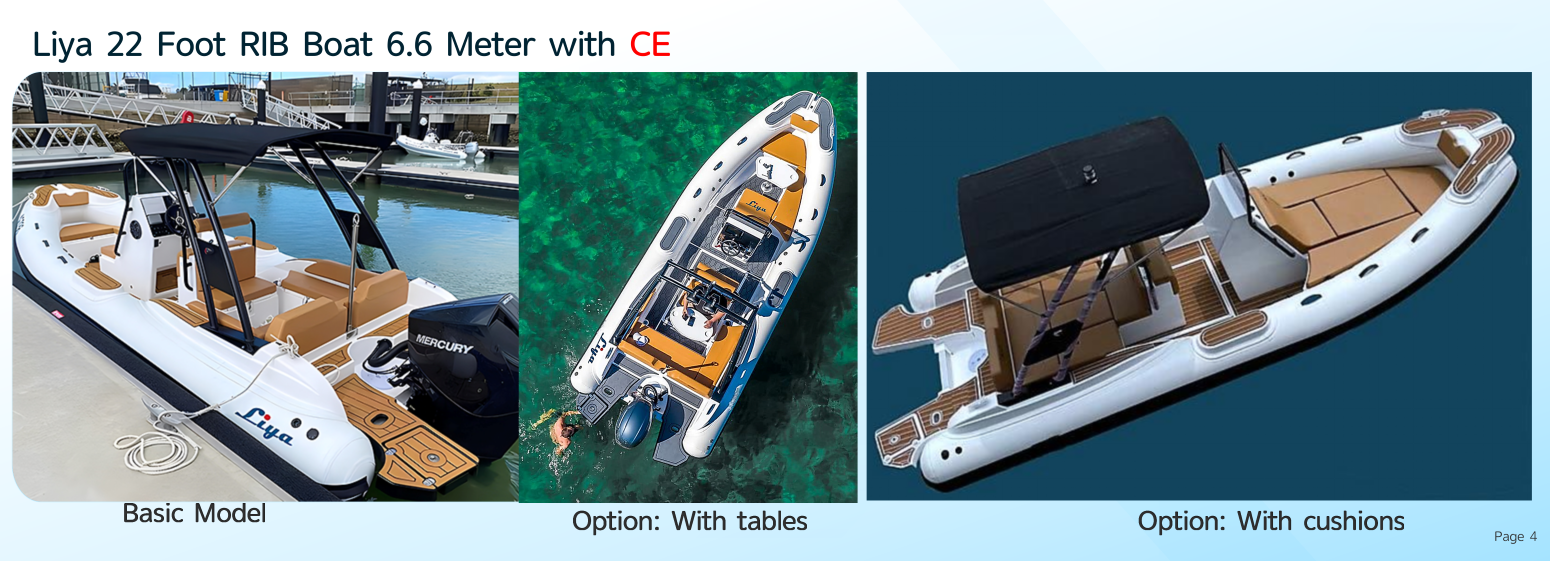
The convertible bow and stern areas feature interchangeable plush sun cushions for relaxation or a sturdy fiberglass table for social gatherings.
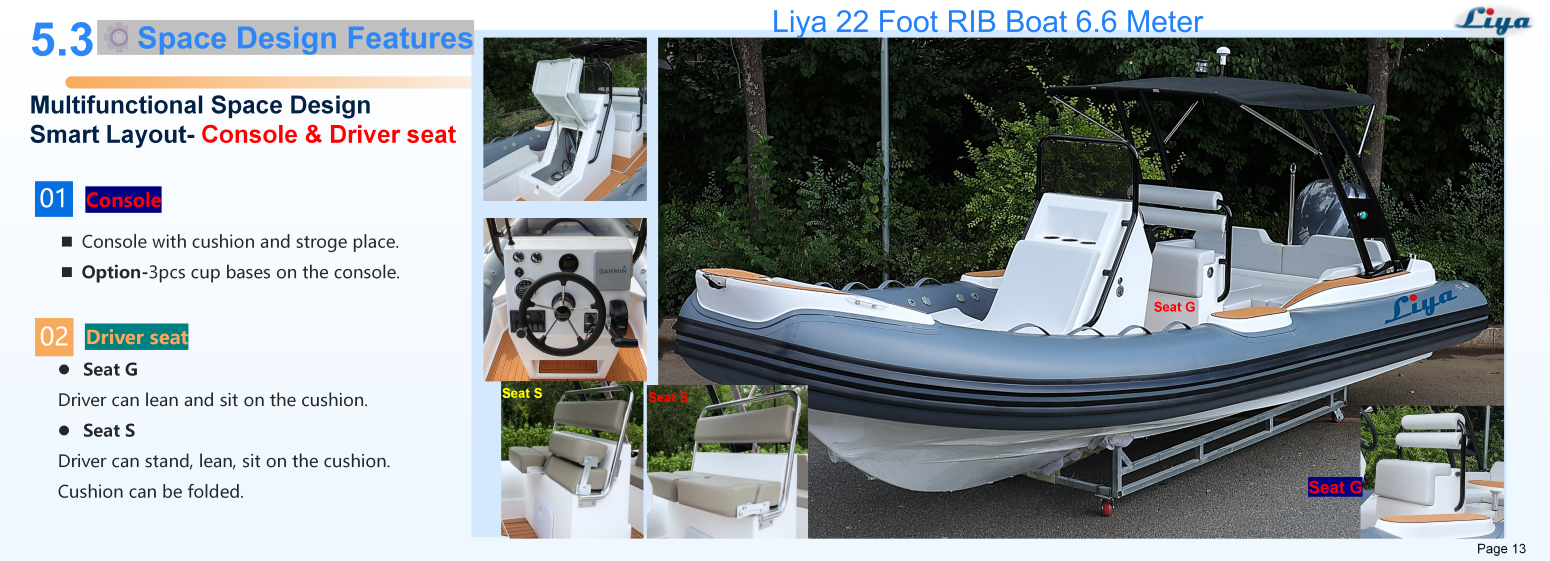
Ergonomic Command Center:
Take control with our unique, adjustable pilot seating system, allowing you to drive comfortably while standing, leaning, or sitting.
The multi-functional console integrates seamlessly with the lounge areas.
Luxury Aquatic Access:
The integrated swimming platform with a sturdy ladder makes entering and exiting the water safe and effortless, perfect for swimming, diving, or boarding towed toys.
▍Engineering Excellence & Performance
Superior Deep V Hull Performance:
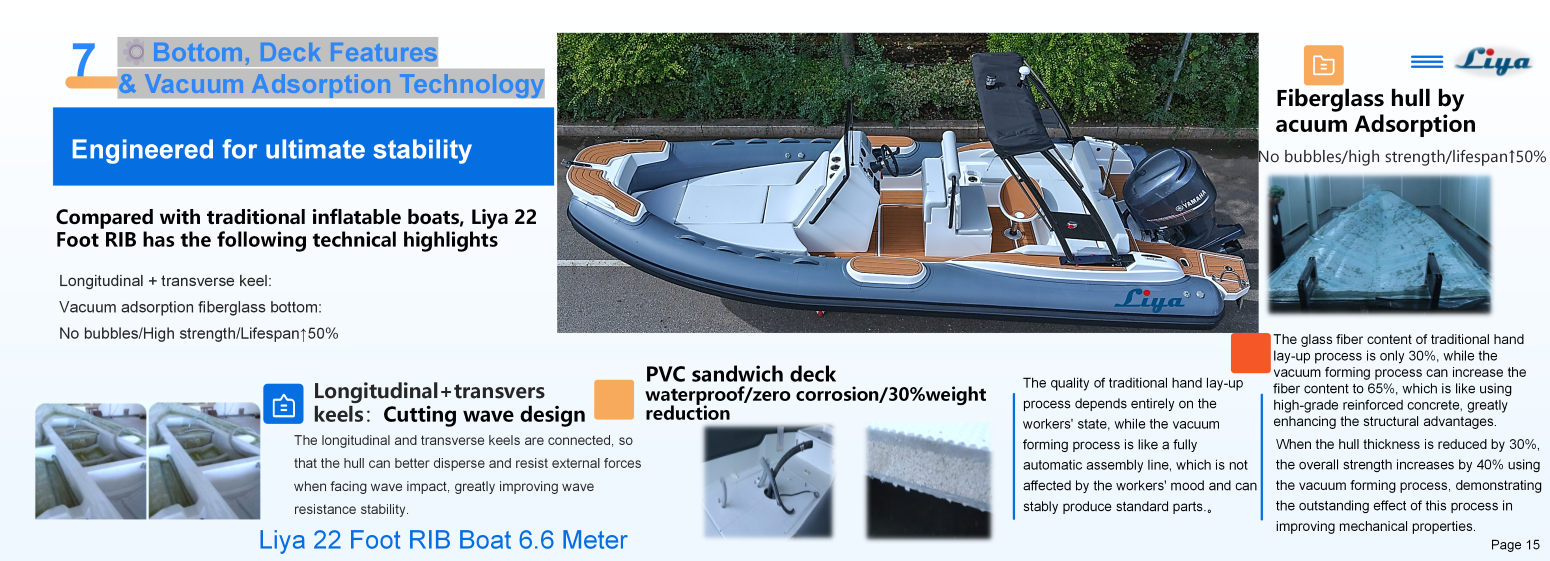
The 21-degree deep V fiberglass hull cuts through chop with ease, providing exceptional stability, dryness, and handling at high speeds, defining the true meaning of a high-performance 12 person RIB.
Powerful & Efficient:
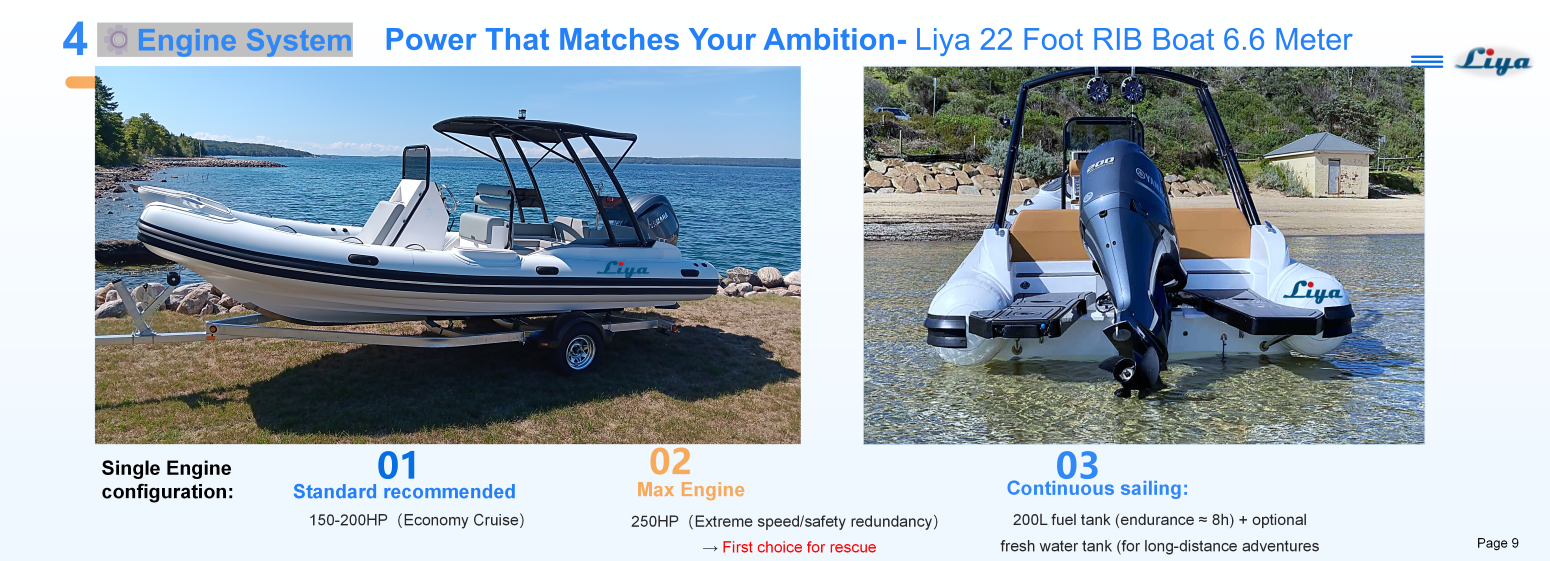
Engineered for a recommended 150-200HP outboard (max 250HP), this boat delivers exhilarating acceleration and top-end speed. The standard 200L fuel tank ensures extended range for all-day adventures.
Built with Advanced Materials:
We utilize vacuum infusion technology to create a hull that is significantly stronger and lighter than traditional hand-laid fiberglass, backed by a 5-year warranty. The decks are cored with waterproof PVC, eliminating rot and reducing weight.
▍Premium Features & Options
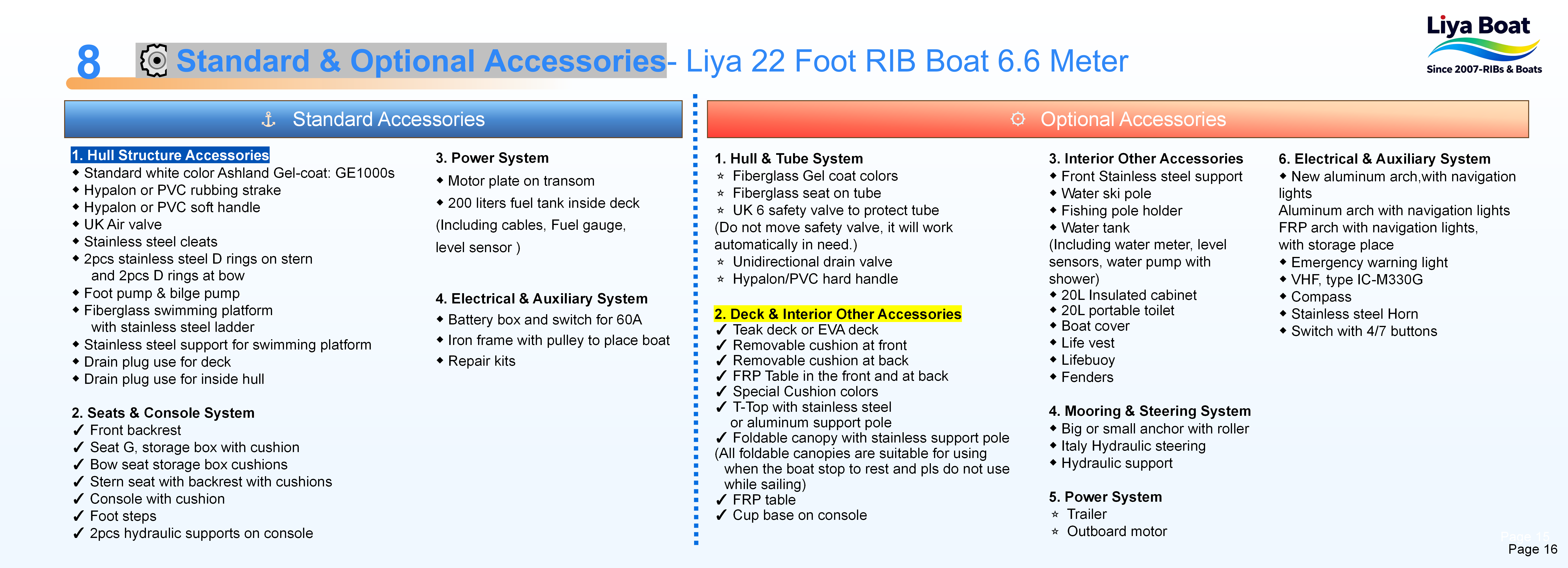
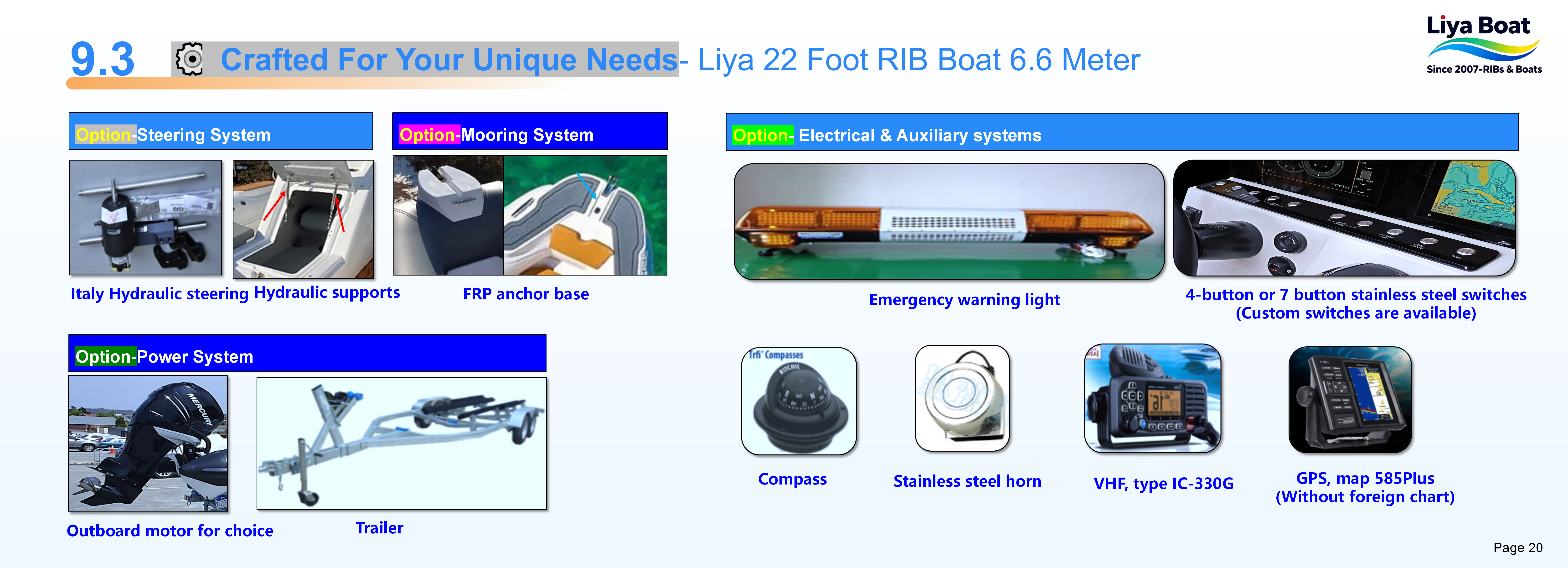
Equipped for luxury and function, the boat includes a deck auto-bilge system and a 80L freshwater tank. Customize yours with options like a Bimini top, tow bar, fishing rod holders, teak-style flooring, and a spoiler with navigation lights to create your perfect new model sport RIB boat 2026.




 |Bottom and deck features & Technology

Liya 22FT Luxury Sport RIB Boat for Sale | 6.6m High-Performance, 12 Person
Close Model Selection
This image includes all accessories. Click on "Non-Required Fields" to deselect the options you don't need,Thanks
Back
Continue


-
 The Liya Classic 22 Foot RIB Boat has earned widespread recognition in the global market for its exceptional all-around performance. Six key factors contribute to its success:1. Certification and CraftsmanshipManufactured by renowned manufacturer Liya in strict accordance with ISO standards and CE c
 -
 The Liya 7.5 meter Classic Hypalon RIB Boat has received widespread acclaim from customers for its outstanding performance and flexible design. This 25 foot RIB inflatable boat with outboard motor, certified by ISO and CE, is safe and reliable. Customers have praised its stability and safety at sea.
 -
 Liya 6.2 meter inflatable hypalon rib boat is ideal for leisure and entertainment, designed for vacations and marine activities. This 20 foot luxury rib boat can accommodate 12 people, equipped with a 115-150 horsepower single engine, bringing a smooth sailing experience. The hull of 6.2 meter semi
 -
 This is Liya Boat`s new rib boat 25 feet semi-rigid boats hypalon boats developed together with Italian clients... ...More details contact us immediately.


