- Home
- About Liya
- Liya Boats
- Luxury RIB Boats-Fiber Hull
- 8.3m/27Ft Cabin RIB Boat
- 8m/26Ft Sport Fiber RIB Boat
- New 7.5m/25Ft luxury Italy style RIB Boat
- Classic 7.5m/25Ft Rigid Inflatable Boat
- New 6.6m/22Ft Sport RIB Boat
- Classic 6.6m/22Ft Inflatable RIB Boat
- 6.2m/20Ft RIB Fishing Boat
- 5.8m/19Ft Fiberglass hull RIB
- 5.2m/17Ft RIB Boat
- 4.3m/14Ft Yacht Tender RIB Dinghy
- 4.3m/14Ft Center Console RIB Boat
- 3.8m/12.5Ft High Speed RIB Tender
- 3.3m/11Ft RIB Dinghy
- 8.3m/27Ft Cabin RIB Boat
- Open Deck RIBs-Fiber Hull
- Aluminum Hull RIB Boats
- 8-10M Aluminum Patrol RIB
- 7m/23Ft Aluminum RIB Yacht Tender
- 6.6m/22Ft Rigid Aluminum Hull RIB Boat
- 6.2m/20Ft Aluminum RIB Boat with Motor
- 5.8m/19Ft Aluminum Hull RIB Tender Boat
- 5.8-7.5M Transportation RIB
- 5.2m/17Ft Aluminum RIB Center Console Boat
- 4.3m/14Ft Aluminum RIB Dinghy For Sale
- 2.4-5.2m/8-17Ft Aluminum RIB Dinghy
- 8-10M Aluminum Patrol RIB
- Work RHIB-Rescue & Patrol RIBs
- 27Ft Aluminum Patrol Boat Polyurea-EVA Collar Deep-V Hull
- 9-10m/29-34Ft Aluminum Patrol RIB Boat
- Professional 8.3m Heavy-Duty Patrol RIB Boat|Fast-Response,12-Person,CE Certified
- 7.9m/26Ft RHIB for Patrol
- 6.6m/22Ft Black RIB Boat
- 5.8-7.5m/19-25ft Heavy Duty RIB Patrol & Work Boat
- 5.8-7.5m/19-25Ft Aluminum RIB Work Boat
- 27Ft Aluminum Patrol Boat Polyurea-EVA Collar Deep-V Hull
- Fiberglass Boats/Fishing Boats
- 7.6m/25Ft Fiberglass Panga Boat for Fishing
- Liya 45ft Fiberglass Cabin Fishing Boat Passenger Tour Vessel
- 9.18m/30Ft Fiberglass Cabin Fishing Boat
- 6.6m/22Ft Fiberglass Panga Skiff Boat
- 6m/20Ft Center Console Fishing Boat
- 5.8m/19Ft Center Console Panga Fishing Boat
- 5m/16.5Ft Economical Fiberglass Boat
- 7.6m/25Ft Fiberglass Panga Boat for Fishing
- Ferry & Transportation Boats
- Fully Inflatable Boats
- Luxury RIB Boats-Fiber Hull
- Application
- Hot Sale
- News
- Feature & Service
- Work RHIBs
- Contact Liya

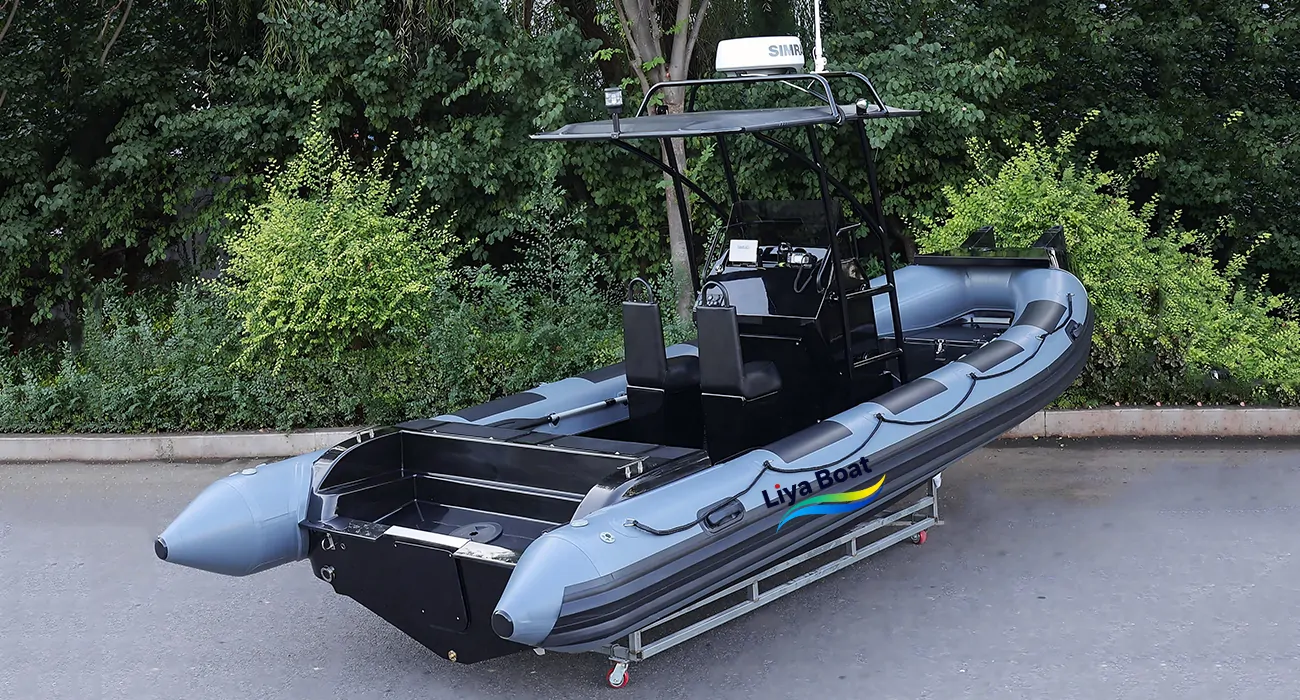


Liya 6.6m Black RIB Boat 200-250HP | 8 Seats | Patrol & Security Craft ![]()
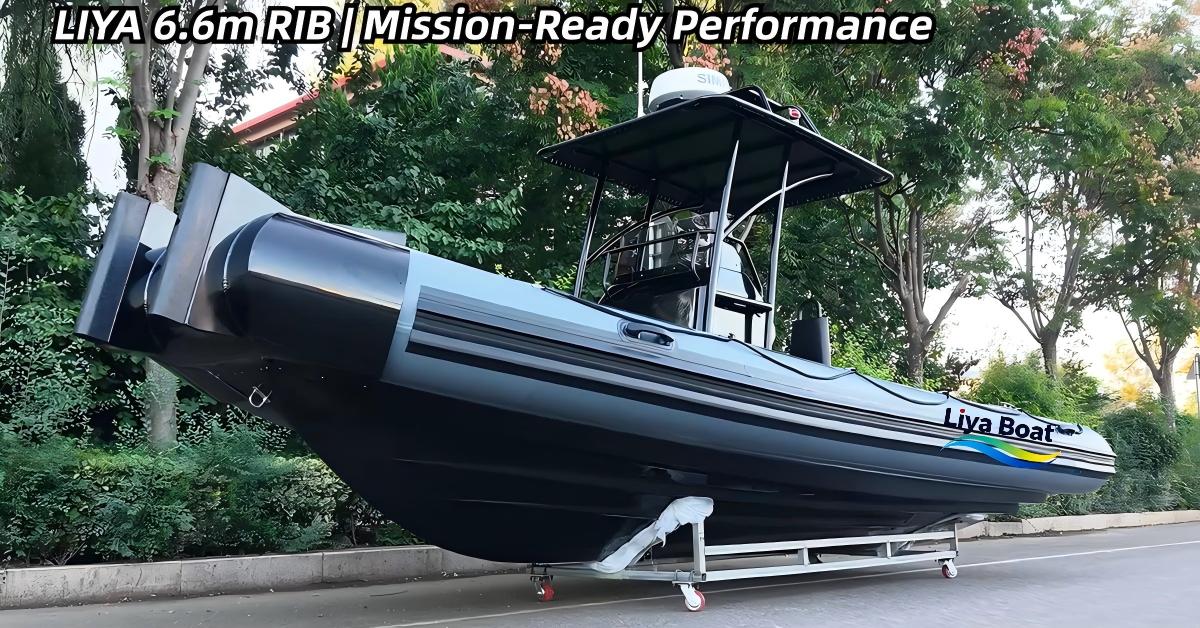
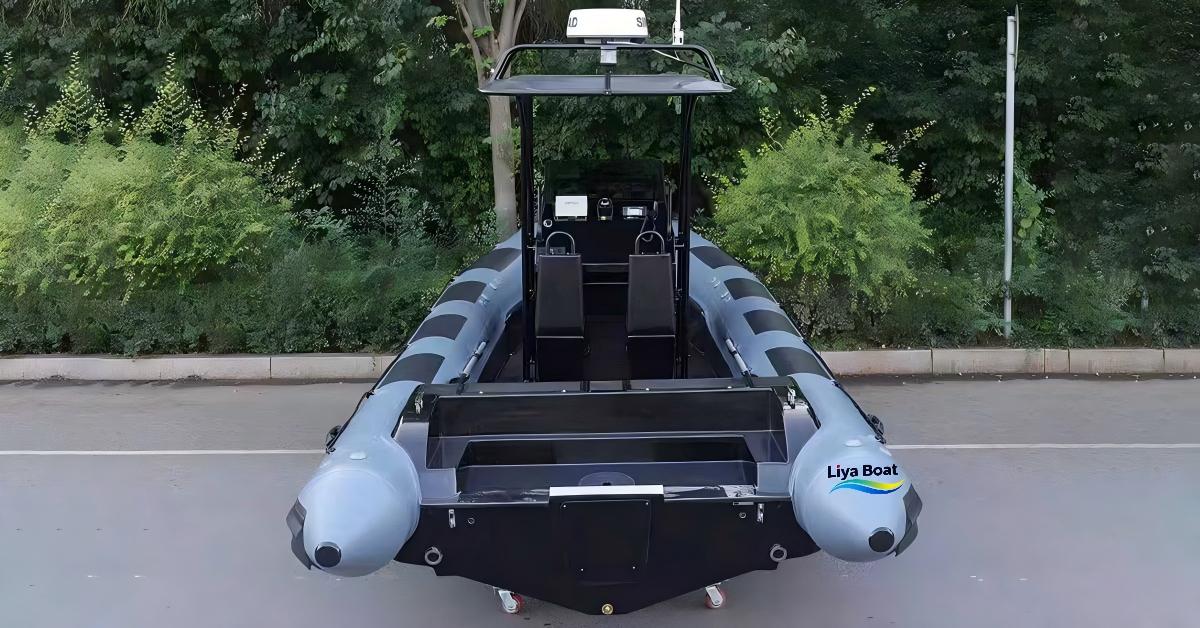
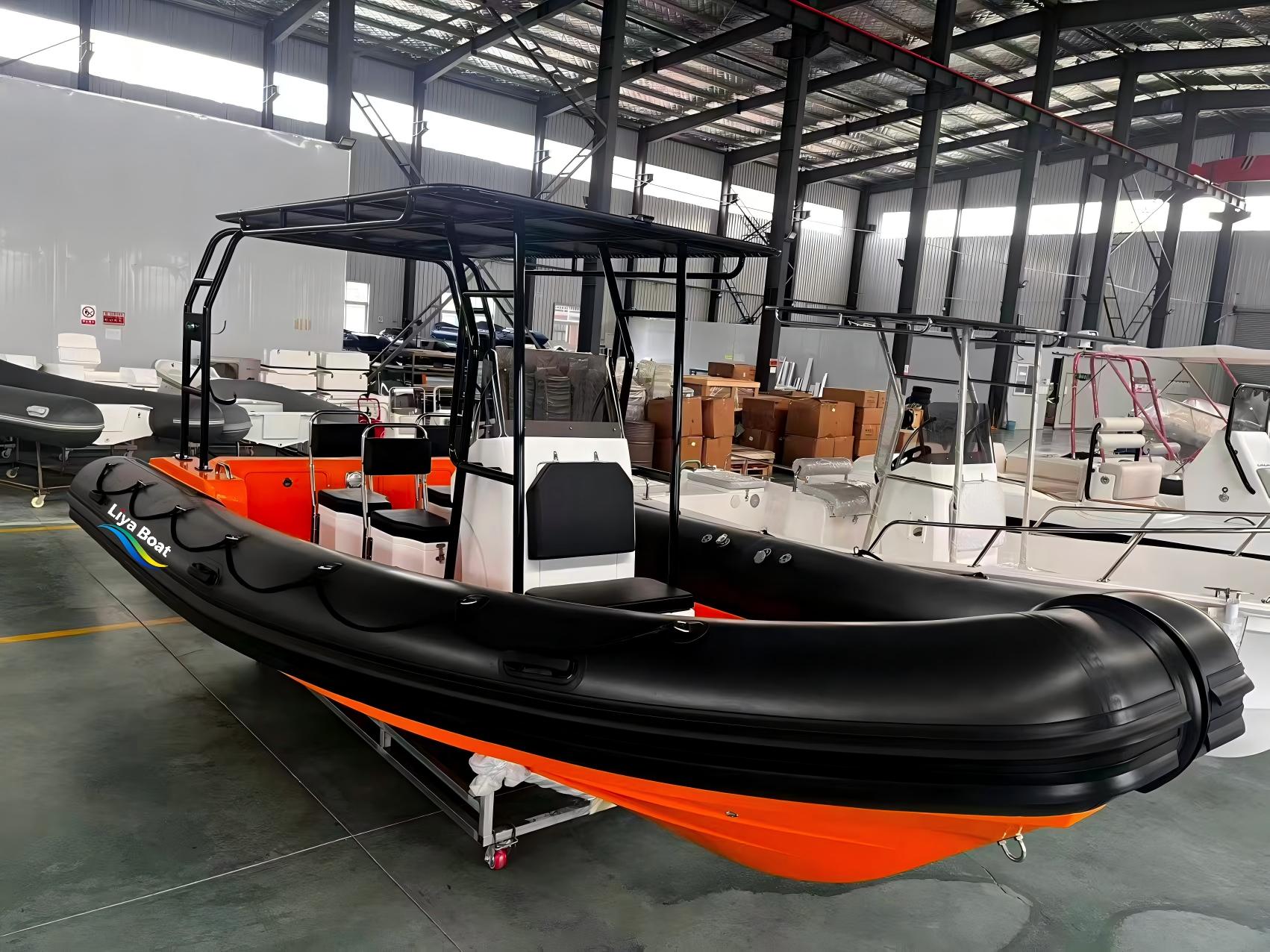
Liya 6.6m | 22FT Professional black patrol and Security grade RIB
➤ ⚫ Tactical Design: Rugged fiberglass hull in low-visibility black or dark grey finish.
➤ Configurable Layout: Flexible seating for 4 to 8 personnel to adapt to mission needs.
➤ High-Performance: Engineered for 200-250HP outboards for pursuit and rapid response.
➤ ️ Mission-Ready Features: Bow impact protection, ample deck storage, and optional solid/inflatable tubes.
➤ Professional Grade: Built to international standards for security, patrol, and utility operations.
➤ ⚫ Tactical Design: Rugged fiberglass hull in low-visibility black or dark grey finish.
➤ Configurable Layout: Flexible seating for 4 to 8 personnel to adapt to mission needs.
➤ High-Performance: Engineered for 200-250HP outboards for pursuit and rapid response.
➤ ️ Mission-Ready Features: Bow impact protection, ample deck storage, and optional solid/inflatable tubes.
➤ Professional Grade: Built to international standards for security, patrol, and utility operations.
-
HYP660
-
Liya Boat
-
8903.190000
-
12 people
-
XL 25''
-
150HP
-
200HP-250HP
库存: 0
Inquire
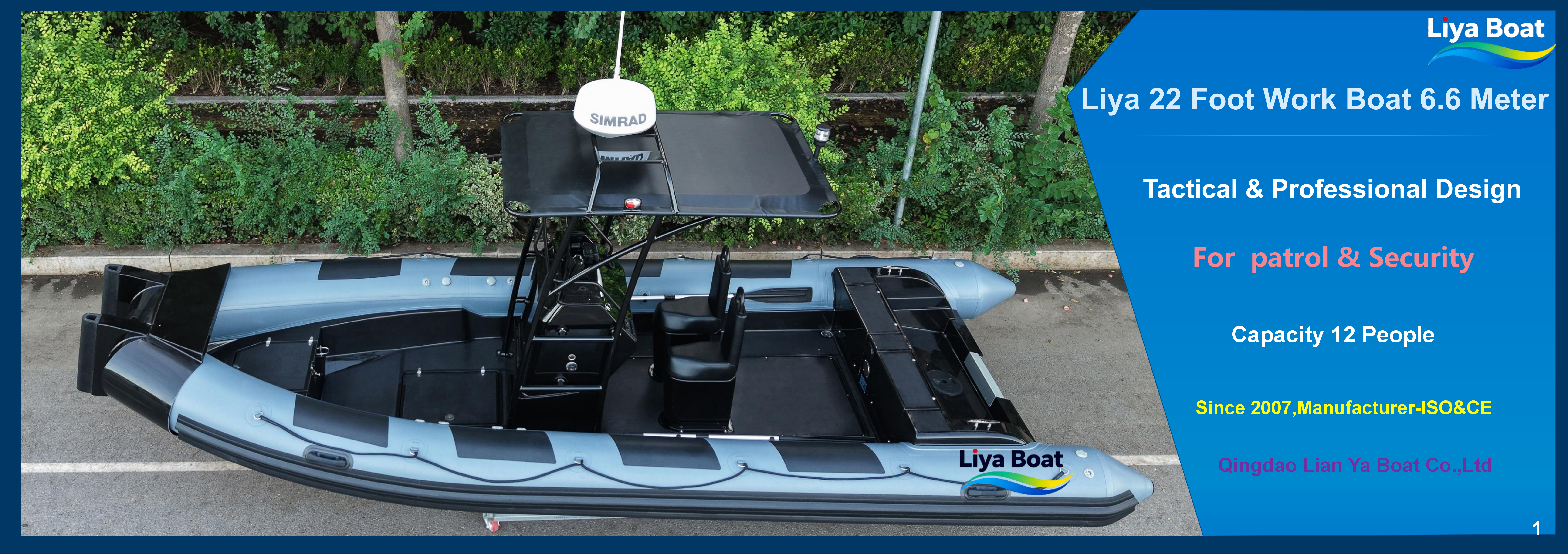
▋Liya 6.6m (22ft) Black/Dark Grey RIB boat is designed and built to stringent international standards,
tailored for institutions and organizations that require reliability, performance, and durability in harsh environments.
▊Superior Structure and Performance
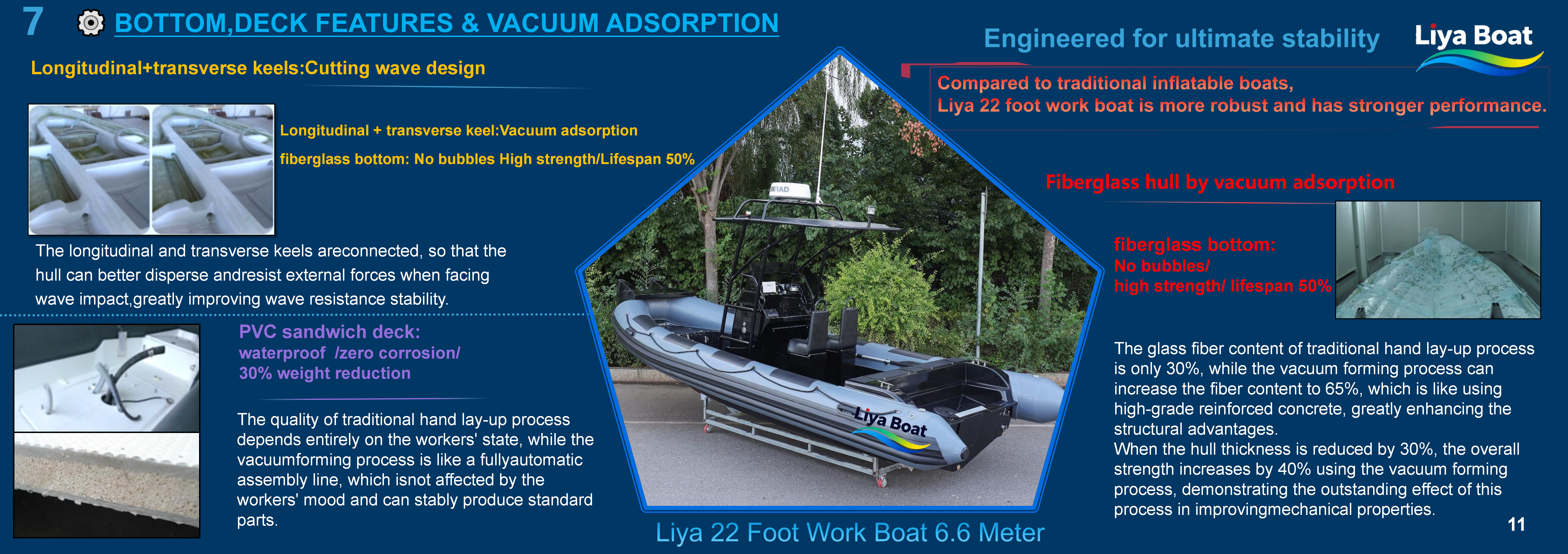
At its heart is a robust, durable deep-V fiberglass hull, finished in tactical black or dark grey to reduce visibility.
The robust hull, coupled with a high-thrust stern, supports 200-250 hp outboard engines,
-providing the superior speed, power, and range required for long-range patrols and rapid deployment.
▊Flexible Mission Configuration
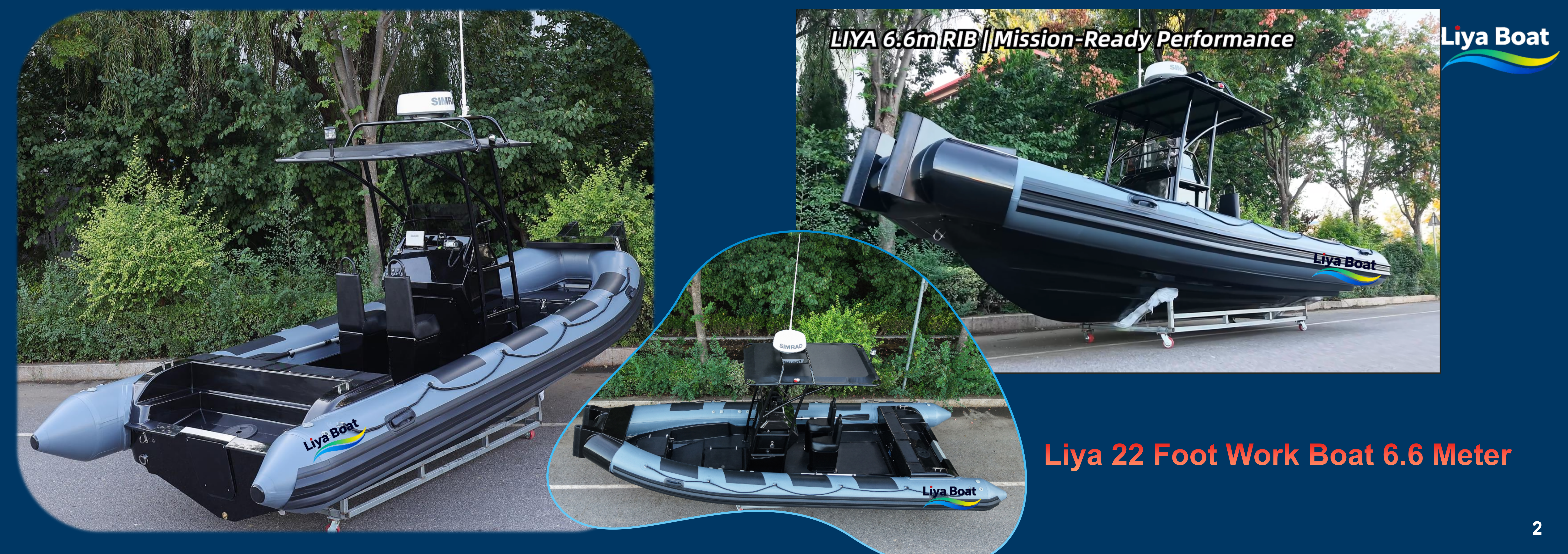
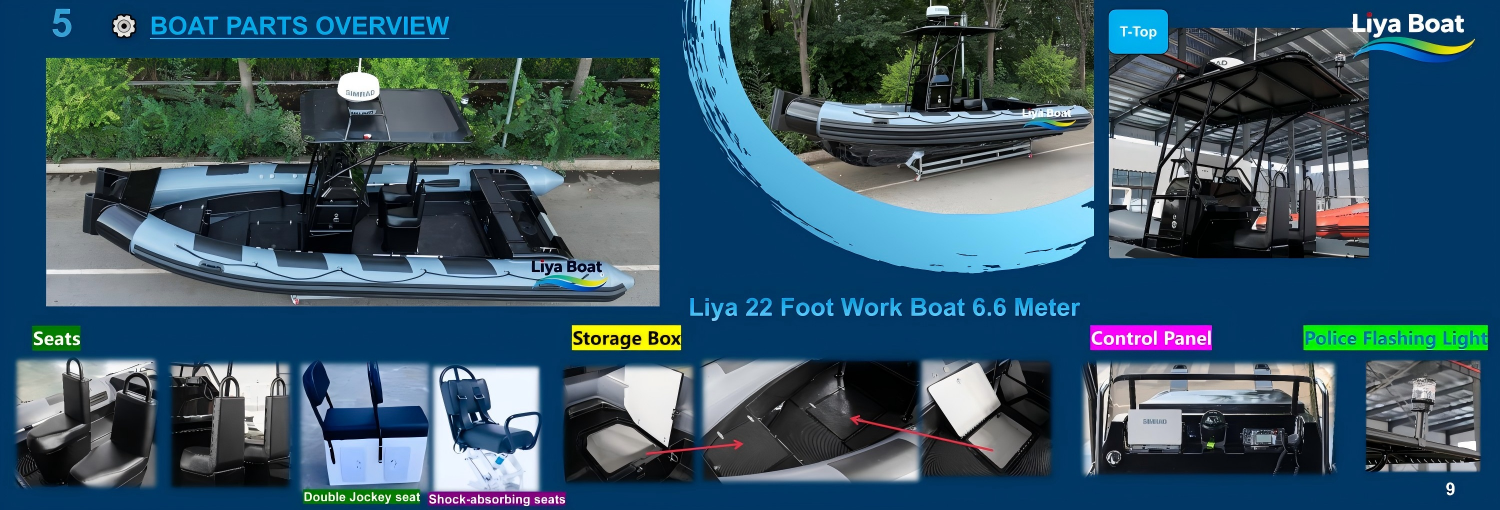
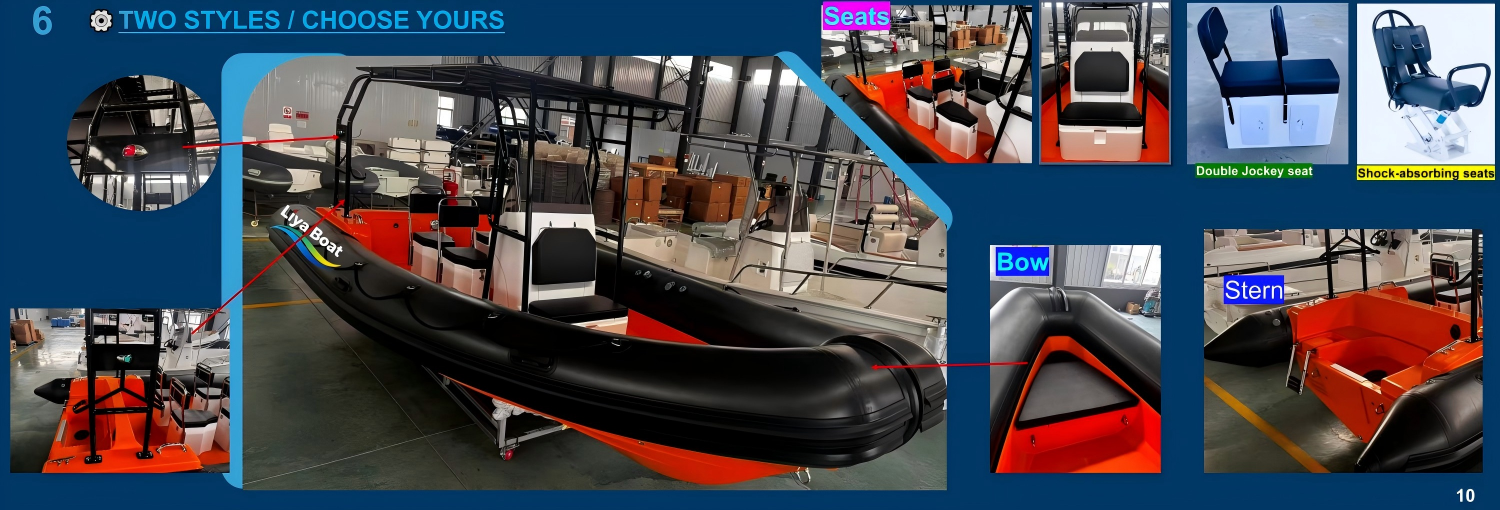
Recognizing that every mission is different, the Liya 6.6m RIB boat features a fully customizable cockpit layout.
It can be configured with 12 people, a spacious self-draining deck providing ample equipment storage,
and an integrated bow protection system to prevent impact damage during berthing operations or in harsh sea conditions.
▋Key Design Choices for Ensuring Operational Integrity
A key operational advantage is the option to use either standard high-pressure inflatable tubing (for optimal performance and sailing experience)
or solid foam-filled tubing.
The latter offers superior puncture and leak-proof performance, ensuring the vessel's integrity in high-risk situations and minimizing downtime.
▋Deployment for Mission-Critical Situations
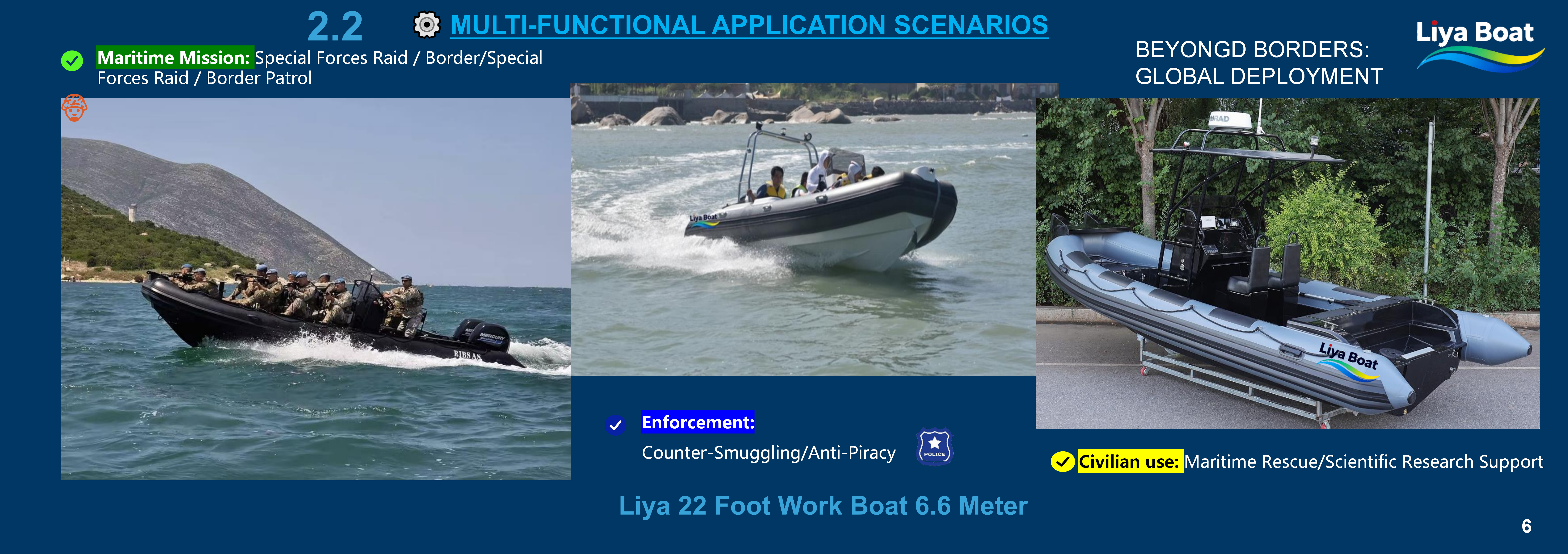
This is not a recreational boat. The Liya 6.6m RIB is ideal for missions such as:
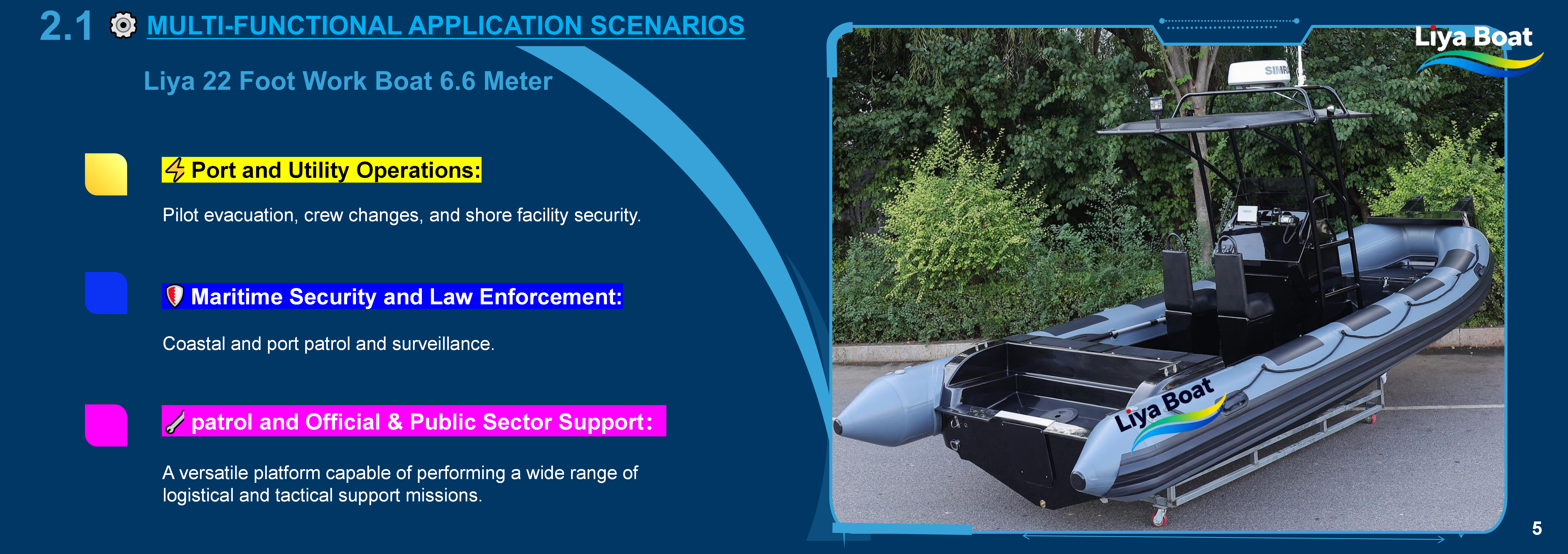
Maritime Security and Law Enforcement: Coastal and port patrol and surveillance.
Port and Utility Operations: Pilot evacuation, crew changes, and shore facility security.
patrol and Office & Public Sector Support: A versatile platform capable of performing a wide range of logistical and tactical support missions.
The Liya 6.6m is durable, high-performing, and ready to be a powerful asset on the water.
 |  |
 |  |
 |  |


Liya 6.6m Black RIB Boat 200-250HP | 8 Seats | Patrol & Security Craft
Close Model Selection
This image includes all accessories. Click on "Non-Required Fields" to deselect the options you don't need,Thanks
Back
Continue


-
 For maritime law enforcement, search and rescue (SAR), and harbor patrol, a vessel is never a mere luxury. It operates as a critical piece of lifesaving equipment every single day. First responders rely on these platforms to survive violent sea states.
 -
 When investing in a RIB Boat, the tube material represents the most critical failure point. It also accounts for a significant portion of the overall vessel cost. Buyers often face conflicting advice driven by brand bias rather than environmental realities.
 -
 A tender is not just a secondary purchase. It serves as the primary logistical lifeline between your mother ship and the shore. You rely on it for every essential provision run. You need it for safe island exploration. Without a reliable vessel, you remain anchored and isolated.
 -
 The world of boating has seen a dramatic shift. Once dominated by heavy, hard-shelled vessels, the market now embraces the versatility and advanced engineering of modern inflatable technology. For many, the idea of a "perfect boat" creates a paradox.