


- Home
- About Liya
- Liya Boats
- Luxury RIB Boats-Fiber Hull
- 8.3m/27Ft Cabin RIB Boat
- 8m/26Ft Sport Fiber RIB Boat
- New 7.5m/25Ft luxury Italy style RIB Boat
- Classic 7.5m/25Ft Rigid Inflatable Boat
- New 6.6m/22Ft Sport RIB Boat
- Classic 6.6m/22Ft Inflatable RIB Boat
- 6.2m/20Ft RIB Fishing Boat
- 5.8m/19Ft Fiberglass hull RIB
- 5.2m/17Ft RIB Boat
- 4.3m/14Ft Yacht Tender RIB Dinghy
- 4.3m/14Ft Center Console RIB Boat
- 3.8m/12.5Ft High Speed RIB Tender
- 3.3m/11Ft RIB Dinghy
- 8.3m/27Ft Cabin RIB Boat
- Open Deck RIBs-Fiber Hull
- Aluminum Hull RIB Boats
- 8-10M Aluminum Patrol RIB
- 7m/23Ft Aluminum RIB Yacht Tender
- 6.6m/22Ft Rigid Aluminum Hull RIB Boat
- 6.2m/20Ft Aluminum RIB Boat with Motor
- 5.8m/19Ft Aluminum Hull RIB Tender Boat
- 5.8-7.5M Transportation RIB
- 5.2m/17Ft Aluminum RIB Center Console Boat
- 4.3m/14Ft Aluminum RIB Dinghy For Sale
- 2.4-5.2m/8-17Ft Aluminum RIB Dinghy
- 8-10M Aluminum Patrol RIB
- Work RHIB-Rescue & Patrol RIBs
- 27Ft Aluminum Patrol Boat Polyurea-EVA Collar Deep-V Hull
- 9-10m/29-34Ft Aluminum Patrol RIB Boat
- Professional 8.3m Heavy-Duty Patrol RIB Boat|Fast-Response,12-Person,CE Certified
- 7.9m/26Ft RHIB for Patrol
- 6.6m/22Ft Black RIB Boat
- 5.8-7.5m/19-25ft Heavy Duty RIB Patrol & Work Boat
- 5.8-7.5m/19-25Ft Aluminum RIB Work Boat
- 27Ft Aluminum Patrol Boat Polyurea-EVA Collar Deep-V Hull
- Fiberglass Boats/Fishing Boats
- 7.6m/25Ft Fiberglass Panga Boat for Fishing
- Liya 45ft Fiberglass Cabin Fishing Boat Passenger Tour Vessel
- 9.18m/30Ft Fiberglass Cabin Fishing Boat
- 6.6m/22Ft Fiberglass Panga Skiff Boat
- 6m/20Ft Center Console Fishing Boat
- 5.8m/19Ft Center Console Panga Fishing Boat
- 5m/16.5Ft Economical Fiberglass Boat
- 7.6m/25Ft Fiberglass Panga Boat for Fishing
- Ferry & Transportation Boats
- Fully Inflatable Boats
- Luxury RIB Boats-Fiber Hull
- Application
- Hot Sale
- News
- Feature & Service
- Work RHIBs
- Contact Liya



Liya 7.5m 25ft RIB Boat for 16 Passengers, Single or Twin Engine Options ![]()
Discover the Liya 7.5m (25ft) Rigid Inflatable Boat - a versatile, CE-certified RIB designed for 16 passengers.
- Perfect for fishing expeditions, leisure cruising, and commercial applications, this high-performance boat combines stability, safety, and customization.
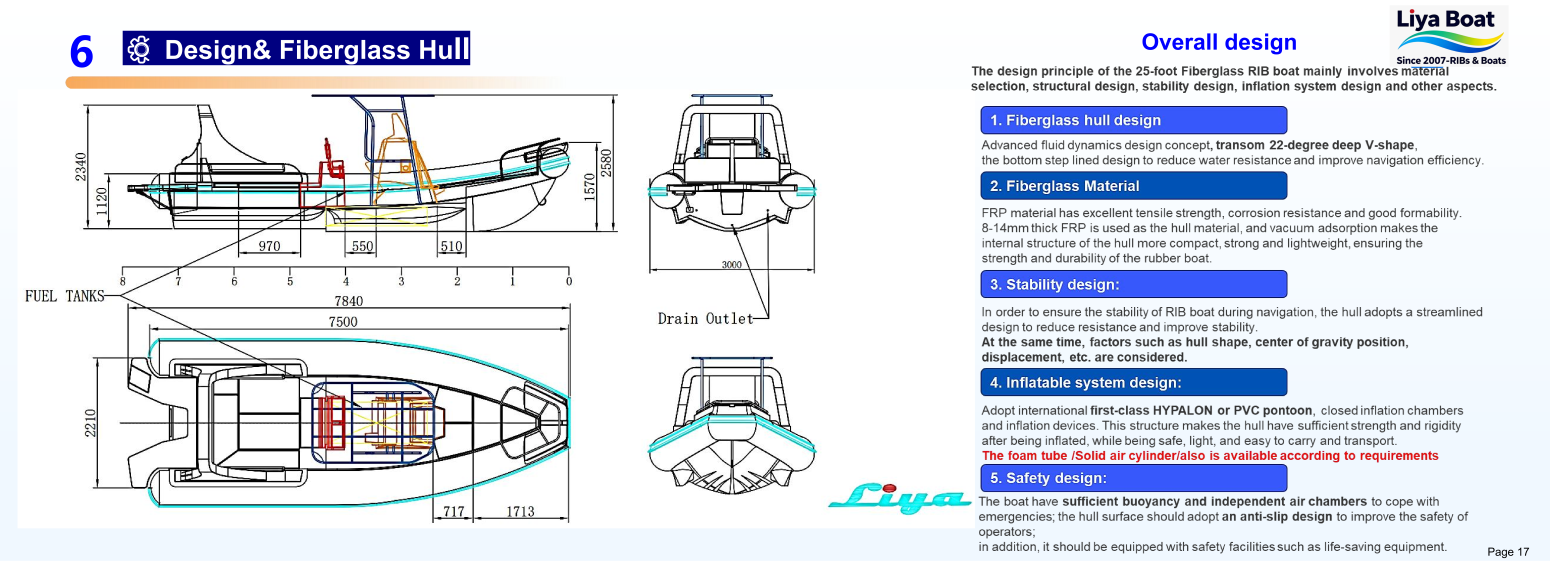
- Featuring a deep-V 26° hull for smooth navigation, flexible single or twin engine configurations (250-500HP), and a robust 450L fuel tank, it ensures extended adventures.
- With optional fishing accessories, removable sun pads, and a practical swim platform with ladder, this RIB adapts to your needs for work or pleasure.
-
Classic HYP750
-
Liya Boat
-
8903.190000
-
16 Person
-
XL 25''
-
250HP(single)/2x115(twin)
-
300HP(single)/ 2x150(twin)
库存: 0
Inquire
▍Liya 7.5m 25ft Rigid Inflatable Boat - Ultimate Versatility on Water
▍Liya 25 Foot Semi Rigid Inflatable Boat Videos
▍Design & Performance
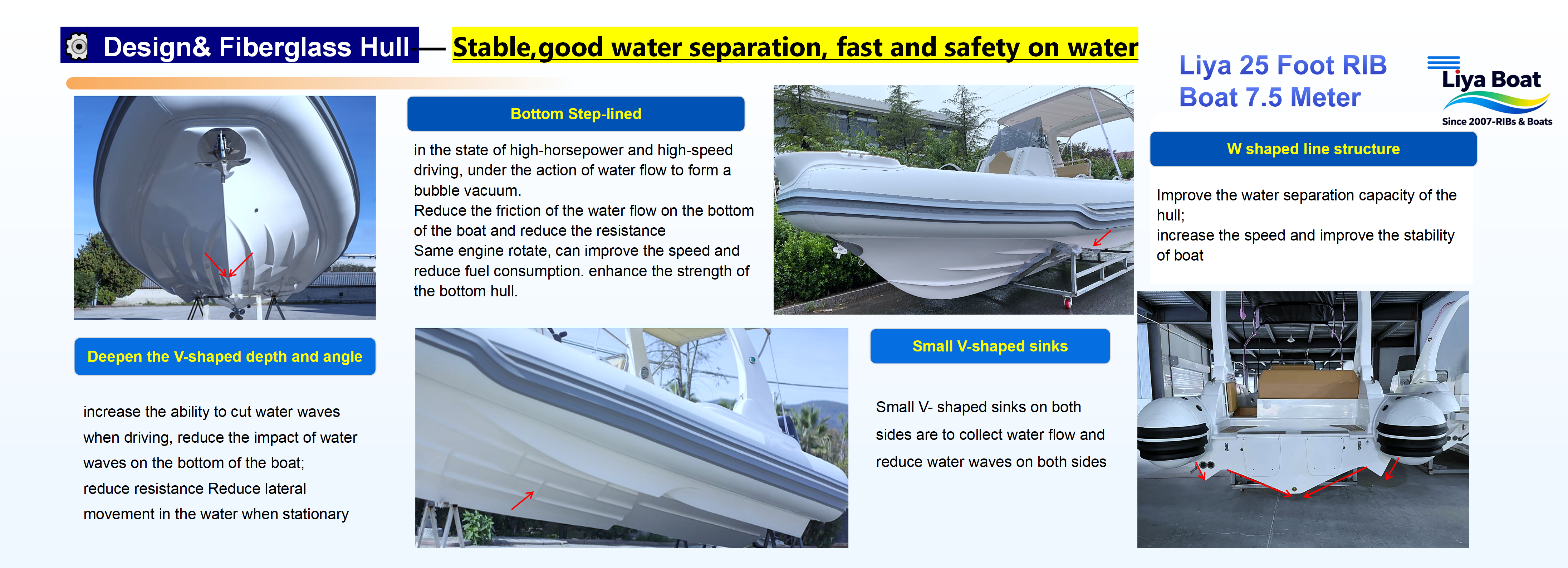
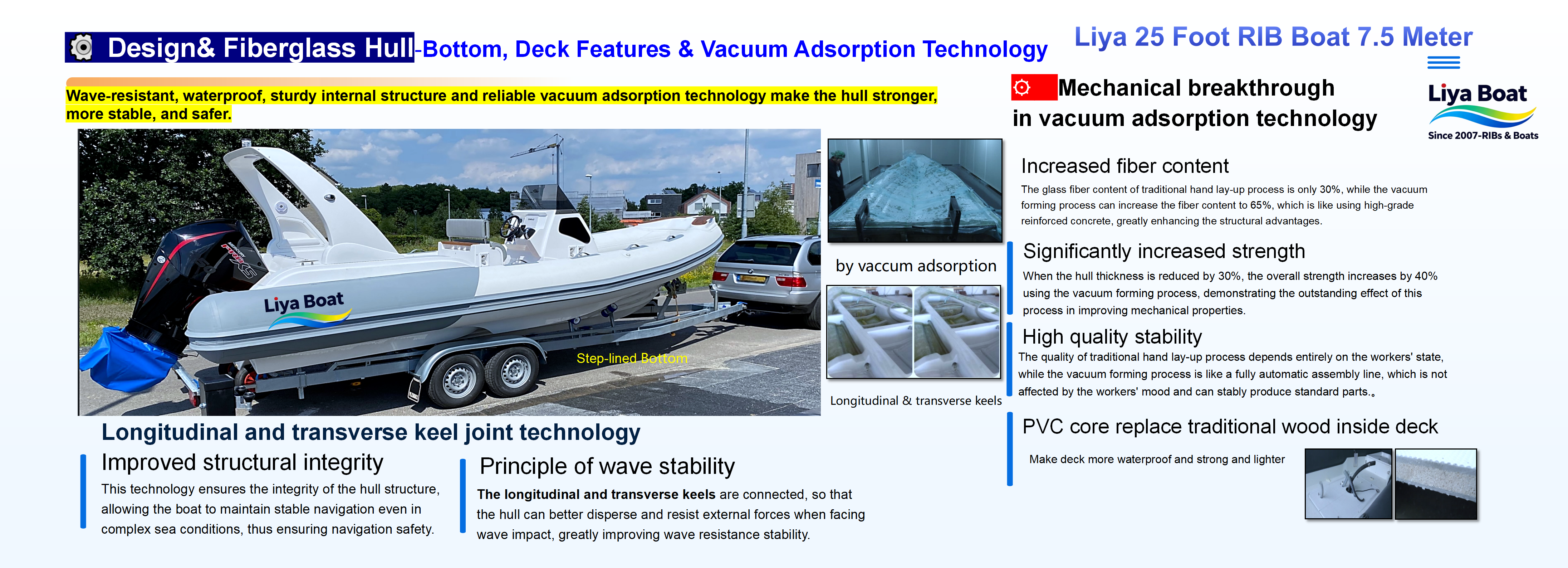
Engineered with a stepped deep-V 26° hull for exceptional stability and speed, the Liya 25ft RIB ensures a comfortable ride even in choppy conditions.
Choose between single (250-300HP) or twin engine setups (recommended 2*150HP max) to match your performance requirements.
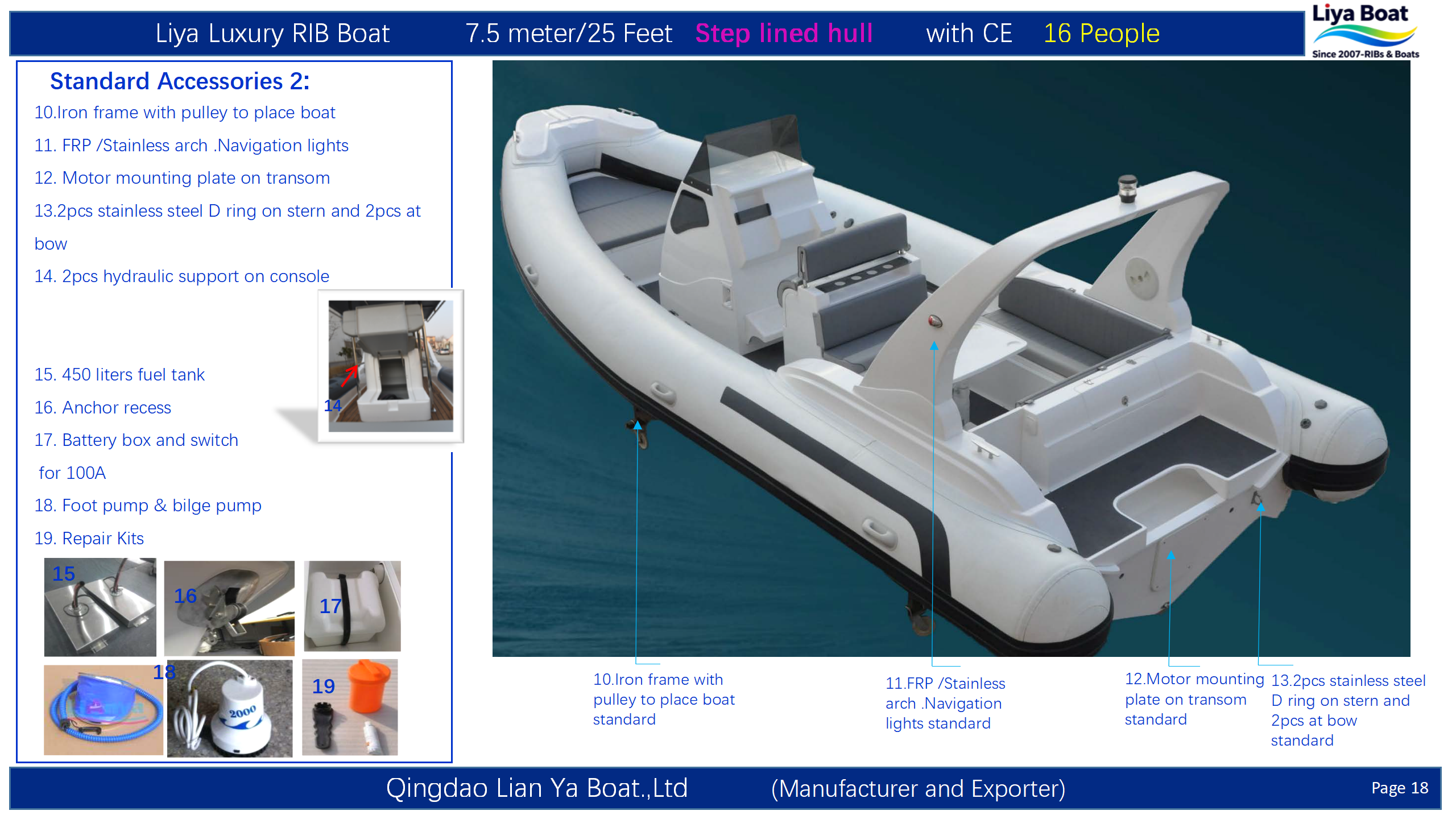
The 450L fuel tank supports long-range trips, making it ideal for fishing, exploration, and leisure activities.

▍Key Features & Configurations

Spacious Console:
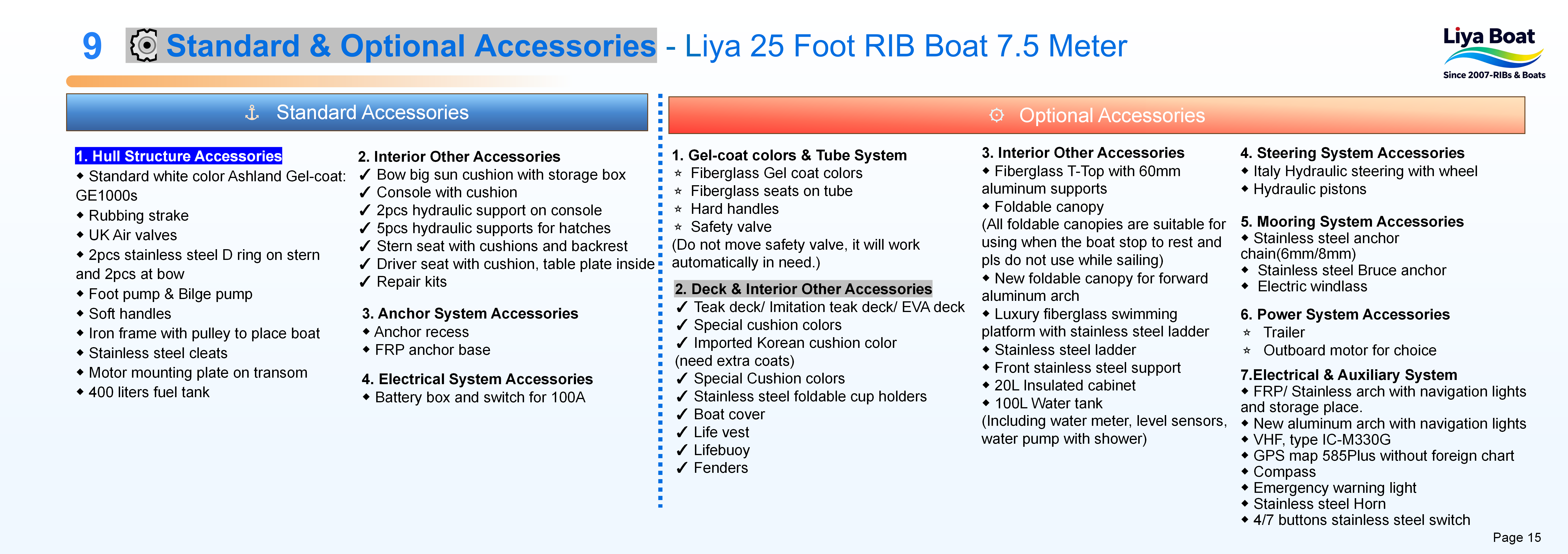
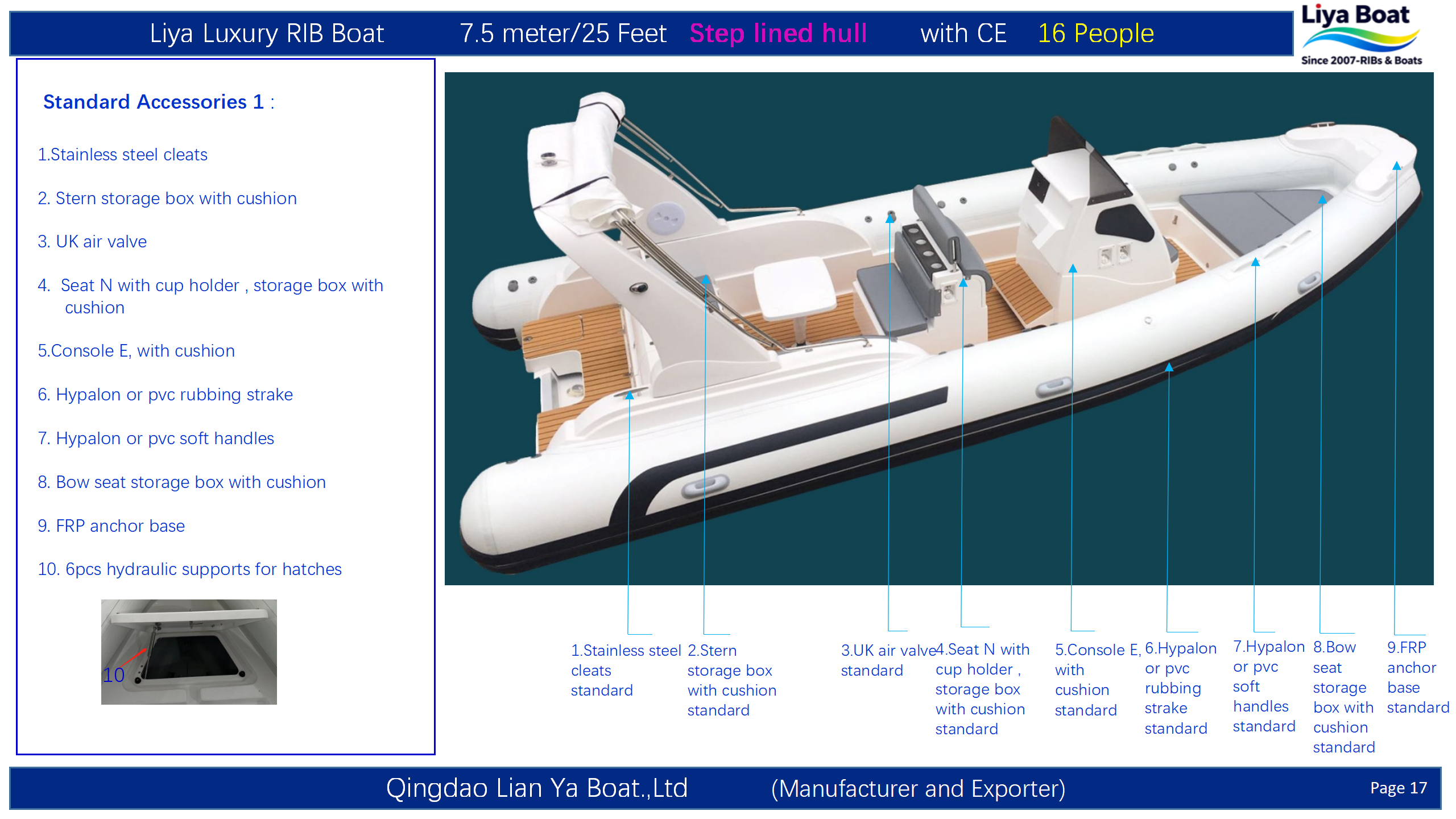
Padded console with ample storage, optional stainless steel cup holders, and easy access for maintenance.
Flexible Seating:
Two helm seat options and a convertible pilot seat for sitting or standing operation.
Custom Swim Platform:
Choice of luxury or classic platform with ladder and grab rails; removable for twin-engine installation.
Practical Add-ons:
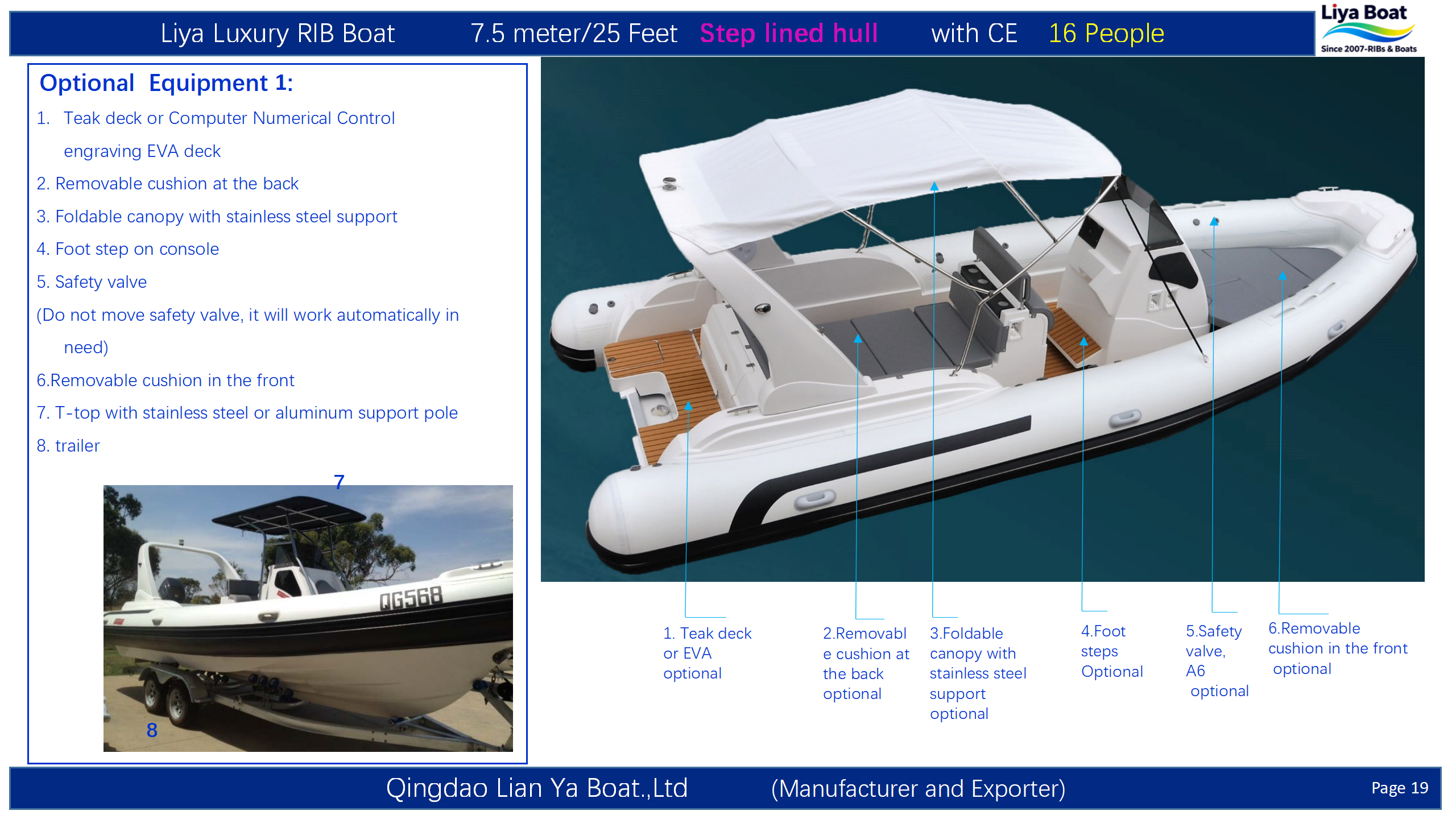
Options include T-top canopy, sun shade, fishing rod holders, water shower, tow bar for water sports, and removable glass fiber table.
Safety & Drainage:
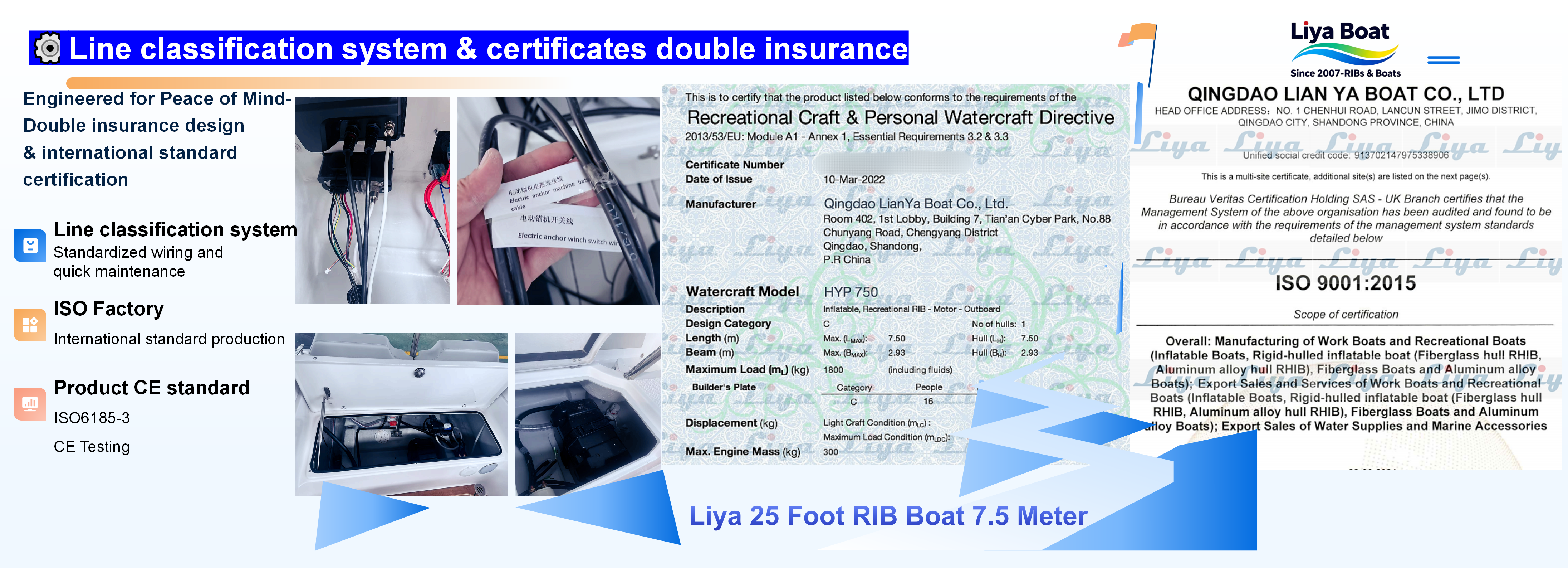
CE certified, built-in deck drainage, and navigation light options for secure outings.

▍Specifications & Options
Length: 7.5m (25ft)
Capacity: 16 persons
Fuel Tank: 450L
Hull: Deep-V 26° fiberglass
Engine: Single 250-300HP or Twin up to 2*150HP
Certification: CE marked
Extras: Portable toilet compatible, bow/rear sun pads, stainless or aluminum T-top, fishing accessories.



Liya 7.5m 25ft RIB Boat for 16 Passengers, Single or Twin Engine Options
Close Model Selection
This image includes all accessories. Click on "Non-Required Fields" to deselect the options you don't need,Thanks
Back
Continue


-
 The Liya 7.5 meter Classic Hypalon RIB Boat has received widespread acclaim from customers for its outstanding performance and flexible design. This 25 foot RIB inflatable boat with outboard motor, certified by ISO and CE, is safe and reliable. Customers have praised its stability and safety at sea.
 -
 This is Liya Boat`s new rib boat 25 feet semi-rigid boats hypalon boats developed together with Italian clients... ...More details contact us immediately.
 -
 Liya 27 Foot Rigid Inflatable Boats (RIB) has won wide acclaim in the European, American and African markets for its excellent performance and user-friendly design. This boat combines comfort and practicality, and is particularly suitable for vacation and leisure entertainment. Its power system can
 -
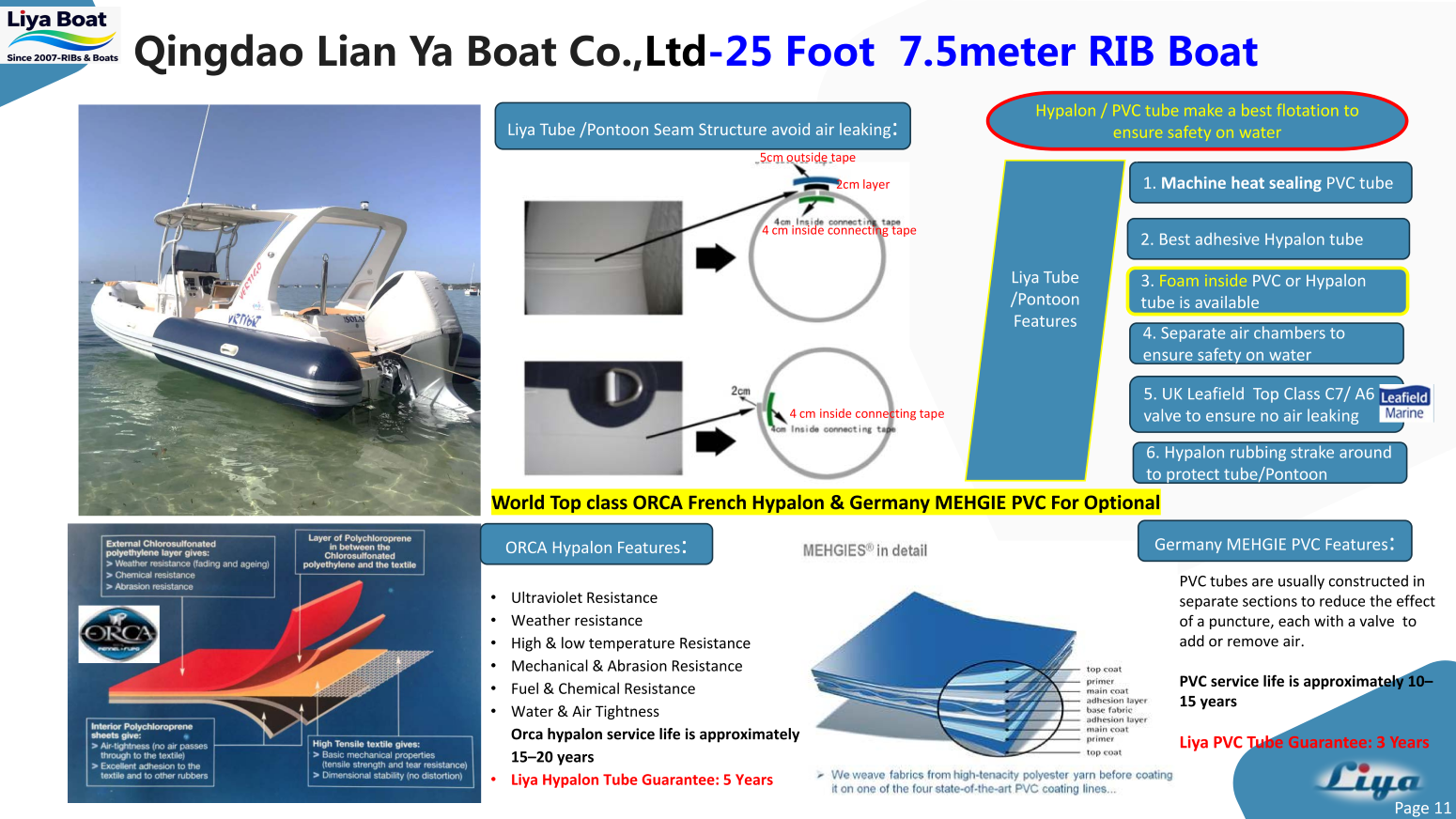
 The reason why Liya Boat is slightly more expensive than competitor is mainly due to its excellent material quality, strict production standards and professional technical accumulation. First, The tube material is made of the world's top materials.1. ORCA Hypalon imported from France has the charact


