- Home
- About Liya
- Liya Boats
- Luxury RIB Boats-Fiber Hull
- 8.3m/27Ft Cabin RIB Boat
- 8m/26Ft Sport Fiber RIB Boat
- New 7.5m/25Ft luxury Italy style RIB Boat
- Classic 7.5m/25Ft Rigid Inflatable Boat
- New 6.6m/22Ft Sport RIB Boat
- Classic 6.6m/22Ft Inflatable RIB Boat
- 6.2m/20Ft RIB Fishing Boat
- 5.8m/19Ft Fiberglass hull RIB
- 5.2m/17Ft RIB Boat
- 4.3m/14Ft Yacht Tender RIB Dinghy
- 4.3m/14Ft Center Console RIB Boat
- 3.8m/12.5Ft High Speed RIB Tender
- 3.3m/11Ft RIB Dinghy
- 8.3m/27Ft Cabin RIB Boat
- Open Deck RIBs-Fiber Hull
- Aluminum Hull RIB Boats
- 8-10M Aluminum Patrol RIB
- 7m/23Ft Aluminum RIB Yacht Tender
- 6.6m/22Ft Rigid Aluminum Hull RIB Boat
- 6.2m/20Ft Aluminum RIB Boat with Motor
- 5.8m/19Ft Aluminum Hull RIB Tender Boat
- 5.8-7.5M Transportation RIB
- 5.2m/17Ft Aluminum RIB Center Console Boat
- 4.3m/14Ft Aluminum RIB Dinghy For Sale
- 2.4-5.2m/8-17Ft Aluminum RIB Dinghy
- 8-10M Aluminum Patrol RIB
- Work RHIB-Rescue & Patrol RIBs
- 27Ft Aluminum Patrol Boat Polyurea-EVA Collar Deep-V Hull
- 9-10m/29-34Ft Aluminum Patrol RIB Boat
- Professional 8.3m Heavy-Duty Patrol RIB Boat|Fast-Response,12-Person,CE Certified
- 7.9m/26Ft RHIB for Patrol
- 6.6m/22Ft Black RIB Boat
- 5.8-7.5m/19-25ft Heavy Duty RIB Patrol & Work Boat
- 5.8-7.5m/19-25Ft Aluminum RIB Work Boat
- 27Ft Aluminum Patrol Boat Polyurea-EVA Collar Deep-V Hull
- Fiberglass Boats/Fishing Boats
- 7.6m/25Ft Fiberglass Panga Boat for Fishing
- Liya 45ft Fiberglass Cabin Fishing Boat Passenger Tour Vessel
- 9.18m/30Ft Fiberglass Cabin Fishing Boat
- 6.6m/22Ft Fiberglass Panga Skiff Boat
- 6m/20Ft Center Console Fishing Boat
- 5.8m/19Ft Center Console Panga Fishing Boat
- 5m/16.5Ft Economical Fiberglass Boat
- 7.6m/25Ft Fiberglass Panga Boat for Fishing
- Ferry & Transportation Boats
- Fully Inflatable Boats
- Luxury RIB Boats-Fiber Hull
- Application
- Hot Sale
- News
- Feature & Service
- Work RHIBs
- Contact Liya

Inquire
For maritime law enforcement, search and rescue (SAR), and harbor patrol, a vessel is never a mere luxury. It operates as a critical piece of lifesaving equipment every single day. First responders rely on these platforms to survive violent sea states. Procurement officers and agency commanders face an overwhelming market of supposedly professional boats. Unfortunately, many options are merely repurposed leisure crafts lacking genuine commercial-grade durability. These inadequate vessels quickly fail under the immense physical stress of active duty.
True professional-grade Rigid Inflatable Boats (RIBs) combine extreme maneuverability, incredibly shallow drafts, and virtually unsinkable platforms. This guide unpacks the strict engineering standards, complex material choices, and efficient procurement frameworks required today. We will help you evaluate and acquire the absolute right RIB for high-stakes missions. You will finally understand how to separate real workboats from recreational toys.
Key Takeaways
Material dictates mission capability: Deep-V fiberglass hulls excel in high-speed operational intercepts, while 5083/5086 marine-grade aluminum provides unyielding strength for high-impact rescue and beaching.
Tube technology is about reserve safety, not primary buoyancy: The rigid hull provides inherent floatation; the heavy-duty Hypalon or hybrid-foam collar acts as a shock absorber, fender, and reserve buoyancy system.
Standardization solves procurement bottlenecks: Opting for standardized, fully-loaded platforms from a vetted RIB Boat manufacturer can reduce 1-2 year custom-build lead times to mere weeks.
Compliance is non-negotiable: Viable patrol vessels must meet strict ABYC, EPA, USCG, or MCA commercial coding standards.
The Operational Standard: Differentiating "Commercial-Grade" from Leisure RIBs
Agencies often waste vital budgets on inadequate vessels. These boats look aggressive on glossy brochures. Yet, they fail dramatically under heavy offshore use. Rapid deployment scenarios quickly expose their structural weaknesses. Leisure boats prioritize cup holders and sun pads. Professional missions require unobstructed decks and rugged reliability. You need strict commercial-grade standards.
Hull Dynamics
Deep-V hulls represent a non-negotiable feature. Builders must include wide reversed chines. Double spray rails are equally critical. They force water downward and away. This ensures immediate planing capabilities. You stay perfectly dry during choppy water operations. A dry crew remains alert and focused. The hull shape slices through waves aggressively. It prevents the bone-jarring slamming typical of flat-bottom designs.
Deck Engineering
Self-bailing cockpits handle breaking waves effortlessly. Water drains instantly through large scuppers. You never worry about swamping the vessel. Heavy-duty reinforced transoms are another absolute necessity. They must support twin or quad high-horsepower outboards securely. The sheer torque of tactical driving demands immense transom strength. Fiberglass decks use a PVC core instead of traditional plywood as the internal material, making them stronger, lighter, and more waterproof. We also recommend using non-slip EVA or composite decks for added stability in emergencies.
Ergonomics & Visibility
Operators require forward-positioned consoles. These setups maximize aft deck space drastically. You gain room for medical stretchers. Tactical gear fits without cluttering walkways. Builders install shock-mitigating seating for the crew. These specialized seats absorb massive impacts. They save operators from chronic spinal injuries over time. Console layouts must prioritize intuitive switch placements. Sirens and radios must sit within arm's reach. A forward console provides unobstructed sightlines. Night operations demand this clear visibility. You spot hazards much earlier. It makes close-quarters harbor maneuvering infinitely safer.
Hull Materials: Matching the Platform to the Mission Profile
You must match the platform to your specific mission profile. The choice between fiberglass and aluminum defines the lifespan of the vessel. It alters your maintenance cycle heavily. It establishes absolute operational limits. Every agency faces unique environmental challenges. Your hull material must conquer those exact challenges.
Marine-Grade Aluminum (5083/5086)
We highly recommend 5083 or 5086 aluminum. It is best for heavy-duty search and rescue. It handles debris-filled waters easily. Submerged logs or rocks rarely pierce it. Beach landings become routine rather than risky. Boarding operations benefit from its rugged exterior. Look for continuous longitudinal stringers underneath the deck. They should measure 6mm to 10mm thick. They prevent the hull from flexing under severe impact. Aluminum dents instead of shattering. You can weld repairs quickly in remote locations.
Advanced Fiberglass / Composite
Advanced fiberglass offers entirely different advantages. It is best for highway patrol support on water. It excels during rapid interception pursuits. Swift-water response teams love its agility. Top builders use vacuum-infused laminate construction techniques. They draw resin through the fiberglass under intense pressure. This eliminates weak air pockets entirely. It reduces overall weight significantly. Rigidity remains exceptionally high across the hull. You gain maximum speed and impressive fuel efficiency. A well-built RIB Boat utilizes these exact materials. It allows you to match your fleet perfectly to your local sea state.
Chart 1: Hull Material Comparison Matrix | ||
Evaluation Dimension | Marine-Grade Aluminum (5083/5086) | Advanced Fiberglass / Composite |
|---|---|---|
Best Mission Profile | Heavy-duty SAR, debris-filled waters, beaching | Highway patrol, rapid interception, swift-water |
Engineering Markers | Continuous longitudinal stringers (6mm-10mm) | Vacuum-infused laminate construction |
Impact Behavior | Dents upon severe impact; highly weldable | Maintains rigid shape; resists structural fatigue |
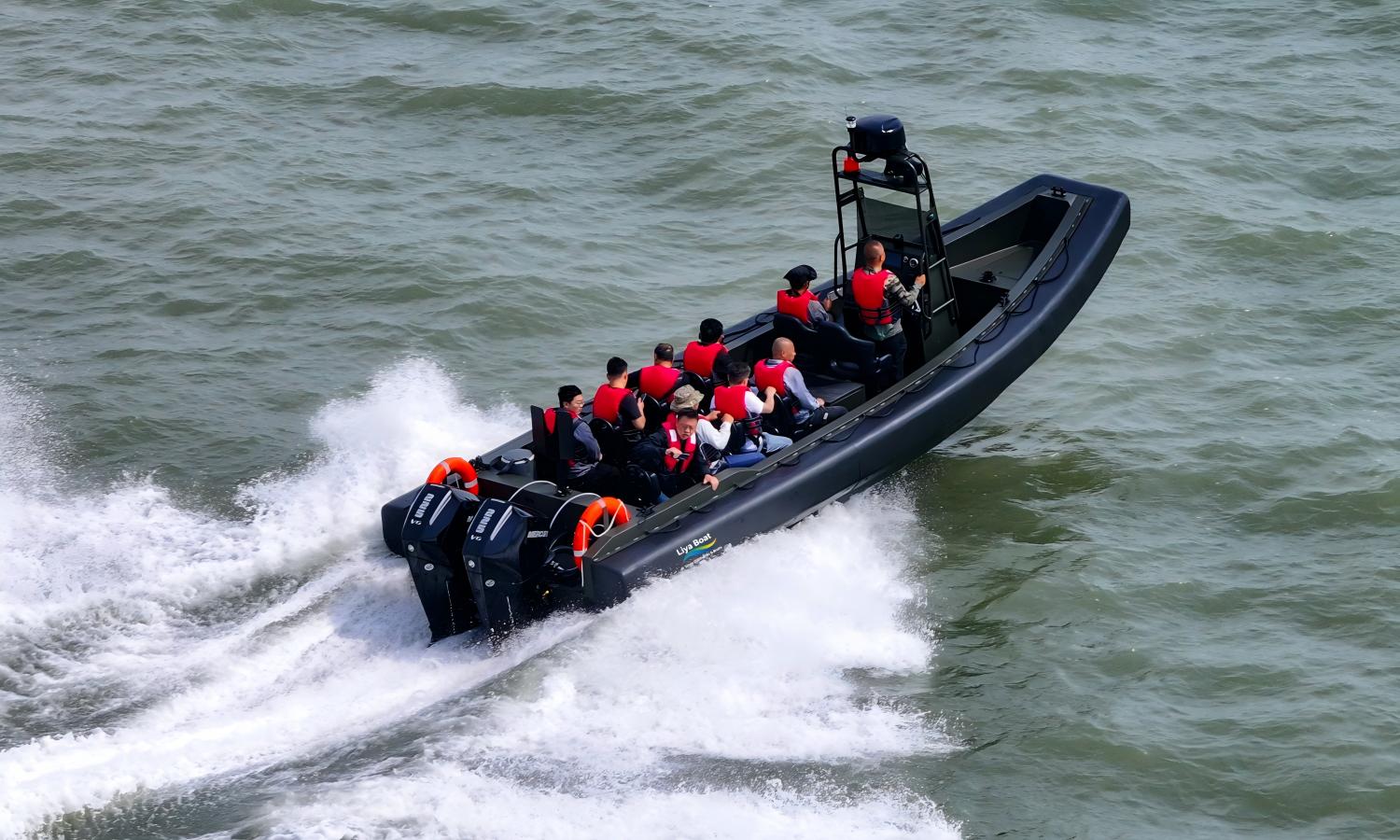
Collar Engineering: Demystifying Tube Buoyancy and Ballistic Protection
We must address a widespread myth first. A punctured collar does not equal a sunk boat. Commercial RIBs possess immense inherent hull buoyancy. The rigid hull floats perfectly on its own.
Collar Configurations
You have two primary options for collar design. Each serves distinct tactical purposes.
Air-Filled Hypalon: Use military-grade ORCA Hypalon for standard duties. It requires triple-bonded seams for maximum durability. Pressure relief valves are essential to prevent blowouts in hot weather. Multi-chambered designs protect the crew continuously. They isolate damage completely. This prevents catastrophic deflation from a single puncture.
Hybrid Foam / Foam-Shielded: Tactical law enforcement faces highly unique risks. Ballistic threats are real in interdiction scenarios. Extreme abrasion from jagged rocks occurs during coastal rescues. Foam-filled D-tubes or collars answer these challenges perfectly. They ensure 100% operational continuity. You keep moving at top speed even if the collar is fully breached by gunfire.
The True Function of the Collar
The collar acts as a built-in heavy-duty rub rail. You can safely execute alongside-boarding of suspect vessels. It protects both hulls from crushing damage. It also defends against brutal dock collisions during rapid deployment. Most importantly, it provides unmatched dynamic stability. As the boat banks sharply, the collar grips the water. Tight, high-speed turns feel incredibly secure. Operators maintain control in pursuing elusive targets.
Navigating Procurement: Custom Builds vs. Standardized Platforms
The business-to-business purchasing process brings significant pain points. Traditional customized boat building forces agencies into agonizing delays. Agencies often endure 12-to-24-month lead times. Endless design approvals cause immense frustration. Budget overruns complicate municipal funding approvals.
The Standardization Approach
Leading manufacturers completely revolutionized this process. They now offer highly standardized platform lengths.
Inventory Availability: Builders keep 21ft, 26ft, and 29ft hulls in inventory. They pre-engineer these lengths for specific operational roles.
"Fully-Loaded" Integration: The platforms arrive pre-configured. They include mission-critical, compliant accessories out of the box. You receive spine board mounts natively integrated. Standardized watertight storage comes built-in. Weapon mounts and dive ladders are firmly attached. Integrated emergency lighting packages operate perfectly from day one.
Risk Reduction: You avoid untested prototype designs. Field-tested platforms guarantee immediate performance and crew safety.
Acquisition Frameworks
You should leverage established government purchasing vehicles. The GSA Advantage program helps US agencies drastically. The 1122 Program is another powerful acquisition tool. You bypass prolonged, messy bidding wars completely. Federal pricing becomes highly accessible for local departments. You ensure rapid delivery for your unit. Weeks replace years in your procurement timeline. State and municipal grants often require strict deadline adherence. Standardized platforms align perfectly with these funding windows. You avoid losing grant money due to manufacturing delays. Always ask vendors about their active contract vehicles early.
Vetting a RIB Boat Manufacturer: A Decision-Maker’s Checklist
You need an evaluation framework to filter out unreliable vendors. You must ensure long-term fleet support. A sleek website does not guarantee marine engineering excellence.
Engineering Transparency
Ask vendors for comprehensive spec sheets immediately. Do they provide exact dry weight data? Maximum payload numbers are critically important. Passenger (Pax) limits must be crystal clear. Fuel capacity against specific sea states matters immensely. Honest builders publish these metrics proudly.
Modular Propulsion Expertise
A truly capable RIB Boat manufacturer accommodates your mechanical preferences easily. They install heavy-duty outboard motors flawlessly. They can fit inboard diesels if requested. They handle waterjet configurations for extreme shallow-water missions. Some even transition fleets to low-acoustic all-electric drives for stealth operations. They understand complex propulsion mechanics deeply.
Post-Delivery Support & Compliance
Ensure the builder holds a pristine compliance track record. They must meet MCA commercial ratings consistently. USCG regulations are absolutely mandatory for patrol work. They should provide a very clear methodology for the future. Parts replacement must be simple and rapid. Warranty claims need quick, painless resolutions. They must offer comprehensive operator training directly. Your crew needs hands-on instruction to handle these powerful machines safely.
Conclusion
The best RIB boat for law enforcement or rescue is highly specialized. It is engineered specifically for the harsh realities of the job. It is never adapted lazily from the recreational market. Your crew deserves uncompromising structural integrity and absolute safety.
Prioritize Material Transparency: Understand exactly why you need marine-grade aluminum or advanced composites for your specific waterways.
Demand Redundant Collar Systems: Choose multi-chambered Hypalon or foam-filled collars to guarantee operational continuity during chaotic incidents.
Embrace Standardized Platforms: Streamline your procurement paths by choosing pre-configured, compliance-ready models.
We strongly encourage procurement teams to act decisively. Request detailed technical specification sheets today. Consult directly with vetted builders on standardized versus mission-specific engineering requirements. Equip your responders with the tools they actually need to save lives.
FAQ
Q: Do RIB boats rely entirely on the inflatable collar to float?
A: No. Commercial-grade rigid hulls possess their own inherent buoyancy. The collar provides reserve floatation, extreme dynamic stability, and shock absorption during boarding operations.
Q: What is the typical lifespan of a professional RIB boat's inflatable tube?
A: With high-grade materials like ORCA Hypalon, UV protection, and multi-chambered construction, tubes can last 10-15 years in commercial environments. Many manufacturers also design collars to be completely removable and replaceable to extend the hull's operational life.
Q: Why should an agency consider standardized RIB models over fully custom designs?
A: Standardized models dramatically reduce procurement lead times from years to weeks. They are pre-engineered to meet stringent compliance standards and come pre-loaded with vetted tactical and rescue integrations, reducing testing and configuration risks.

Welcome To Contact Us

-
 Choosing the hull material is one of the main decisions when buying a rigid-hull inflatable boat. Aluminum and fiberglass are both widely used for RHIBs, and both can support patrol, rescue, workboat, tender and recreational applications.The main differences lie in how the hull is made, how it respo
 -
 Shallow-water operation exposes a boat to risks that are less common on deeper, predictable routes: changing bottom conditions, sandbars, debris, beach landings, floating docks and low-speed contact with shore structures.
 -
 The choice between a 7m and a 10m RHIB is mainly a choice between operating roles. Both are capable Aluminum Hull RIB Boats, but they serve different needs in terms of passenger movement, deck space, route length, equipment integration and crew workflow.