


- Home
- About Liya
- Liya Boats
- Luxury RIB Boats-Fiber Hull
- 8.3m/27Ft Cabin RIB Boat
- 8m/26Ft Sport Fiber RIB Boat
- New 7.5m/25Ft luxury Italy style RIB Boat
- Classic 7.5m/25Ft Rigid Inflatable Boat
- New 6.6m/22Ft Sport RIB Boat
- Classic 6.6m/22Ft Inflatable RIB Boat
- 6.2m/20Ft RIB Fishing Boat
- 5.8m/19Ft Fiberglass hull RIB
- 5.2m/17Ft RIB Boat
- 4.3m/14Ft Yacht Tender RIB Dinghy
- 4.3m/14Ft Center Console RIB Boat
- 3.8m/12.5Ft High Speed RIB Tender
- 3.3m/11Ft RIB Dinghy
- 8.3m/27Ft Cabin RIB Boat
- Open Deck RIBs-Fiber Hull
- Aluminum Hull RIB Boats
- 8-10M Aluminum Patrol RIB
- 7m/23Ft Aluminum RIB Yacht Tender
- 6.6m/22Ft Rigid Aluminum Hull RIB Boat
- 6.2m/20Ft Aluminum RIB Boat with Motor
- 5.8m/19Ft Aluminum Hull RIB Tender Boat
- 5.8-7.5M Transportation RIB
- 5.2m/17Ft Aluminum RIB Center Console Boat
- 4.3m/14Ft Aluminum RIB Dinghy For Sale
- 2.4-5.2m/8-17Ft Aluminum RIB Dinghy
- 8-10M Aluminum Patrol RIB
- Work RHIB-Rescue & Patrol RIBs
- 27Ft Aluminum Patrol Boat Polyurea-EVA Collar Deep-V Hull
- 9-10m/29-34Ft Aluminum Patrol RIB Boat
- Professional 8.3m Heavy-Duty Patrol RIB Boat|Fast-Response,12-Person,CE Certified
- 7.9m/26Ft RHIB for Patrol
- 6.6m/22Ft Black RIB Boat
- 5.8-7.5m/19-25ft Heavy Duty RIB Patrol & Work Boat
- 5.8-7.5m/19-25Ft Aluminum RIB Work Boat
- 27Ft Aluminum Patrol Boat Polyurea-EVA Collar Deep-V Hull
- Fiberglass Boats/Fishing Boats
- 7.6m/25Ft Fiberglass Panga Boat for Fishing
- Liya 45ft Fiberglass Cabin Fishing Boat Passenger Tour Vessel
- 9.18m/30Ft Fiberglass Cabin Fishing Boat
- 6.6m/22Ft Fiberglass Panga Skiff Boat
- 6m/20Ft Center Console Fishing Boat
- 5.8m/19Ft Center Console Panga Fishing Boat
- 5m/16.5Ft Economical Fiberglass Boat
- 7.6m/25Ft Fiberglass Panga Boat for Fishing
- Ferry & Transportation Boats
- Fully Inflatable Boats
- Luxury RIB Boats-Fiber Hull
- Application
- Hot Sale
- News
- Feature & Service
- Work RHIBs
- Contact Liya


Inquire
A Center Console Boat places the helm in a console near the middle of an open deck, creating a passage on both sides. That simple arrangement is why the type appears in fishing, family recreation, coastal transport, and tender applications. It gives the operator good visibility and lets people move around the boat without climbing through a cabin. For a beginner, the important point is that center-console boats are not all alike: hull depth, freeboard, size, seating, power, and equipment determine whether a model fits your water and intended use.
Key Takeaways
A Center Console Boat is defined by its central helm and walkaround deck, not by one specific hull size or fishing package.
Open access is useful for fishing and social use, but it also exposes occupants to sun, rain, wind, and spray.
Buy for the conditions, payload, and operating plan you have now, then add only the options that support that plan.
The center console layout explained
The console is the control station. It commonly houses steering, throttle and shift controls, engine gauges, electrical switches, navigation electronics, storage, and sometimes a head compartment on larger models. Because the helm is separated from the sides of the hull, the deck can be used as a walkaround boat: passengers and anglers move between bow and stern along both sides rather than being confined to a cockpit behind a cabin.
This arrangement supports a wide range of use. Anglers can follow a fish around the boat, cast from several positions, and keep gear within reach. Families gain open social space and better access for swimming or boarding, depending on the design. Operators using a boat for transfers or work can organize seats and equipment around the central control point. The trade-off is that a center console layout normally has less enclosed shelter and overnight accommodation than a cabin boat of comparable size.
The Liya 20-foot center-console boat shows the basic idea in a fiberglass platform: a center-deck layout designed for open visibility and easier movement. The best version of the layout is not automatically the biggest console; it is the one that leaves useful deck space while putting controls and storage where you can use them safely.
Why the layout works for different activities
Center console boats are often associated with fishing, and for good reason. Open side decks allow anglers to work a line around the helm, while a bow casting area, rod holders, livewell, and under-deck storage can be arranged without a large cabin interrupting movement. But fishing is not the only case. A central helm makes it easy to keep sightlines across guests during a family cruise, and an outboard boat can leave the stern more open for boarding or gear handling.
For coastal touring, the useful features may be a Bimini or T-top, padded seating, cooler storage, a ladder, and handholds. For diving, prioritize clear floor space, tank management, non-slip surfaces, and entry/exit arrangements. For light commercial work, consider robust seating, load distribution, cleanable surfaces, and the regulations for your operation. The hull must be selected for the hardest normal job, not the easiest occasional activity.
Liya Boat builds center-console configurations across fiberglass and RIB styles, so buyers can compare the open-deck approach against their mission rather than treating it as a single product. The 5.2 m fiberglass center-console RIB, for instance, presents a compact open deck for sightseeing, guest transfer, and tender use. Its suitability still depends on capacity, local conditions, and the complete specification.

Understand the hull beneath the deck
The console position does not tell you how a boat rides. Hull design does. A center console may use a shallow-V, modified-V, or deep-V hull, and may be built in fiberglass, aluminum, or as a rigid inflatable boat with a rigid hull and buoyancy tubes. Each combination changes the priorities for ride, draft, towing, maintenance, and intended conditions.
A deep-V hull commonly aims to meet chop more smoothly at speed, especially in more exposed water, but the overall boat still needs enough length, weight balance, freeboard, and power for its task. A shallower form can offer lower draft and good stability at rest in protected water, but may not give the same ride character in rougher conditions. Do not assume that one shape is better in every situation. Ask the builder what sea conditions and loading scenario the design is intended to handle, then compare that answer with your route.
Construction should be reviewed just as carefully. Check the hull material, reinforcement, deck core, drainage, transom, fittings, and warranty. For an aluminum or fiberglass hull, ask what is standard and what is optional. For a RIB, review the hull, tube fabric, seams, tube chambers, and service plan. A beginner does not need to become a naval architect; a beginner does need to understand that the visible console is only part of the boat.
Essential Center Console Boat features
Specifications vary, but the feature groups below make a practical comparison list. Look for what is included on the exact model and what changes with an option package.
Feature group | Why it matters | What to check |
Helm and visibility | Safe navigation and operator comfort | Standing and seated sightlines, windshield, room for electronics |
Deck access | Fishing, boarding, and movement | Passage width, handholds, non-slip surfaces, drainage |
Seating and storage | Comfort without clutter | Seat security, dry storage, under-deck access, cooler location |
Weather protection | Longer, more comfortable outings | T-top or Bimini height, shade coverage, trailer clearance |
Fishing equipment | Productive, clean operation | Rod storage, livewell, washdown, tackle space |
Safety equipment | Preparedness and compliance | Navigation lights, pumps, rails, capacity label, required gear |
Useful extras should solve a routine problem. A T-top provides shade and a mounting point, but affects height and windage. A livewell supports bait management but occupies space and adds water weight. Extra seating improves family comfort but can conflict with casting room. Electronics should be sized around navigation, communication, and fishing needs rather than chosen solely for screen size.
Size, capacity, and power for beginners
Start with the number of people you will carry on a normal day, not the maximum you might invite once a year. Then add personal gear, safety equipment, fuel, batteries, coolers, and activity-specific equipment. Capacity labels and load ratings are safety limits, not a target for a comfortable day on the water. A boat that is technically capable of carrying a crowd may not have enough clear deck space for fishing or relaxed movement once the crew and gear arrive.
Engine power must fall inside the model’s approved range and suit the load. Ask for the recommended power as well as the maximum, the intended shaft length, tank capacity, and the weight of standard equipment. A bigger outboard is not automatically a better choice if it adds cost and fuel use without improving the way you operate. At the same time, an underpowered boat can be frustrating or unsafe when it cannot plane efficiently with a realistic load.
One published Liya Boat example is the 20-foot deep-V fiberglass center-console RIB. It describes 360-degree access and a 24-degree deep-V hull. Treat those details as model-specific: review current capacity, engine, equipment, and warranty information before making a purchase decision.
How to choose your first center console
Make a brief operating profile before contacting suppliers. State where you launch, distance from shelter, typical passenger count, target activities, maximum trailer dimensions, storage location, local weather, and budget for engine, electronics, maintenance, and insurance. This prevents you from buying a boat optimized for someone else’s life.
Next, inspect the deck physically or through a detailed walk-through. Stand at the helm. Move from stern to bow. Open every hatch. Look under seats. Imagine loading life jackets, a cooler, tackle, dock lines, and cleaning gear. Check how a child, guest, or older passenger would board and find a handhold. A boat can look open online but feel crowded once a console, seating package, and equipment are installed.
Finally, compare written specifications. Ask whether the quotation includes steering, controls, fuel system, batteries, pumps, lights, trailer, electronics, canvas, and delivery. Confirm who will provide commissioning, documents, warranty support, and parts. The boat collection can help buyers see the available product families, while the final order should always identify the selected model and equipment list precisely.

Make the first purchase easier to live with
The most useful first boat is usually the one you can launch, operate, clean, store, and maintain regularly. Before adding every possible accessory, account for where the boat will live and who will prepare it. Measure garage doors, storage gates, trailer space, and dock access. Confirm whether a T-top, antenna, or windshield changes the height. Check the vehicle’s applicable towing limits with the loaded trailer in mind, not only the brochure’s bare hull weight.
Build a first-year budget that includes training, registration, insurance, storage, launch fees, engine maintenance, cleaning materials, trailer service, safety equipment, electronics, covers, and fuel. These are ordinary parts of ownership. Planning for them protects the enjoyment of the purchase and may change which size or option package makes the most sense.
For the first few trips, operate conservatively and learn the boat in protected water. Practice docking, launching, retrieval, slow-speed steering, trim changes, and the location of all emergency equipment. Bring experienced instruction where needed and follow local navigation rules. Familiarity turns the apparent simplicity of a center console into genuine confidence.
Operating and ownership considerations
Open boats reward preparation. Use weather forecasts, route planning, navigation knowledge, and suitable safety equipment before each trip. Secure loose items, distribute weight sensibly, avoid exceeding ratings, and learn the manufacturer’s maintenance requirements for hull, engine, steering, electrical system, and drainage. Saltwater use generally demands consistent rinsing and inspection, particularly around fittings, electronics, and outboard components.
Budget for more than the hull. Ownership can include registration, training, insurance, storage, trailer upkeep, launch fees, engine service, batteries, safety equipment, covers, and seasonal maintenance. A realistic budget makes a Center Console Boat more enjoyable because you have the equipment and time to operate it properly.
Conclusion
A Center Console Boat is an open, flexible platform built around a centrally located helm and walkaround access. That arrangement makes it especially useful for fishing, family outings, coastal day trips, and many working roles, but it does not eliminate the need to choose the right hull and equipment. Decide how far you travel, who comes with you, what conditions you face, and how you will store and maintain the boat. With that information, a beginner can compare layouts confidently and ask Liya Boat or any supplier the questions that produce a workable specification.
FAQs
What makes a Center Console Boat different from a cabin boat?
A center-console boat places the helm in an open central console with passages around it. A cabin boat dedicates more volume to enclosed accommodation and weather protection, usually with less walkaround deck access.
Are center console boats good for beginners?
They can be, because the open layout gives good visibility and straightforward movement. Beginners should still choose an appropriate size, seek instruction, follow local rules, and practice in suitable conditions.
Can a center console be used for family boating?
Yes. Select seating, shade, storage, boarding features, and safety equipment for your family. Check the passenger rating and ensure the deck remains safe and comfortable when occupied.
What is a deep-V hull on a center console?
A deep-V hull has a pronounced V shape that is generally intended to provide a smoother ride in chop than flatter forms. Exact handling depends on the complete hull design, boat size, load, and speed.
Do center console boats have enough weather protection?
They are more exposed than cabin boats. A T-top, Bimini, windshield, appropriate clothing, and a conservative weather plan can improve comfort, but they do not turn an open boat into a fully enclosed vessel.
What should I inspect before ordering a center console fishing boat?
Review the model-specific capacity, hull construction, engine range, drainage, storage, fishing equipment, included options, delivery terms, warranty, and local compliance requirements.

Welcome To Contact Us

-
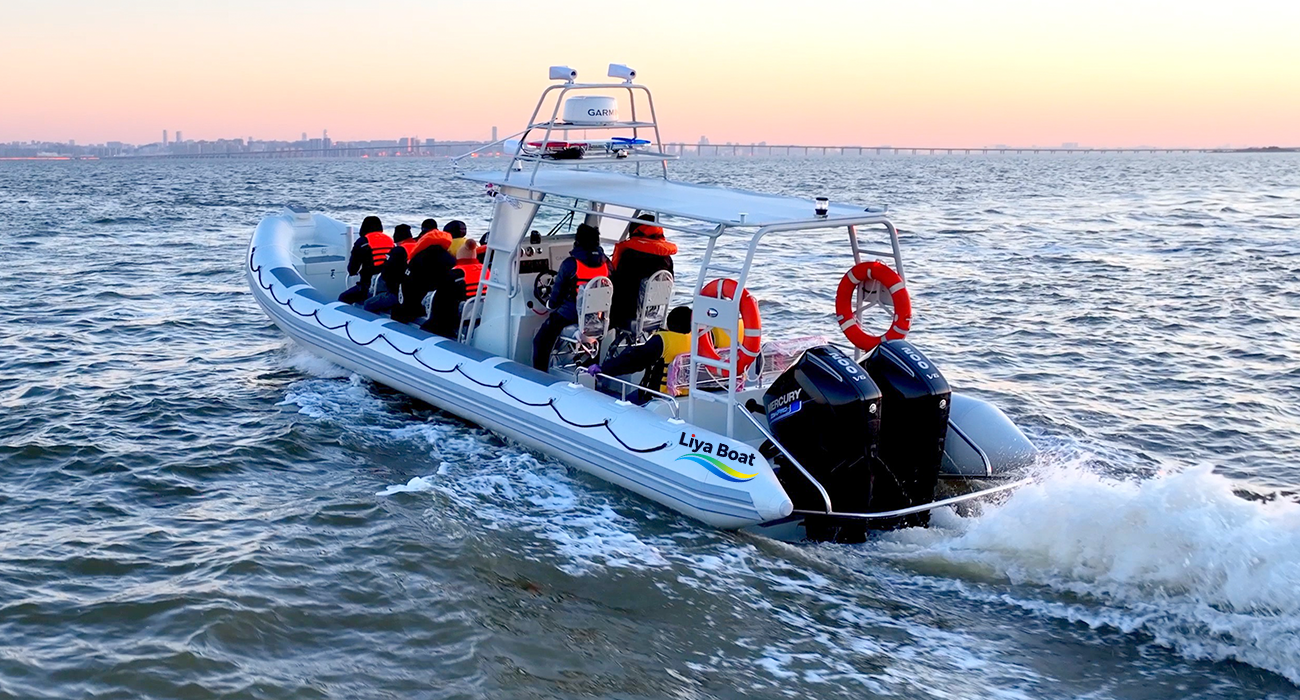 Choosing the hull material is one of the main decisions when buying a rigid-hull inflatable boat. Aluminum and fiberglass are both widely used for RHIBs, and both can support patrol, rescue, workboat, tender and recreational applications.The main differences lie in how the hull is made, how it respo
 -
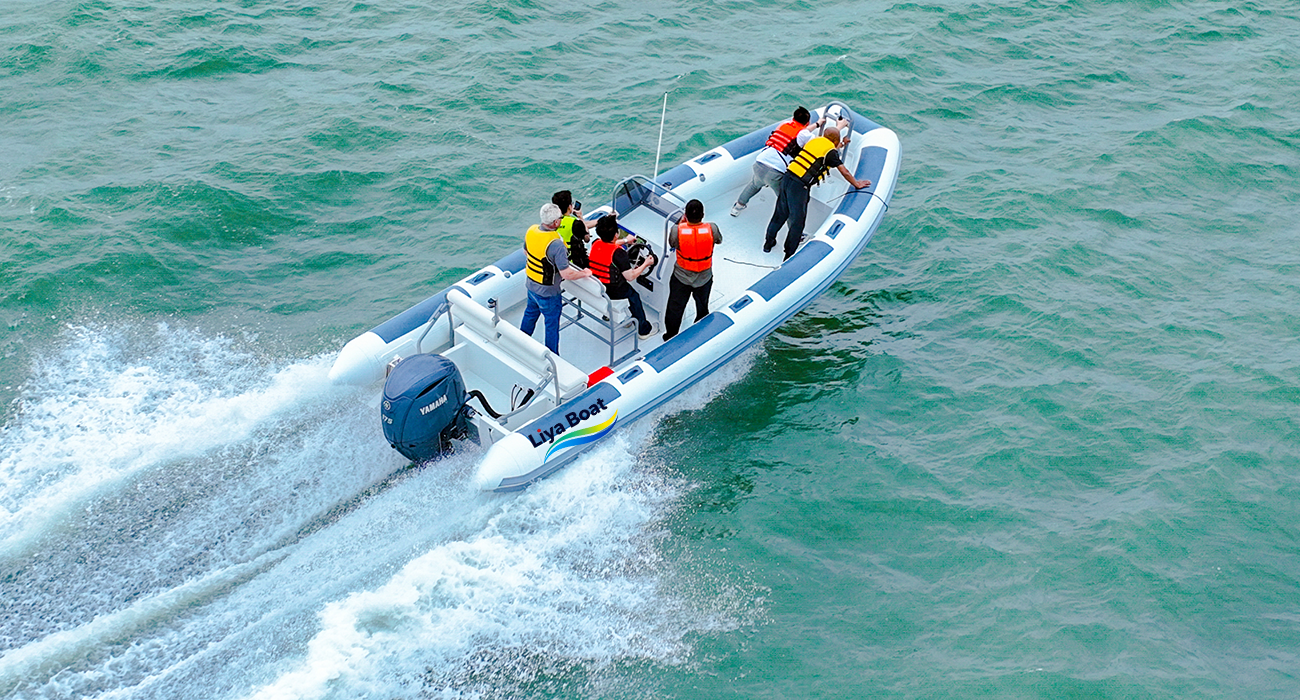 Shallow-water operation exposes a boat to risks that are less common on deeper, predictable routes: changing bottom conditions, sandbars, debris, beach landings, floating docks and low-speed contact with shore structures.
 -
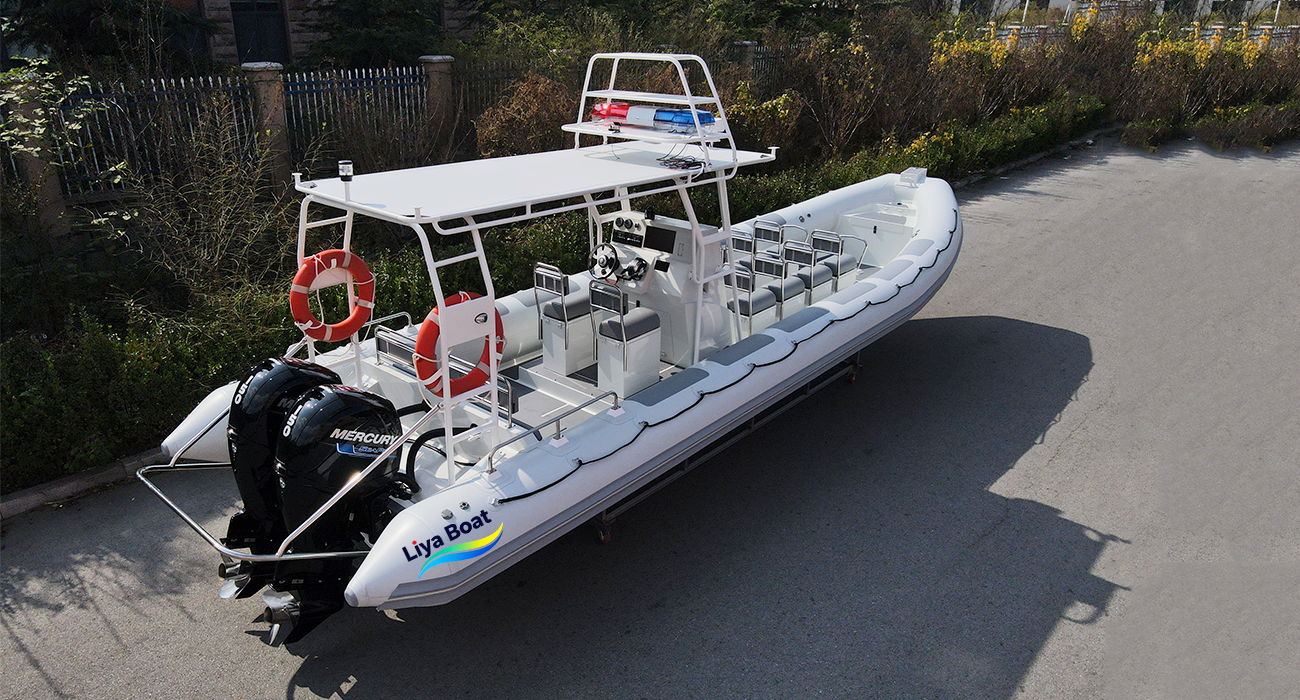 The choice between a 7m and a 10m RHIB is mainly a choice between operating roles. Both are capable Aluminum Hull RIB Boats, but they serve different needs in terms of passenger movement, deck space, route length, equipment integration and crew workflow.


