


- Home
- About Liya
- Liya Boats
- Luxury RIB Boats-Fiber Hull
- 8.3m/27Ft Cabin RIB Boat
- 8m/26Ft Sport Fiber RIB Boat
- New 7.5m/25Ft luxury Italy style RIB Boat
- Classic 7.5m/25Ft Rigid Inflatable Boat
- New 6.6m/22Ft Sport RIB Boat
- Classic 6.6m/22Ft Inflatable RIB Boat
- 6.2m/20Ft RIB Fishing Boat
- 5.8m/19Ft Fiberglass hull RIB
- 5.2m/17Ft RIB Boat
- 4.3m/14Ft Yacht Tender RIB Dinghy
- 4.3m/14Ft Center Console RIB Boat
- 3.8m/12.5Ft High Speed RIB Tender
- 3.3m/11Ft RIB Dinghy
- 8.3m/27Ft Cabin RIB Boat
- Open Deck RIBs-Fiber Hull
- Aluminum Hull RIB Boats
- 8-10M Aluminum Patrol RIB
- 7m/23Ft Aluminum RIB Yacht Tender
- 6.6m/22Ft Rigid Aluminum Hull RIB Boat
- 6.2m/20Ft Aluminum RIB Boat with Motor
- 5.8m/19Ft Aluminum Hull RIB Tender Boat
- 5.8-7.5M Transportation RIB
- 5.2m/17Ft Aluminum RIB Center Console Boat
- 4.3m/14Ft Aluminum RIB Dinghy For Sale
- 2.4-5.2m/8-17Ft Aluminum RIB Dinghy
- 8-10M Aluminum Patrol RIB
- Work RHIB-Rescue & Patrol RIBs
- 27Ft Aluminum Patrol Boat Polyurea-EVA Collar Deep-V Hull
- 9-10m/29-34Ft Aluminum Patrol RIB Boat
- Professional 8.3m Heavy-Duty Patrol RIB Boat|Fast-Response,12-Person,CE Certified
- 7.9m/26Ft RHIB for Patrol
- 6.6m/22Ft Black RIB Boat
- 5.8-7.5m/19-25ft Heavy Duty RIB Patrol & Work Boat
- 5.8-7.5m/19-25Ft Aluminum RIB Work Boat
- 27Ft Aluminum Patrol Boat Polyurea-EVA Collar Deep-V Hull
- Fiberglass Boats/Fishing Boats
- 7.6m/25Ft Fiberglass Panga Boat for Fishing
- Liya 45ft Fiberglass Cabin Fishing Boat Passenger Tour Vessel
- 9.18m/30Ft Fiberglass Cabin Fishing Boat
- 6.6m/22Ft Fiberglass Panga Skiff Boat
- 6m/20Ft Center Console Fishing Boat
- 5.8m/19Ft Center Console Panga Fishing Boat
- 5m/16.5Ft Economical Fiberglass Boat
- 7.6m/25Ft Fiberglass Panga Boat for Fishing
- Ferry & Transportation Boats
- Fully Inflatable Boats
- Luxury RIB Boats-Fiber Hull
- Application
- Hot Sale
- News
- Feature & Service
- Work RHIBs
- Contact Liya


Inquire
A luxury RIB boat may look impressive at the marina, but its real value becomes clear once passengers spend several hours on the water. Families want a comfortable place to relax, convenient access for swimming, and protection from the elements. Charter operators have additional concerns, including passenger movement, operating efficiency, maintenance, and the ability to offer a consistent experience across different trips.
Hull design is another important part of that decision. A stepped-hull RIB can offer performance advantages under suitable conditions, but those advantages must be considered alongside weight distribution, engine configuration, and onboard layout.
Our 27ft luxury cabin RIB boat brings these requirements together in an 8.3m fiberglass design. With a 22-degree stepped deep-V hull, an integrated cabin, convertible leisure areas, and single or twin outboard options, it is intended for recreational cruising and potential commercial charter applications.
For buyers comparing high-performance luxury RIBs, understanding how these features work together is more useful than simply comparing advertised speeds or equipment lists.
Why Does a Stepped Hull Matter on a Luxury RIB?
A stepped hull differs from a conventional continuous-V hull because its underwater running surface incorporates transverse steps. At suitable planing speeds, these steps can influence the flow of water and air beneath the boat, changing the wetted area and the distribution of hydrodynamic forces.
Reducing wetted resistance under appropriate conditions may improve planing efficiency. This is one reason stepped-hull designs are associated with performance-oriented recreational boats, where handling and speed are important considerations.
However, the presence of steps does not automatically make a boat faster, smoother, or more fuel-efficient in every situation. Their performance depends on the complete hull geometry, running trim, engine installation, passenger load, and sea conditions.
On our 27ft cabin RIB, the stepped design is combined with a 22-degree deep-V fiberglass hull. The V-shaped running surface influences how the vessel enters waves, while the steps affect water contact during planing. Together, they form a performance-oriented hull arrangement intended for coastal recreational use.
Why Weight Distribution Deserves Attention
Weight distribution is especially important on a cabin RIB because the boat carries more than an open deck and a simple steering console. The cabin structure, fuel, engines, passengers, and optional equipment all influence the center of gravity.
A stepped hull's running attitude can change if too much weight is concentrated toward the bow or stern. This is relevant to owners who regularly travel with different numbers of passengers and to charter businesses whose loads may vary from one trip to another.
For that reason, we encourage buyers to consider their typical operating load before choosing engines and accessories. A boat configured for a family of four may have different requirements from one intended to carry larger private groups.
The best stepped-hull luxury RIB boat is not necessarily the model with the most aggressive hull design. It is one whose hull, propulsion, and load arrangement work appropriately for the intended use.

A Private Cabin Makes a Difference on Longer Family Adventures
One of the distinguishing features of our 27ft model is its integrated cabin. While many leisure RIBs rely almost entirely on open seating and sunpads, this design provides an enclosed space that adds privacy and convenience during extended outings.
Inside the cabin, a set of removable soft cushions can be configured to create a spacious resting platform, accommodating 2–3 people. It also incorporates provision for a fixed or portable marine toilet, allowing buyers to consider additional onboard facilities according to their requirements.
For families, these details can be valuable. Parents traveling with children may appreciate a private place to change clothes, while other passengers may benefit from a separate area for personal belongings or a short break from the open deck.
The cabin does not turn the vessel into a fully equipped overnight cruiser, nor should it be treated as guaranteed protection in every weather condition. Its actual usefulness depends on the selected equipment, ventilation, access, and the way the boat will be operated.
Privacy Without Giving Up Outdoor Leisure Space
A common concern with cabin boats is whether the enclosed structure reduces recreational space too much. This is where the surrounding deck layout becomes important.
On the 27ft RIB, passengers still have access to a large forward sunpad with concealed storage and a flexible aft leisure area. The boat therefore provides both open-air relaxation and a separate private compartment.
This combination can be particularly attractive for families planning a mixture of cruising, swimming, and leisure stops. The cabin adds convenience without requiring every activity to take place inside an enclosed cockpit.
For private owners, that balance may be more important than adding numerous luxury accessories. A useful cabin, comfortable outdoor spaces, and practical access routes can improve the experience of a full day aboard.
The Aft Deck Is Designed for More Than One Activity
The aft deck is another area where the 27ft cabin RIB offers flexibility. Its convertible arrangement allows a large sunpad to be changed into a social table configuration, creating different uses for the same part of the boat.
During a suitable leisure stop, the sunpad provides a place to relax. When passengers prefer to sit together, the table arrangement offers a more social setting. A central transom access door also helps organize movement toward the swimming platform.
These features are useful because recreational activities rarely remain the same throughout a trip. Guests may begin with a coastal cruise, stop for swimming, enjoy refreshments, and then continue to another destination.
The layout must still be used appropriately. Convertible furniture should be secured according to the manufacturer's instructions, and passengers should occupy suitable designated positions while the boat is underway.
At the helm, customers can discuss different steering-seat arrangements, including an O-type option with an integrated sink and an R-type sport-oriented seat. An optional 100L freshwater system is also available.
Rather than selecting every accessory, buyers should consider which combination best supports their usual activities and leaves enough space for safe movement.
How Would a Family Use This 27ft Cabin RIB?
Consider a family planning a coastal day trip with several swimming stops. Before departure, the operator checks the weather, verifies the boat's loading, and ensures that fuel and safety equipment are sufficient for the planned route.
During the cruising portion, passengers use the appropriate seating areas while the driver manages speed and trim according to conditions. The cabin provides a separate private space when needed, while personal belongings can be organized in suitable storage compartments.
At a sheltered destination, once the boat is safely secured, the aft area can be arranged for relaxation or social seating. Passengers may also use the swimming platform for water activities where conditions permit.
If an appropriate marine toilet has been installed, the family gains another convenience that can be valuable during longer outings. However, that benefit should be evaluated alongside installation space, waste handling, and maintenance requirements.
This illustrates the real appeal of a luxury cabin RIB for family cruising. It is not merely about having a cabin or a stepped hull independently; the design brings together features that support different stages of a recreational journey.
What Makes a 27ft Cabin RIB Suitable for Commercial Charters?
Commercial charter operators evaluate boats differently from private recreational owners. Comfort remains important, but operating consistency, passenger access, equipment durability, and maintenance requirements become more significant when a vessel is used frequently.
A stepped-hull cabin RIB may be worth considering for premium private excursions, coastal sightseeing, or leisure trips operated within the vessel's approved capabilities. Its cabin can provide additional privacy, while the sunpads and convertible social area contribute to the guest experience.
However, a boat that works well for private recreation is not automatically authorized for carrying paying passengers. Commercial operation may require additional equipment, documentation, inspections, qualified crew, and other approvals under the rules of the destination market.
Planning Around the Actual Passenger Group
Our 27ft model has a published capacity range of 6–12 people, depending on configuration. This does not mean every version has twelve dedicated seats or that it can legally transport twelve paying passengers.
For a premium charter focused on smaller private groups, spacious leisure areas and cabin convenience may be more valuable than maximizing passenger numbers. An operator whose business depends on carrying larger groups should instead pay close attention to the certified seating arrangement, boarding procedures, and available passenger space.
The distinction affects how a charter business should specify its boat from the outset.
What Charter Operators Should Evaluate
Operating priority | Why it matters |
|---|---|
Passenger seating and movement | Helps organize boarding, cruising, and leisure activities |
Cabin and toilet provision | Can add convenience on longer private excursions |
Engine and fuel planning | Influences operating costs, route planning, and servicing |
Cleaning and equipment access | Matters when preparing the boat between trips |
Certification and documentation | Determines suitability for the intended commercial market |
An appropriately configured charter RIB should also be practical to maintain. Upholstery, storage areas, electrical equipment, and onboard facilities need to withstand repeated use, while operators should have access to relevant maintenance information.
For customers developing a leisure fleet, we recommend defining a consistent equipment specification rather than ordering different arrangements without a clear operational reason.
Single or Twin Outboards: Which Configuration Makes More Sense?
The engine arrangement has a direct influence on how a 27ft stepped-hull RIB performs and how it is maintained. Our cabin model supports both single- and twin-outboard configurations, allowing customers to evaluate different propulsion arrangements according to their requirements.
The published technical specifications list 250HP as the recommended single-engine power and twin 115HP outboards as the recommended twin-engine configuration.If a higher-power option is required, the specific permissible limits and installation requirements must be verified before proceeding to production.
A single outboard generally offers a less complex mechanical arrangement, with one engine to maintain and service. This may appeal to private owners who prioritize straightforward maintenance and have suitable support facilities.
Twin outboards provide a different propulsion arrangement and may offer useful maneuvering characteristics and some redundancy, although they introduce additional engine weight, components, and servicing requirements. Their suitability depends on the actual engine package and the boat's approved configuration.
For family owners and charter businesses alike, the decision should reflect expected loading, cruising speed, local servicing availability, fuel costs, and the operating conditions rather than horsepower alone.
What Does the 410L Fuel Tank Tell Buyers?
The boat has an integrated 410L fuel tank, which provides substantial fuel capacity for planning coastal journeys. However, fuel capacity should never be presented as a fixed cruising range.
Actual range depends on the chosen engines, operating speed, passenger load, sea conditions, and fuel reserves. A vessel operating at moderate cruise speeds with a small group may consume fuel differently from one carrying a larger charter load.
Buyers should request appropriate engine and performance information for their proposed configuration before committing to longer routes or commercial schedules.
The Construction Details Behind a Performance-Oriented Cabin RIB
A stepped hull needs more than an attractive exterior shape. The structural design, fiberglass construction, and distribution of installed equipment all matter because the vessel experiences changing loads as it operates.
For our 27ft cabin RIB, we use vacuum adsorption technology for Fiberglass Boat Hulls and structural PVC foam core material within the deck. The boat also incorporates longitudinal and transverse structural reinforcement and an inflatable collar divided into eight chambers.
These characteristics form part of the construction approach behind the finished vessel. Vacuum-based lamination is intended to improve laminate consistency and reduce trapped air, using a PVC foam core to fill the deck makes it more water-resistant, lightweight, and durable compared to traditional wooden decks.
Customers can examine our fiberglass construction and quality control methods when evaluating the structural details behind the boat rather than relying only on exterior photographs.
Depending on the intended use, the tubing can be made from different materials: world-class French Hypalon or high-quality German PVC. The appropriate choice depends on climate, storage conditions, maintenance expectations, and the buyer's budget.
We also provide applicable product and certification documentation for discussion during procurement. Customers should confirm the certification and design-category documents corresponding to the exact boat configuration and intended destination market.
What Should You Confirm Before Ordering a 27ft Luxury Cabin RIB?
The most productive purchasing discussions begin with the buyer's intended use. Rather than asking for the highest horsepower or every available accessory, it is better to establish a realistic operating profile and then determine which configuration fits it.
For private buyers, this usually means clarifying the typical number of passengers, expected cruising distance, need for cabin privacy, and preferred leisure facilities. A marine toilet may be valuable on longer trips, while a simpler cabin arrangement may be entirely adequate for short coastal outings.
For charter businesses, the discussion should also cover passenger approvals, operating schedules, required safety equipment, maintenance access, and whether a single or twin-engine arrangement is more suitable for the service.
We can review these requirements against the available configurations, including helm seating, freshwater options, tube materials, engine choices, and deck accessories. Our boat features and service information also provides further details relevant to material selection and maintenance planning.
Buyers who are still considering different sizes or leisure arrangements can review our Luxury RIB Boats range, although the 27ft cabin design is particularly relevant when an enclosed private space and stepped-hull configuration are priorities.
Conclusion
The best stepped-hull luxury RIB is not defined by its maximum engine power or the number of accessories available. What matters is whether the hull, cabin, deck arrangement, and propulsion system work together for the owner's intended activities.
Our 27ft cabin RIB combines a 22-degree stepped deep-V hull, a practical private cabin, convertible leisure areas, and flexible outboard options. These features make it a relevant choice for family coastal adventures and businesses evaluating a premium private charter boat.
Whether you are selecting a recreational vessel or developing a commercial leisure operation, we can help review the available specifications and equipment choices. Contact our team to discuss your preferred cabin layout, engine arrangement, and 27ft RIB quotation.
Frequently Asked Questions
Is a stepped-hull RIB always faster than a conventional deep-V boat?
No. Stepped hulls can reduce wetted resistance under suitable planing conditions, but actual speed and efficiency depend on hull design, trim, engine setup, loading, and sea conditions. Direct performance comparisons require reliable test data.
Can the 27ft cabin RIB be used for commercial charter operations?
It can be considered for suitable charter applications, but commercial passenger use depends on the vessel's final configuration and the licensing, inspection, and safety requirements of the operating location.
Does the cabin come with a marine toilet?
The cabin includes provision for a fixed or portable toilet arrangement. The selected toilet equipment and installation should be confirmed as part of the order.
Should I choose a single or twin-engine configuration?
The answer depends on expected loading, intended cruising conditions, maintenance resources, and operating priorities. We recommend discussing the proposed engines and final installation with our team before production.

Welcome To Contact Us

-
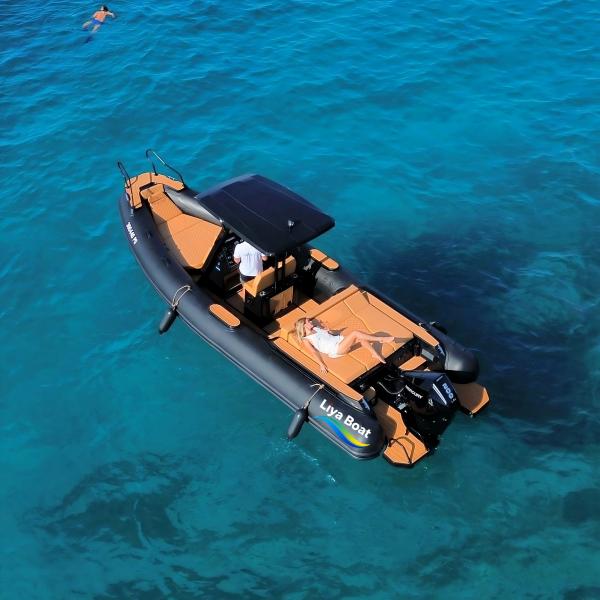 A luxury RIB boat should offer more than attractive upholstery and a powerful engine. For owners who enjoy spending full days on the water, the arrangement of the sunbed, storage compartments, seating, and onboard facilities can make a greater difference than decorative details. A spacious deck shou
-
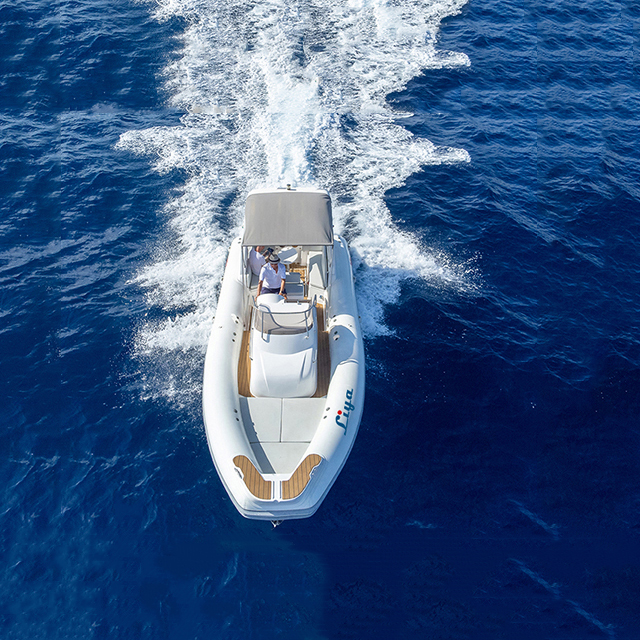 A luxury RIB boat may look impressive at the marina, but its real value becomes clear once passengers spend several hours on the water. Families want a comfortable place to relax, convenient access for swimming, and protection from the elements. Charter operators have additional concerns, including
-
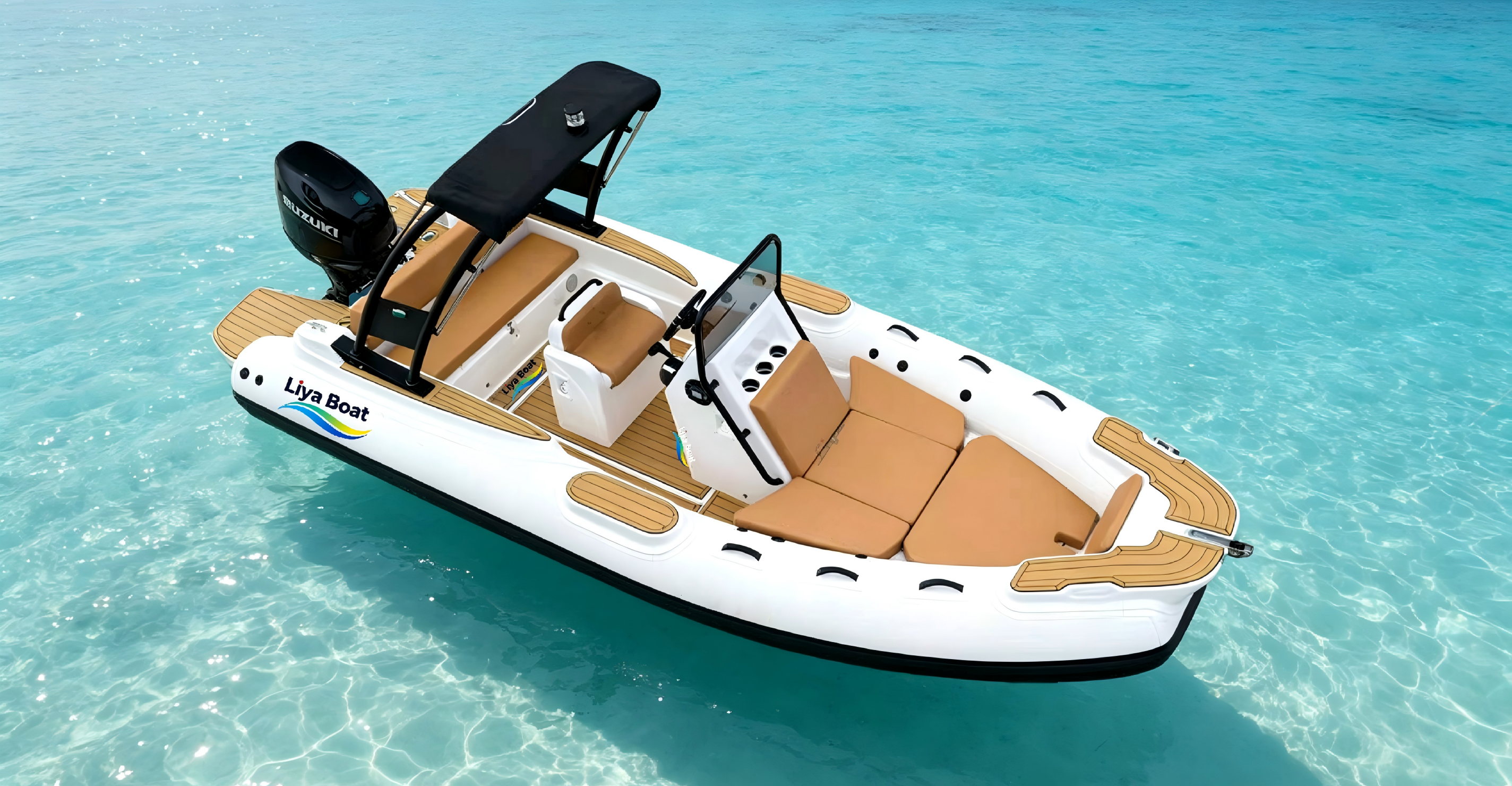 A 10-person RIB boat may sound spacious, but passenger capacity alone does not tell you how comfortable or practical the boat will be during a day on the water. Families need places to sit and store their belongings, fishing enthusiasts need room to handle equipment, and recreational operators want


