


- Home
- About Liya
- Liya Boats
- Luxury RIB Boats-Fiber Hull
- 8.3m/27Ft Cabin RIB Boat
- 8m/26Ft Sport Fiber RIB Boat
- New 7.5m/25Ft luxury Italy style RIB Boat
- Classic 7.5m/25Ft Rigid Inflatable Boat
- New 6.6m/22Ft Sport RIB Boat
- Classic 6.6m/22Ft Inflatable RIB Boat
- 6.2m/20Ft RIB Fishing Boat
- 5.8m/19Ft Fiberglass hull RIB
- 5.2m/17Ft RIB Boat
- 4.3m/14Ft Yacht Tender RIB Dinghy
- 4.3m/14Ft Center Console RIB Boat
- 3.8m/12.5Ft High Speed RIB Tender
- 3.3m/11Ft RIB Dinghy
- 8.3m/27Ft Cabin RIB Boat
- Open Deck RIBs-Fiber Hull
- Aluminum Hull RIB Boats
- 8-10M Aluminum Patrol RIB
- 7m/23Ft Aluminum RIB Yacht Tender
- 6.6m/22Ft Rigid Aluminum Hull RIB Boat
- 6.2m/20Ft Aluminum RIB Boat with Motor
- 5.8m/19Ft Aluminum Hull RIB Tender Boat
- 5.8-7.5M Transportation RIB
- 5.2m/17Ft Aluminum RIB Center Console Boat
- 4.3m/14Ft Aluminum RIB Dinghy For Sale
- 2.4-5.2m/8-17Ft Aluminum RIB Dinghy
- 8-10M Aluminum Patrol RIB
- Work RHIB-Rescue & Patrol RIBs
- 27Ft Aluminum Patrol Boat Polyurea-EVA Collar Deep-V Hull
- 9-10m/29-34Ft Aluminum Patrol RIB Boat
- Professional 8.3m Heavy-Duty Patrol RIB Boat|Fast-Response,12-Person,CE Certified
- 7.9m/26Ft RHIB for Patrol
- 6.6m/22Ft Black RIB Boat
- 5.8-7.5m/19-25ft Heavy Duty RIB Patrol & Work Boat
- 5.8-7.5m/19-25Ft Aluminum RIB Work Boat
- 27Ft Aluminum Patrol Boat Polyurea-EVA Collar Deep-V Hull
- Fiberglass Boats/Fishing Boats
- 7.6m/25Ft Fiberglass Panga Boat for Fishing
- Liya 45ft Fiberglass Cabin Fishing Boat Passenger Tour Vessel
- 9.18m/30Ft Fiberglass Cabin Fishing Boat
- 6.6m/22Ft Fiberglass Panga Skiff Boat
- 6m/20Ft Center Console Fishing Boat
- 5.8m/19Ft Center Console Panga Fishing Boat
- 5m/16.5Ft Economical Fiberglass Boat
- 7.6m/25Ft Fiberglass Panga Boat for Fishing
- Ferry & Transportation Boats
- Fully Inflatable Boats
- Luxury RIB Boats-Fiber Hull
- Application
- Hot Sale
- News
- Feature & Service
- Work RHIBs
- Contact Liya


Inquire
In high-stakes flood and swiftwater scenarios, procurement decisions directly impact survivability. Traditional hard-shell vessels often fail in shallow, debris-laden urban floods. They also struggle heavily in highly aerated rapids. Legacy systems rely on deep-draft designs. These designs frequently anchor themselves on hidden underwater obstacles. Emergency management teams have heavily shifted toward rapid-deployment inflatables. We witnessed this real-world efficacy during catastrophic events like Hurricane Ida. Flexible hulls drastically out-performed rigid ones during tight neighborhood evacuations. When water levels fluctuate wildly, you need extreme physical adaptability.
To make an informed purchasing decision, rescue agencies must look beyond basic boat dimensions. You must evaluate material composition accurately. You must match propulsion compatibility to your local environment. You also need to verify hull geometry against your specific operational hazards. This guide breaks down the essential vessel features you need. It helps you navigate complex material choices. It explains advanced hull physics simply. It clarifies critical engine sizing logic. You will learn how to configure the optimal rapid-response vessel for your team.
Key Takeaways
Material Tradeoffs: Polyurethane offers peak puncture resistance, while Hypalon provides superior field-patchability. Thermo-welded seams are critical to prevent adhesive failure under stress.
Propulsion Physics: Conventional propellers lose massive efficiency in aerated white water; jet pumps and jet outboards reduce snag risks and protect victims but require specific horsepower compensations.
Design for Extraction: Features like open transoms, catamaran hulls, and drop-stitch floors are non-negotiable for performing immediate CPR and hauling fatigued victims aboard.
Defining the Operational Requirement: IRB vs. RHIB vs. Catamaran
Procurement officers often struggle to balance competing needs during disaster response planning. They need the raw speed of rigid hulls. Yet they also demand the portability of fully inflatable vessels. Choosing the right platform changes operational outcomes completely. You have three primary categories to evaluate for emergency use.
Pure Inflatable Rescue Boats (IRB) offer maximum elasticity. In swiftwater or shallow floods, a pure IRB bounces off submerged rocks. It deflects off abandoned vehicles. It will not shatter on impact. However, they typically reach slower top speeds compared to rigid counterparts. They excel in narrow, hazardous spaces where rigid hulls would crack.
Rigid Hull Inflatable Boats (RHIB or RIB) feature aluminum or fiberglass hulls. This rigid base allows for high-speed open water navigation. Coastal teams use them heavily for surf rescue operations. They cut through crashing waves easily. Many easily exceed 40 knots. However, the primary limitation lies in their weight. They usually require a heavy trailer. You must launch them from designated concrete boat ramps. This makes rapid deployment in flooded, debris-choked urban streets highly difficult. Your team might get stuck blocks away from the actual victims.
Inflatable Catamarans lift the central deck above the waterline. This design drastically reduces the risk of puncturing the floor on submerged debris. You also gain a massive payload-to-weight ratio. For example, a 50kg vessel can easily support a 700kg payload. Catamarans provide incredible side-to-side stability during turbulent rescues.
Vessel Type | Primary Advantage | Primary Limitation | Best Use Case |
|---|---|---|---|
Pure IRB | Maximum elasticity and bounce | Slower top speeds | Shallow urban floods |
RHIB / RIB | High speed and rigid stability | Heavy; requires trailer launch | Open water coastal rescue |
Catamaran | High payload capacity | Wider turning radius | Heavy extraction missions |
Best Practice: Always audit your primary response zone before selecting a hull. If your team mostly faces urban flash floods, prioritize the pure IRB or Catamaran over the RHIB.
Critical Material and Construction Tolerances
Your fabric selection dictates vessel vulnerability in the field. Rescue teams cannot afford material failures mid-mission. Understanding chemical and physical tolerances helps you avoid catastrophic blowouts.
Hypalon: This is the industry standard for UV resistance. It handles chemical exposure exceptionally well. Rescue crews value it because it is highly patchable on site. You can glue a patch quickly during an active mission.
Heavy-Duty PVC: This material provides excellent abrasion resistance. It allows boats to slide over obstacles smoothly. However, PVC is prone to massive failure if manufacturers glue the seams instead of welding them.
Polyurethane: This represents the next-generation standard. It delivers extreme puncture resistance. It creates a highly durable outer shell for extreme environments.
Seam architecture is just as critical. Avoid traditional glued seams entirely. They degrade quickly under high heat. Operational stress tears them apart. We emphasize the necessity of thermo-welded joints. They guarantee long-term structural integrity. Heat welding physically melts two layers of fabric into one solid piece.
You also need proper armor and reinforcement. Integrate Kevlar-reinforced lower strakes. Add heavy-duty rub rails along impact zones. These additions are vital for navigating flood debris safely. When floating past submerged fences, bottom armor prevents fatal punctures.
Finally, evaluate deck rigidity. Floor systems must provide a perfectly flat, non-slip surface. You can choose aluminum panels, marine plywood, or high-pressure drop-stitch floors. Marine plywood floors offer affordability but require strict drying protocols. They can rot if left damp. Aluminum panels provide extreme durability. However, they add significant weight to the boat. Drop-stitch floors use thousands of internal polyester threads. They create a rock-hard surface once inflated to high pressure. They give you the rigidity of wood but roll up tightly for storage. The deck must remain stable enough for rescuers to safely administer CPR.
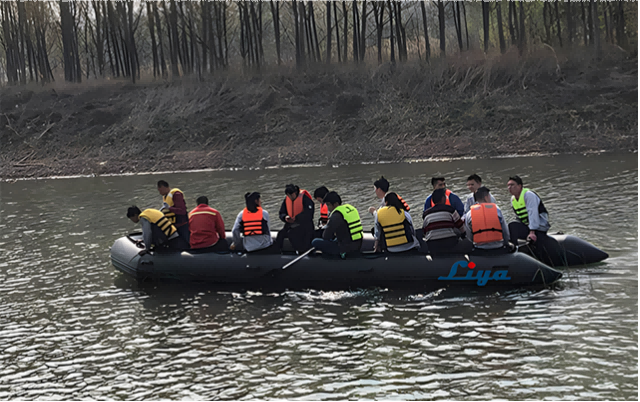
Matching Propulsion Systems to Flood and Swiftwater Realities
Aeration creates a major problem in swiftwater rescues. Class IV white water often contains up to 60% air. This air causes traditional propellers to cavitate. Cavitation happens when propeller blades spin in air pockets instead of solid water. It leads to a massive, sudden loss of thrust. When you lose thrust, you lose steering capability. You need specific propulsion logic for these unpredictable environments. Upstream thrust is a matter of life or death when holding position against a surging current.
Traditional propellers equipped with guards offer high efficiency in flat water. However, they carry a high risk. They can injure victims thrashing in the water. They also frequently strike submerged vehicles. Snagging a propeller on a submerged chain-link fence anchors your boat in a deadly current.
Jet pumps and jet outboards solve many of these issues. A jet outboard reduces the vessel draft to as little as 2 inches. This shallow draft is perfectly ideal for shallow flood zones. It completely eliminates exposed blades. This protects victims and divers moving around the hull.
But there is a catch. Jet outboards suffer an approximate 30% power loss. A 40-HP engine effectively outputs only about 30-HP of thrust. Procurement teams must upsize engines accordingly to compensate. You cannot rely on standard flat-water ratings.
Engine sizing requires careful logic. Oversized boats exceeding 16 feet lose crucial maneuverability in tight alleys. This happens especially when paired with massive engines. Many agencies find a specific sweet spot. A 12-foot to 14-foot Inflatable Rescue Boat paired with a 30-HP to 40-HP engine works best. It balances upstream thrust against narrow-clearance maneuverability.
Specialized Configurations for Extreme Rescue Scenarios
Extreme rescue scenarios demand specialized vessel geometries. Standard recreational shapes will fail you miserably. Open transom and open bow designs are essential. They drastically reduce physical drag when pulling a waterlogged victim over the side. You do not have to lift them over a high, inflated tube. They also allow for instant water drainage. The vessel can shed swamping water in mere seconds.
A closed transom traps swamped water inside the deck. It turns the boat into a heavy, unsteerable anchor. Water weighs over eight pounds per gallon. You must shed it immediately to maintain buoyancy and control.
Low head dams and surf rescues present unique hazards. Professionals often call low head dams "drowning machines." Surviving them requires specific hull geometry. Quad-stepped hulls and triangular bow anti-wave designs help prevent catastrophic capsizing. They allow the bow to pierce heavy backwash safely. Modular roll-cages with self-righting capabilities keep the crew safe. They prevent drowning even if the boat flips completely.
Rapid inflation architecture is another non-negotiable feature. High-pressure manifold systems must be compatible with standard SCBA tanks. Fire departments already carry these tanks on their trucks. This setup enables a trained two-person crew to unroll and launch the boat in under three minutes. Fast deployment saves lives when floodwaters rise rapidly.
Vetting an Inflatable Rescue Boat Manufacturer
You must evaluate suppliers carefully. It is vital to separate recreational boat builders from tactical emergency suppliers. Do not rely on marketing claims alone. Look deeply into their compliance and testing protocols. Do they build to military specifications? Do they understand dynamic loads?
Look for verifiable certifications: SOLAS compliance provides a strong baseline for maritime safety. It proves the builder understands extreme environments.
Investigate rigorous quality assurance: A proper Inflatable Rescue Boat manufacturer tests their products relentlessly. They should conduct X-ray testing on thermo-welded seams. This ensures the welds are completely uniform. It exposes invisible air pockets before the boat reaches your department.
Assess ecosystem modularity: Determine if the manufacturer provides integrated rescue ecosystems. They should offer compatible rescue sleds. Look for inflatable rescue tracks. Ask about flip lines and auto-bailing systems.
Evaluate training support: Check if they offer detailed maintenance manuals. See if they provide field-repair training for your crews.
An ecosystem approach ensures your agency can adapt to varying mission profiles seamlessly. It prevents you from taping together incompatible gear in the field.
Conclusion
The ideal rescue vessel is not universally applicable. You must tailor it to your agency's primary threat matrix. You must decide between shallow urban floods, coastal surf, or rocky swiftwater. Procurement is about matching hull physics to real-world hazards. Here are the crucial next steps for your procurement process:
Prioritize thermo-welded, highly elastic pure IRIBs or Catamarans for urban flood zones.
Reserve aluminum-hulled RHIBs strictly for open-water, high-speed interception missions.
Audit your current engine inventory. Calculate potential jet-drive power loss before deciding on hull sizes.
Request rapid-deployment demonstrations from shortlisted manufacturers before issuing a formal purchase order.
FAQ
Q: Why use a pure inflatable over a hard-shell boat for flood rescue?
A: RIBs require no trailers. Two people can deploy them easily from an SUV. They draft in shallower water. They safely bounce off submerged cars and rocks that would crack a rigid fiberglass hull.
Q: What is the minimum horsepower required for a swiftwater rescue boat?
A: We recommend a minimum of 30-HP for adequate upstream thrust. If you utilize a jet outboard for safety, you must account for a 30% power loss. Size up your engine accordingly.
Q: Can CPR be performed effectively on an inflatable boat?
A: Yes. The vessel must be equipped with a rigid deck system. Interlocking aluminum plates or high-pressure drop-stitch floors work perfectly. An open layout accommodates the rescuer's stance securely.

Welcome To Contact Us

-
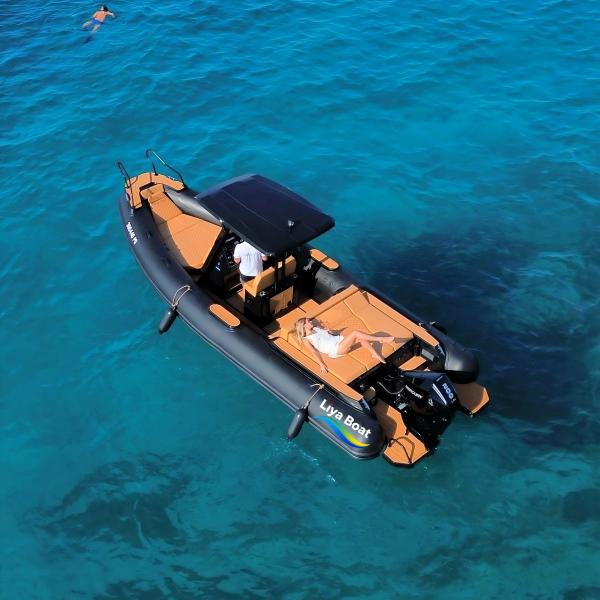 A luxury RIB boat should offer more than attractive upholstery and a powerful engine. For owners who enjoy spending full days on the water, the arrangement of the sunbed, storage compartments, seating, and onboard facilities can make a greater difference than decorative details. A spacious deck shou
 -
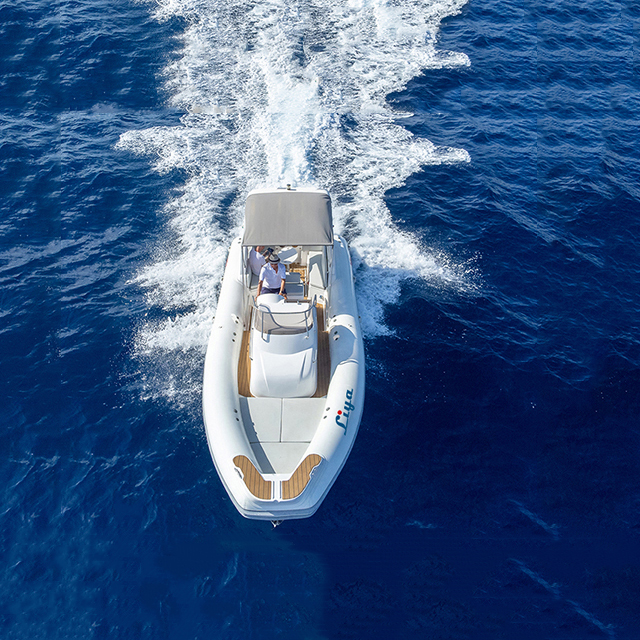 A luxury RIB boat may look impressive at the marina, but its real value becomes clear once passengers spend several hours on the water. Families want a comfortable place to relax, convenient access for swimming, and protection from the elements. Charter operators have additional concerns, including
 -
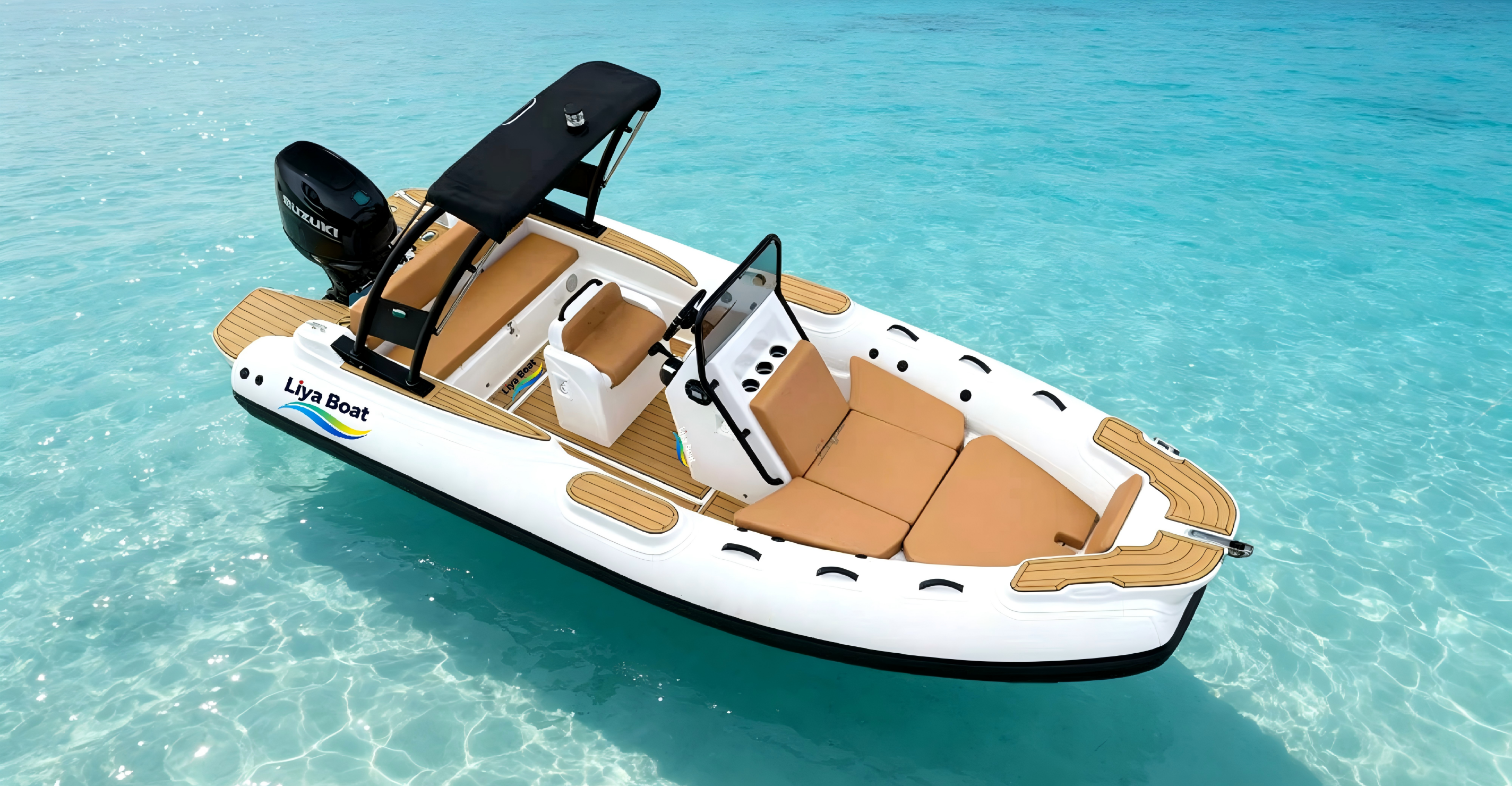 A 10-person RIB boat may sound spacious, but passenger capacity alone does not tell you how comfortable or practical the boat will be during a day on the water. Families need places to sit and store their belongings, fishing enthusiasts need room to handle equipment, and recreational operators want


